


Table of Contents
- How to Choose the Best Home Gym Equipment for Your Space
- Home Gym Essentials: The Minimum Viable Setup
- Compact Home Gym Equipment That Fits Apartments and Small Rooms
- Cardio Equipment: Treadmills, Bikes, and What Each One Actually Trains
- Strength Training Equipment: Benches, Kettlebells, and Free Weights
- Home Gym Equipment Packages: Are Bundles Worth the Money?
- Total Cost of Ownership: What You'll Actually Spend Over Five Years
- The Best Home Gym Equipment for Beginners and Advanced Lifters
- Frequently Asked Questions
Last Updated: October 12, 2026
How to Choose the Best Home Gym Equipment for Your Space
Buying fitness equipment for home gyms starts with a tape measure, not a shopping cart. Most people pick the machine first, then discover it does not fit, does not clear the ceiling, or makes the floor creak.
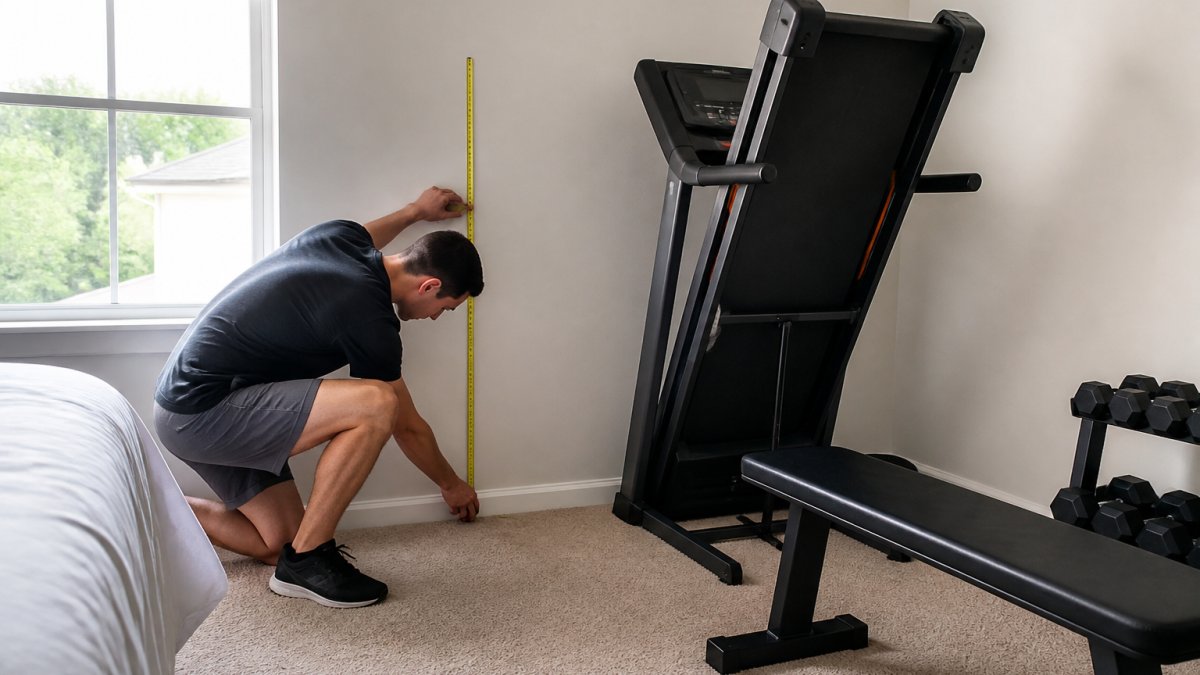
At Bodyhackfitnesss, customers want a setup that survives past month three: measure first, match gear to a real goal, and buy pieces that fold, stack, or tuck away.
Measure Ceiling Height, Floor Space, and Floor Load Before You Buy
Three numbers decide what you can safely buy.
- Ceiling height: A treadmill user needs clearance above their head at full stride. If you plan to jump rope or press overhead, add more.
- Floor space: Measure the footprint plus a buffer zone for stepping on and off safely.
- Floor load: Heavy racks and loaded barbells concentrate weight on a small area. Upper floors and older homes deserve a second look before you commit.
A common mistake is measuring only the machine's footprint. You also need room to lie flat on a bench, swing a kettlebell, and get off a bike without clipping a wall.
Match Equipment to Your Training Goal, Not the Trend Cycle
Training goal should drive the purchase, not trends. Cardio-first buyers should anchor on one machine they will actually use; strength-first buyers on a bench and adjustable weights.
If unsure, pick one cardio piece and one strength piece. Our Heavy-Duty Foldable Weight Bench for Home Gym Workouts folds flat and supports up to 1,000 lbs.

Home Gym Essentials: The Minimum Viable Setup
A complete home gym does not need ten machines. It needs enough to train every major movement pattern: push, pull, hinge, squat, carry, and cardio.
The minimum viable setup looks like this:
- One cardio machine you will use three times a week
- One adjustable weight tool, such as a kettlebell or dumbbell set
- One bench for pressing and support work
- One resistance band for warm-ups and mobility
- One mat for floor work and stretching
That list covers a full-body workout without turning a spare room into a warehouse. Our Versatile Adjustable Kettlebell replaces seven fixed kettlebells with one unit, the space-saving trade most home setups need.
Compact Home Gym Equipment That Fits Apartments and Small Rooms
Compact home gym equipment solves the real constraint most buyers face: square footage, not budget. The best compact gear does two jobs at once, or disappears when the session ends.
Foldable and collapsible designs are the biggest lever. A bench that folds to a few inches thick slides under a bed; a treadmill that folds upright reclaims the floor between runs; an adjustable kettlebell replaces a rack of fixed weights.
Foldable and Collapsible Options That Store Out of Sight
Storage-first buyers should prioritize three things: fold-flat geometry, wheels or light weight for repositioning, and a footprint that fits a closet or under-bed gap.
| Constraint | Best Compact Choice | Why It Works |
|---|---|---|
| No spare room | Foldable flat bench | Folds thin, slides under a bed |
| Low ceilings | Adjustable kettlebell | No overhead clearance needed |
| Shared living space | Foldable treadmill | Folds upright between sessions |
| Small floor area | Adjustable kettlebell | Replaces seven fixed weights |
Cardio Equipment: Treadmills, Bikes, and What Each One Actually Trains
Each cardio machine trains a different thing, and that should decide your pick. Treadmills train walking, jogging, and running with near-real gait mechanics. Bikes train the legs with zero impact. Rowers and ellipticals spread the load across more of the body. Most homes need one machine, so choose based on joint impact, space, and the movement you will repeat three times a week.
Compare Cardio Machines on the Same Four Criteria
Most roundups list machines by category and leave you to guess. Use one framework for every option: footprint, joint impact, muscles trained, and storage profile.
| Machine | Typical Footprint | Joint Impact | Primary Muscles | Storage Profile |
|---|---|---|---|---|
| Treadmill | Largest; needs stride and fall-off buffer | Highest; ground reaction forces scale with speed | Legs, hips, some core | Folds upright on many models |
| Indoor bike | Small; roughly the size of a chair plus pedaling room | Lowest; seated, no landing forces | Quads, hamstrings, glutes, calves | Usually fixed; some fold or roll |
| Rower | Long and low; needs pull-through space behind | Low; smooth drive, no landing | Legs, back, arms, core | Often splits or stands upright |
| Elliptical | Large; long stride path and fixed handles | Low; feet stay on pedals | Legs, hips, upper body on handled models | Rarely folds; plan permanent floor space |
Two practical notes. Ceiling height matters most for treadmills and ellipticals because your head rises above the deck or pedals at full extension. Floor load matters most for rowers and bikes because the frame concentrates weight on a small contact patch, worth checking on upper floors and older homes.
What Each Machine Actually Trains
Treadmill. Walking, jogging, and running with near-real gait mechanics. Incline adds glute and calf demand without adding speed.
Indoor bike. Leg endurance and intervals with zero impact.
Rower. A full-body pull-and-drive pattern that loads legs, back, arms, and core in one stroke.
Elliptical. A low-impact stride that keeps feet on pedals, which suits knees and hips that dislike landing forces.
Match the Machine to the Room and the Body
- Low ceilings: bike or rower. Both keep your head below standing height.
- Shared walls or downstairs neighbors: bike or rower. Treadmill and elliptical produce more vibration and footfall noise.
- Upper-floor rooms: any machine works, but verify floor load and use a mat to spread contact pressure.
Our Portable 3.0HP Incline Treadmill handles walking through running at 1 to 8 MPH with an 8% incline, and it folds for storage. Our Adjustable Indoor Exercise Bike is the low-impact alternative, with a 300 lb capacity and an 18 lb flywheel for smooth pedaling.


Strength Training Equipment: Benches, Kettlebells, and Free Weights
Strength training equipment is where home gyms either get serious or get cluttered.
A flat bench unlocks pressing, rows, step-ups, and support work. An adjustable kettlebell covers swings, goblet squats, presses, and carries.
The Heavy-Duty Foldable Weight Bench needs no assembly, which matters more than people expect. Most benches sit in a box for two weeks because the instructions are painful.
Heavy-Duty Foldable Weight Bench for Home Gym Workouts - Multi-Purpose Flat →
Home Gym Equipment Packages: Are Bundles Worth the Money?
Home gym equipment packages are worth it when the bundle matches your goal and includes gear you would have bought anyway. They are a bad deal when they pad the box with items you will never touch. The useful question is not "is a bundle cheaper" but "does this bundle replace three separate purchases I was already going to make."
What a Good Bundle Actually Contains
A well-built package covers movement patterns, not product categories. Look for one item from each of these buckets:
- Push: a bench plus a weight tool, or a multi-gym with a press station
- Pull: a band, a pull-up bar, or a cable attachment
- Hinge: a kettlebell or adjustable dumbbell
- Squat: the same weight tool, or a rack if the bundle is strength-first
- Carry and core: a kettlebell, a mat, or a sandbag
- Cardio: one machine you will use weekly
If a bundle skips a bucket, you will buy that piece separately anyway, which erases the savings. If a bundle doubles up on a bucket, you are paying for redundancy.
Run the Bundle Math Before You Buy
Add up the individual prices of the items you would actually buy from the bundle, then compare that total to the bundle price. A bundle only wins if the overlap is high and the discount covers the items you would not have chosen.
Run this check before buying any bundle:
- Every item maps to a movement in your weekly plan
- Total footprint fits your measured space
- Weight capacities match your body weight plus working load
If a bundle fails two or more of those, buy the pieces separately. A two-item package you use beats a six-item package that lives in a closet.
Bundles by Experience Level
Packages are usually organized by experience level, and that framing is useful if you treat it as a starting point rather than a ceiling.
| Level | What the Bundle Should Cover | What to Add Later | What to Avoid in a Bundle |
|---|---|---|---|
| Beginner | Bench, one adjustable weight, mat, one cardio machine | Second weight tool | Specialized racks, duplicate cardio |
| Intermediate | Bench, adjustable weights, treadmill or bike, bands | Heavier weights, second cardio modality | Trend purchases, single-purpose machines |
| Advanced | Full strength base plus cardio, rack or multi-gym | Specialized equipment for stalled lifts | Bundles padded with beginner accessories |
The Hidden Costs Bundles Do Not Show
Sticker price is only the first cost. Total cost of ownership adds delivery, assembly, flooring, subscriptions, maintenance, and replacement parts. A bundle that ships in three boxes and needs two hours of assembly is not the same deal as one that arrives ready to use, even at the same price.
- Delivery: oversized items often ship freight, and curbside delivery means you move the boxes yourself.
- Assembly: benches and racks vary widely; some need no assembly, others need tools and a second person.
- Flooring: mats or tiles protect floors and reduce vibration, and they are rarely included.
That is why foldable and adjustable designs pay off twice. They cost less per exercise they support, and they give the room back when you are done.
Total Cost of Ownership: What You'll Actually Spend Over Five Years
Sticker price is only the first cost. Total cost of ownership adds maintenance, replacement parts, and the space you give up permanently.
Cheaper gear often costs more over five years because parts fail sooner and replacements are hard to source.
That is why foldable and adjustable designs pay off twice. They cost less per exercise they support, and they give the room back when you are done.
The Best Home Gym Equipment for Beginners and Advanced Lifters
The best home gym equipment for beginners is not the same as the best for advanced lifters. Beginners need consistency tools. Advanced lifters need progression tools.
Beginner Path: Build Consistency Before You Build a Rack
Start with a bench, one adjustable weight, and one cardio machine. Train three days a week for a month before adding anything. If you cannot hold that schedule, more equipment will not fix it.
Advanced Path: When to Add Specialized Equipment
Add specialized gear when a specific lift stalls and the missing tool is the reason. A heavier kettlebell, a second bench angle, or a dedicated cardio machine each solve a defined problem. Buying before that point just adds clutter.
| Buyer Type | Core Setup | Add Next | Skip For Now |
|---|---|---|---|
| Beginner | Bench, adjustable kettlebell, mat | Cardio machine | Specialized racks |
| Intermediate | Bench, kettlebell, treadmill or bike | Second weight tool | Duplicate cardio |
| Advanced | Full strength base plus cardio | Specialized equipment | Trend purchases |
For guidance on safe progression and injury prevention, the American College of Sports Medicine exercise guidelines is a solid reference, and the CDC physical activity recommendations covers weekly activity targets. For equipment safety standards, see the Consumer Product Safety Commission.
Frequently Asked Questions
What equipment do you need for a home gym?
A functional home gym starts with three categories: cardio, strength, and functional training. For cardio, a foldable treadmill like the Portable 3.0HP Incline Treadmill ($173.02) or an adjustable exercise bike ($113.69) covers most needs. For strength, a foldable weight bench with 1000 lbs capacity ($66.14) and an adjustable kettlebell with 7 weight levels ($117.02) handle pressing, pulling, and full-body movements. Add resistance bands and an exercise mat to round out the setup. Start with two or three pieces that match your primary fitness goal, then expand as your routine solidifies.
What is the best fitness equipment for a home gym?
The best fitness equipment for home gyms depends on your training goal and available space. For cardio-focused training, the Portable 3.0HP Incline Treadmill offers speeds from 1 to 8 MPH with an 8% incline and folds for storage. For strength training, the Heavy-Duty Foldable Weight Bench supports up to 1000 lbs and requires no assembly. The Versatile Adjustable Kettlebell replaces seven separate weights, saving both money and floor space. Each piece targets a different training need, so the right choice comes down to what you will actually use consistently.
How much does it cost to set up a home gym?
A starter home gym can cost under $500 when you choose compact, multi-purpose equipment. The foldable weight bench is $66.14, the adjustable kettlebell is $117.02, and the portable incline treadmill is $173.02. Together, these three pieces cover strength training, cardio, and full-body workouts for roughly $356. An adjustable indoor exercise bike at $113.69 adds low-impact cardio. For a more advanced setup with a spinning bike at $669.07, total costs rise, but you can build gradually over months rather than buying everything at once.
What home gym equipment is best for small spaces?
Compact home gym equipment that folds, stacks, or adjusts is best for small spaces. The Heavy-Duty Foldable Weight Bench collapses to slide under a bed or into a closet. The Versatile Adjustable Kettlebell replaces seven fixed-weight kettlebells with one unit. The Portable 3.0HP Incline Treadmill folds after use. The adjustable indoor exercise bike fits into tight corners. Before buying, measure your ceiling height (treadmills need clearance when inclined), door widths, and floor space. Prioritize equipment that serves multiple exercises so you buy fewer pieces overall.
Are home gym equipment packages worth it?
Home gym equipment packages save time and often cost less than buying each piece separately, but only if every item matches your training style. A package built around cardio may include a bike you never ride. A strength-focused bundle may include weights you outgrow in months. The better approach for most people is to build your own package: start with one cardio machine, one strength station, and one adjustable free weight. That way, every dollar goes toward equipment you will actually use, and you can add pieces as your fitness goals evolve.
Building a home gym that lasts comes down to measuring first, choosing gear that matches your goal, and buying pieces that fold or adjust so your space stays usable. Bodyhackfitnesss carries the foldable bench, adjustable kettlebell, and compact cardio machines that make that setup possible, backed by a customer-focused shopping experience for training and recovery equipment. Get started with Bodyhackfitnesss and build a home gym you will still be using next year.