

Table of Contents
- How to Choose the Best Foam Roller for Sore Muscles
- Foam Roller Density Guide: Soft vs. Firm vs. Extra Firm
- How to Use a Foam Roller for Sore Muscles
- Foam Rolling Duration for Muscle Groups
- Top Picks for Sore Muscle Recovery
- Safety, Contraindications, and Material Longevity
- Conclusion
- Frequently Asked Questions
Last Updated: October 1, 2026
How to Choose the Best Foam Roller for Sore Muscles
Finding the best foam roller for sore muscles comes down to three specs: density, texture, and size. Get them right and a $80 roller will outperform a $300 one that fights your body every stroke.

Density, Texture, and Size: The Three Specs That Matter
Density is how much the foam resists compression. Soft rollers spread pressure across a wide area, suiting beginners and anyone working near a spine or injury. Firm rollers concentrate pressure into a narrower band, reaching deeper tissue but punishing anyone not ready for it.
| Spec | Soft | Medium | Firm |
|---|---|---|---|
| Best for | Beginners, sensitive areas | Most daily recovery | Deep tissue, experienced users |
| Compression | High, spreads pressure | Moderate | Low, concentrates pressure |
| Typical use | Neck, inner thigh, calves | Quads, hamstrings, back | IT band, glutes, lats |
| Risk if mismatched | Too little feedback | Rarely a problem | Bruising, guarding, quitting |
Foam Roller Density Guide: Soft vs. Firm vs. Extra Firm
Density decides whether you keep rolling past week two, yet most guides describe it vaguely. Here is what "soft," "medium," and "firm" actually mean under body weight.
What Density Actually Measures
Density is how much the foam resists compression per unit of body weight. A soft roller flattens under a hip; a firm roller barely dents under a hand and holds its shape under a full body; extra firm feels closer to a hard rubber bar than a foam cylinder.

Soft Rollers
Soft rollers are the right starting point for most people. They let you learn technique without wincing and work well on the neck, inner thigh, and anywhere bone sits close to the surface. The trade-off: a soft roller can compress so much you never feel the tissue you are targeting, making it a poor choice for thick groups like the glutes or lats.
Medium Density
Medium density covers most daily recovery needs. If you lift, run, or play a sport two to four times a week, a medium roller handles quads, hamstrings, calves, and upper back without leaving you sore from the roller itself. It is the density most physical therapists hand to a new client: enough pressure to matter without triggering the guarding reflex.
Extra Firm
Extra firm rollers are a specialist tool, not an upgrade. They suit experienced lifters chasing myofascial release in thick tissue like the glutes, lats, and IT band. On a calf or neck, they can cause bruising and reflex guarding, where the muscle tightens to protect itself, defeating the purpose.
Matching Density to the Muscle, Not the Ego
The mistake is choosing one density for the whole body. A practical setup is two rollers: a medium for daily full-body work and a firm or extra firm for the glutes, lats, and IT band. If you only buy one, buy medium, it survives the widest range of muscles and is the one you will actually use on a sore day.
| Spec | Soft | Medium | Firm |
|---|---|---|---|
| Best for | Beginners, sensitive areas | Most daily recovery | Deep tissue, experienced users |
| Compression | High, spreads pressure | Moderate | Low, concentrates pressure |
| Typical use | Neck, inner thigh, calves | Quads, hamstrings, back | IT band, glutes, lats |
| Risk if mismatched | Too little feedback | Rarely a problem | Bruising, guarding, quitting |
How to Use a Foam Roller for Sore Muscles
Roll slowly, breathe, and stop on the spots that hurt. That is the entire method. Most people roll too fast, skip the painful spots, and wonder why nothing changes.
Technique Basics: Speed, Pressure, and Breathing
Control pressure by shifting your body weight, not by pressing harder with your hands. Supporting more weight on your forearms or opposite leg reduces the load on the muscle being rolled, letting you dial intensity up or down mid-stroke.

Positioning by Muscle Group
Where you put your body matters more than how hard you press. These setups reach each group without loading a joint or the spine.
- Calves: Sit with the roller under one calf, the other leg crossed on top to add weight. Lift your hips and roll from ankle to just below the knee. Keep the ankle relaxed so the Achilles is not taking the load.
- Quads: Lie face down with the roller under one thigh, forearms on the floor for support. Roll from just above the knee to the top of the thigh. Rotate slightly inward and outward to catch the inner and outer bands.
- Hamstrings: Sit with the roller under one thigh, hands behind you for support. Roll from the back of the knee to the glute fold. Stop before the knee joint itself.
- Glutes: Sit on the roller with one ankle crossed over the opposite knee. Lean toward the crossed side and roll the outer hip. This is where a firm roller earns its keep.
- Upper back: Lie on your back with the roller across the shoulder blades, knees bent, hands supporting the head. Roll from the mid-back to the top of the shoulders, keeping the lower back off the roller.
- IT band: Lie on your side with the roller under the outer thigh, bottom leg straight, top leg crossed in front for support. Roll from the hip to just above the knee. This is the most commonly over-rolled area; treat it as a two-to-three-times-per-week muscle, not a daily one.
The Mistakes That Undo the Work
Four errors show up again and again, and each has a fix.
- Rolling too fast. Speed skips the tissue that needs the most attention. Slow to roughly 2.5 cm per second and let the tender spots stop you.
- Rolling the joint instead of the muscle. The knee, elbow, and shoulder do not respond to compression the way muscle does. Stay on the muscle belly.
- Rolling the lower back. The lumbar spine has no ribs to protect it and the roller can push vertebrae into extension. Roll the glutes and mid-back instead, and let the lower back release indirectly.
- Chasing pain. Sharp pain is a stop sign, not a target. If a spot sharpens instead of fading, you are irritating tissue, not releasing it.
When to Skip Rolling Entirely
Rolling is safe for ordinary training soreness, but not for everything. Do not roll over an acute injury, a swollen joint, a fracture, or a site of recent surgery. Skip areas with numbness, tingling, or sharp pain, and avoid rolling if you have a bleeding disorder, advanced osteoporosis, or a diagnosed circulatory condition without clearing it with a clinician first.
Fitting Rolling Into a Recovery Routine
Rolling works best as one part of a broader protocol. A common pattern is five to ten minutes before activity to improve range of motion, then targeted rolling after training on the muscles that did the work. On rest days, a percussion gun or stretching strap reaches tissue the roller cannot, like the upper traps and forearms.
Electric Foam Roller for Muscle →
Foam Rolling Duration for Muscle Groups
Spend 30 to 60 seconds per muscle group, and no more than two minutes on any single area. Longer is not better. Past a couple of minutes, you are mostly irritating tissue that has already released.
| Muscle Group | Duration | Frequency |
|---|---|---|
| Calves | 30-45 seconds per leg | Daily |
| Quads | 45-60 seconds per leg | Daily or post-workout |
| Hamstrings | 45-60 seconds per leg | Daily or post-workout |
| Glutes | 60 seconds per side | 3-4 times per week |
| Upper back | 45-60 seconds | Daily |
| IT band | 30-45 seconds per side | 2-3 times per week |
Top Picks for Sore Muscle Recovery
The right roller depends on the job. Here are the options worth considering, matched to how each gets used.
Electric Foam Roller for Muscle Relaxation - Blue Wave Design
For anyone whose hands and shoulders ache after a manual rolling session, this electric roller removes the effort entirely. The built-in motor delivers multi-level vibration through a textured blue wave surface, so you get deep tissue pressure without pushing your body weight into the floor.
Foam Roller Peanut Yoga Roller
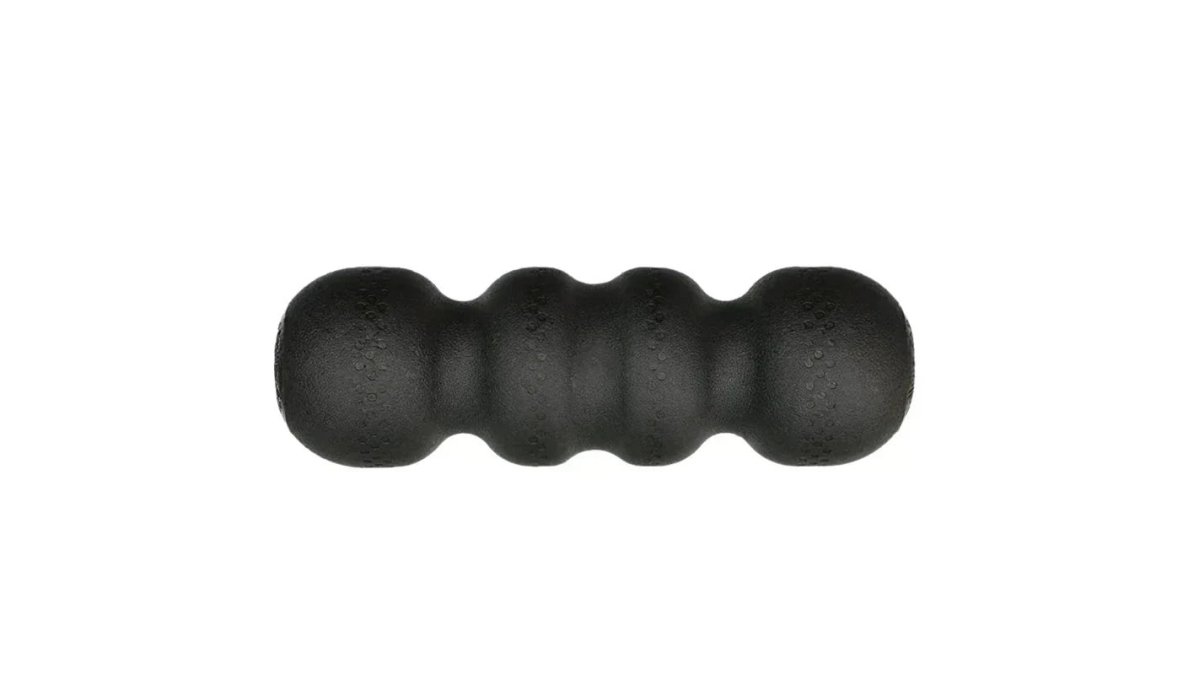
The peanut shape is the reason to buy this one. The center groove cradles the spine while the two lobes press into the muscles along either side, making it the best option for back and neck work, a standard cylinder cannot do that without loading the vertebrae.
High-Density Foam Roller for Full Body
This is the workhorse. The 45 x 15 cm size covers both legs at once for core stability work and stretches across the full back. Made from 100% EPP foam with a 300-pound weight capacity, it holds up to daily use without softening.
Safety, Contraindications, and Material Longevity
Do not roll over an acute injury, a swollen joint, a fracture, or a site of recent surgery. Skip areas with numbness, tingling, or sharp pain, and avoid rolling if you have a bleeding disorder, advanced osteoporosis, or a diagnosed circulatory condition without clearing it with a clinician first. Soreness from training is fair game.
Conclusion
Sore muscles are not a sign you did something wrong. They are a sign you did something. The right roller helps you recover faster so you can get back to training instead of waiting out the ache.
Frequently Asked Questions
Should you use a foam roller on sore muscles?
Yes, foam rolling is safe for most people with delayed onset muscle soreness (DOMS). The pressure from the best foam roller increases blood flow and helps release tension in tight muscles. Avoid rolling directly over acute injuries, bruises, or swollen joints. If you have a medical condition or recent surgery, check with a physical therapist before starting. For standard post-workout soreness, 1-2 minutes per muscle group is enough to see benefits.
What density of foam roller is best for beginners?
Beginners should start with a soft or medium-density foam roller. A soft roller (lower density) applies less pressure, making it easier to tolerate on tender spots. Once your muscles adapt, you can move to a firm or high-density roller for deeper tissue work. The High Density Foam Roller for Full Body is a good step-up option once you are comfortable with basic rolling.
How often should you foam roll for muscle soreness?
You can foam roll daily for sore muscles. Most people see the best results rolling once after a workout or in the evening. Keep sessions short: 30 to 60 seconds per muscle group for maintenance, or up to 2 minutes for very tight areas. If you are training hard, a daily 5-10 minute routine helps manage tightness and supports recovery without overdoing it.
Are vibrating foam rollers worth the extra cost?
Vibrating rollers add vibration to the foam surface, which some people find helps relax muscles faster. The Electric Foam Roller for Muscle Relaxation - Blue Wave Design offers multiple intensity levels. If you struggle to relax during rolling or have very tight muscles, vibration can make the session more effective. If you are on a budget, a standard high-density roller still delivers solid results for soreness relief.
Can foam rolling help with delayed onset muscle soreness (DOMS)?
Research suggests foam rolling can reduce the intensity of DOMS, though it does not eliminate it entirely. The rolling action increases blood flow, reduces inflammation, and helps restore range of motion. Use a firm roller like the Foam Roller Peanut Yoga Roller for targeted back and neck relief. Roll gently for 1-2 minutes per sore area, and avoid pushing through sharp pain.