

Table of Contents
- Why Low Impact Cardio Works for Weight Loss
- Incline Treadmill Walking: The Most Underrated Fat Burner
- Cycling and Indoor Bikes for Sustained Cardio
- Steppers and Vertical Climbers: Full-Body Engagement at Low Impact
- How Long Should Low Impact Cardio Last?
- Your Low Impact Cardio Workout Plan for the Week
- Low Impact Cardio Equipment for Home
- Recovery, Strength Training, and Staying Consistent
- Frequently Asked Questions
Last Updated: September 23, 2026
Why Low Impact Cardio Works for Weight Loss
Low impact cardio is any sustained aerobic activity that keeps at least one foot on the ground or removes landing forces from the joints, and it burns calories as effectively as running when effort is matched. This guide covers the best low impact cardio for weight loss in 2026, plus a weekly plan you can start this week.
Caloric Expenditure Without Joint Stress
The calorie math does not require running. A 30-minute brisk incline walk burns a meaningful number of calories for most adults and is repeatable five or six days a week. Consistency beats intensity for body composition over a three-month horizon.
Incline Treadmill Walking: The Most Underrated Fat Burner
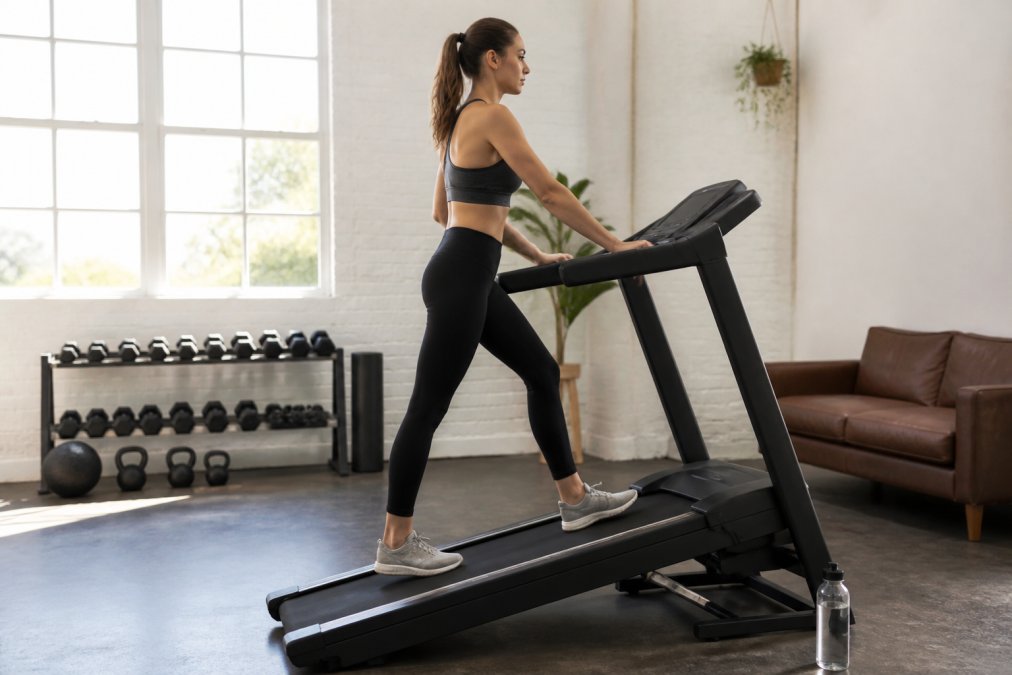
Incline walking is the best starting point for most people because it raises intensity without raising speed. Adding grade recruits the glutes and hamstrings, lifts your heart rate into a working zone, and keeps impact low because you never leave the belt.
Cycling and Indoor Bikes for Sustained Cardio
Indoor cycling delivers some of the highest caloric expenditure of any low impact option because you control resistance continuously. There is no landing phase, so joint stress stays minimal while your heart rate stays elevated all session.
| Equipment | Price | Best For | Key Spec |
|---|---|---|---|
| Portable 3.0HP Incline Treadmill | $168.53 | Incline walking and jogging | 8% incline, 265 lbs capacity |
| 2.25HP Under Desk Walking Pad | $104.32 | Desk work and small spaces | 0.6-4 MPH, TPR cushioning |
| Adjustable Indoor Exercise Bike | $108.00 | Long steady-state sessions | 18 lb flywheel, 300 lbs capacity |
| Lateral Stepper with Resistance Bands | $71.09 | Full-body stepping at home | 330 lbs capacity, under 20dB |
| Vertical Climber | $85.06 | Full-body conditioning | Foldable, 265 lbs capacity |
Steppers and Vertical Climbers: Full-Body Engagement at Low Impact
Stepping machines add vertical movement and upper-body engagement without running's landing forces. A vertical climber mimics rock climbing, so your legs, hips, core, and arms all contribute, raising caloric expenditure per minute.
How Long Should Low Impact Cardio Last?
Low impact cardio should last 30 to 45 minutes per session for most adults, four to five days a week, inside the 150-minute weekly guideline. Beginners do better starting at 20 minutes and adding five minutes weekly.
Steady-State vs. Low-Impact HIIT
Steady-state cardio means holding one moderate pace for the full session. Low-impact HIIT means alternating short hard efforts with recovery, using a bike, stepper, or incline walk so nothing pounds the floor.
| Format | Session Length | Weekly Frequency | Best For |
|---|---|---|---|
| Steady-state | 30-45 minutes | 3-4 sessions | Beginners, recovery days |
| Low-impact HIIT | 15-20 minutes | 2 sessions | Time-crunched, plateaued |
| Active recovery | 20-30 minutes | 1-2 sessions | Between hard sessions |
Your Low Impact Cardio Workout Plan for the Week
A low impact cardio workout plan should mix modalities, keep two days genuinely easy, and never stack hard sessions back to back. The schedule below is built for beginners and scales up by adding minutes, not intensity. It also folds in two short strength sessions, because low impact cardio plus resistance training drives body recomposition, you lose fat while holding onto the muscle that keeps your metabolism and joints supported.
How to Set Your Intensity Without a Lab
Use the talk test as your control dial. Moderate intensity means you can speak in short sentences but not hold a full conversation, that is where most of your weekly fat-burning work should sit. Vigorous low impact work means only a few words come out. If you wear a monitor, keep steady-state sessions where you are working but not gasping, and reserve the top of your range for short intervals only.
Sample 7-Day Schedule for Beginners
- Monday: Incline treadmill walk, 25 minutes at 3% grade, 2.5 MPH
- Tuesday: Indoor bike, 30 minutes steady-state at moderate resistance
- Wednesday: Active recovery walk, 20 minutes flat, easy pace, plus 10 minutes of full-body strength (squats to a chair, rows with the stepper's resistance bands, push-ups)
- Thursday: Low-impact HIIT on the bike, 8 rounds of 40 seconds hard and 80 seconds easy
- Friday: Lateral stepper, 20 minutes with resistance bands for the last 5
- Saturday: Vertical climber or incline walk, 35 minutes moderate, plus 10 minutes of strength (hip hinges, calf raises, band pull-aparts)
- Sunday: Rest or light stretching
Progression Rules That Prevent Plateaus and Injuries
Add five minutes per week to your longest session before adding speed or resistance. Duration first, intensity second. Once your longest session reaches 45 minutes, hold it and instead add one grade point to your incline walk or one resistance step to your bike every two weeks. Deload every fourth week by cutting volume roughly in half, the week most people skip and the one that keeps tendons and joints from accumulating irritation.
If You Are 50 or Older
Recovery capacity drops with age, so the same weekly minutes need more spacing. A common adjustment is three cardio sessions instead of five, all low impact, plus two strength sessions focused on balance and hip stability. Walking, cycling, and stepping remain the safest defaults because there is no landing phase. If you have joint pain or a cardiac condition, clear the plan with your physician first, and progress by adding one variable at a time rather than stacking duration, grade, and resistance in the same week.
Portable 3.0HP Incline Treadmill for →
If You Are Short on Time
Two 20-minute low-impact HIIT sessions plus two 30-minute steady-state sessions will hit the weekly guideline for most adults. Split them across four days rather than cramming them into two, recovery between sessions is part of the training.
Low Impact Cardio Equipment for Home
The best low impact cardio equipment for home is whatever you will use without rearranging your life. Space, noise, and setup friction decide adherence more than specs do.
Recovery, Strength Training, and Staying Consistent
Recovery and resistance training are what let you keep doing cardio. Two short strength sessions a week protect bone density, range of motion, and musculoskeletal health, keeping your joints resilient enough to handle volume. What determines whether you are still training in week eight is what you do in the hours after.
A Post-Workout Recovery Protocol for Joint Health
Pair each cardio session with five minutes of easy movement afterward instead of stopping cold. A slow walk and a few hip and calf stretches lower perceived exertion going into your next session. A simple protocol most practitioners find effective:
- Cool-down (5 minutes): Walk at a conversational pace until your breathing normalizes. This clears metabolic byproducts and brings your heart rate down gradually rather than abruptly.
- Mobility (5-8 minutes): Ankle circles, hip flexor stretches, and gentle hamstring and calf stretches. Low impact work still loads the same tissues repeatedly, so restoring range of motion after each session matters more than after varied high-impact training.
- Hydration and protein: Drink water through the day, and include a protein source within a couple of hours of training. Protein supports muscle repair, and muscle keeps your joints supported and your metabolism elevated.
- Sleep: The single highest-leverage recovery tool. Most adults do best with seven to nine hours, and shortchanging sleep raises perceived exertion on your next session and lowers adherence.
- Deload weeks: Every fourth week, cut your cardio volume roughly in half. Tendons and connective tissue adapt more slowly than your heart and lungs, so the deload is where they catch up.
Warning Signs You Need More Recovery, Not More Cardio
Persistent joint ache lasting more than a day or two after a session, a resting heart rate that stays elevated, or a sudden drop in motivation are all signals to back off. The fix is usually fewer minutes, not more, swap a hard session for an easy walk and reassess in a week.
How Strength Training Fits Around Cardio
Schedule strength on the same days as easy cardio or on separate days, but avoid stacking heavy lower-body strength directly before a hard interval session. A practical pattern is strength after an easy walk, or on its own day with a short warm-up walk. Two sessions of 10 to 20 minutes covering squats, hinges, pushes, pulls, and a carry cover the major patterns without adding much time.
Staying Consistent When Motivation Fades
The consistency problem is real. The most effective fix is lowering the barrier: keep the machine set up, keep shoes by it, and commit to a minimum of ten minutes on days you do not feel like training. Ten minutes almost always becomes twenty-five once you start. Pair that with a visible log and a fixed time of day, and the routine stops depending on how you feel.
Frequently Asked Questions
Can you lose weight doing only low impact cardio?
Yes. Weight loss depends on caloric expenditure and consistency, not impact level. A 150-pound person burns roughly 300 to 400 calories per hour walking at an incline, which adds up over a week. Pair low impact cardio with a modest calorie deficit and you can lose weight without stressing your joints. The key is showing up regularly and gradually increasing duration or incline as your aerobic capacity improves.
How does low impact cardio compare to high-impact for weight loss?
High-impact cardio like running burns more calories per minute, but low impact cardio lets you train longer and more often because it causes less joint stress. Over a full week, the total caloric expenditure can be similar. Low impact options also support better exercise adherence, especially if you have knee, hip, or ankle concerns. Many people combine both: low impact for volume, short high-intensity bursts for metabolic conditioning.
How often should I do low impact cardio for weight loss?
Aim for 150 to 300 minutes of moderate-intensity cardio per week, spread across 4 to 6 sessions. That works out to roughly 30 to 60 minutes per session. Beginners can start with 20-minute sessions three times a week and add time gradually. If you are also doing resistance training, schedule cardio on separate days or after your strength work to preserve muscle and support body composition goals.
What are the best low impact cardio exercises for beginners?
Walking on a flat or slightly inclined treadmill, using a stationary bike, and stepping on a mini pedal stepper are all beginner-friendly. These movements keep one foot grounded or supported at all times, reducing joint stress. Start with 15 to 20 minutes at a pace where you can still hold a conversation. Increase duration before intensity, and pay attention to perceived exertion rather than chasing a specific heart rate zone right away.