

Table of Contents
- Why Muscle Recovery Tools Matter for Your Training
-
Best Muscle Recovery Tools for Home Gyms: Our Top Picks
- Theragun PRO Plus: Multi-Modal Deep Tissue Recovery
- Hyperice Normatec Elite Legs: Advanced Compression for Athletes
- TriggerPoint GRID Foam Roller: Versatile and Affordable
- ROLL Recovery R8: Hands-Free Deep Tissue Massage
- Chirp Wheel+: Targeted Spinal Relief and Mobility
- Budget-Friendly Alternatives: Topical Balms and Scrapers
- How to Use a Foam Roller for Hip Flexor Relief
- Post-Workout Recovery Routine for Athletes
- Recovery Tools by Workout Type: What Actually Works
- Common Recovery Mistakes and Safety Considerations
- Conclusion
Last Updated: August 17, 2026
Why Muscle Recovery Tools Matter for Your Training
Your muscles grow during recovery, not during workouts. When you push intensity, you create microscopic damage in muscle fibers. Recovery tools accelerate repair, reduce soreness, and prepare your body for the next session faster than passive rest alone.
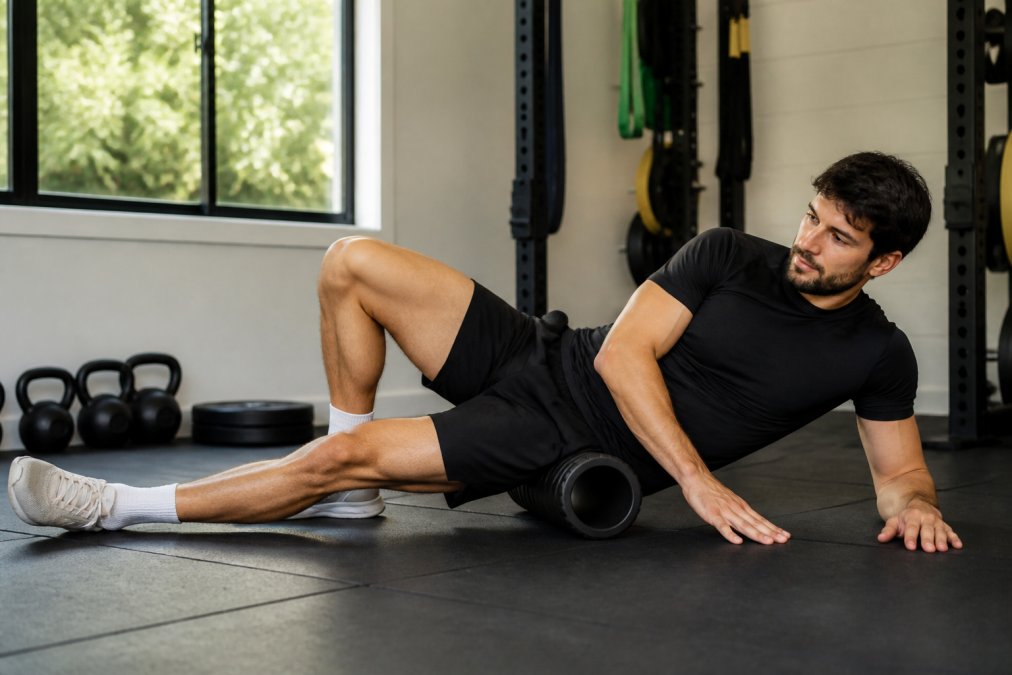
Whether managing delayed onset muscle soreness (DOMS), improving range of motion, or optimizing tissue repair, the right equipment shortens recovery windows and keeps you consistent. At Bodyhackfitness, we've curated premium recovery tools designed to address every recovery need, from foam rolling and percussion therapy to compression and targeted stretching devices.
Most home gym setups neglect recovery entirely. Myofascial release, vibration therapy, and compression therapy aren't luxuries, they're practical solutions for managing muscle tension, improving circulation, and preventing the stiffness that derails consistency.
Best Muscle Recovery Tools for Home Gyms: Our Top Picks
1. Bodyhackfitness: Curated Recovery Equipment Selection
Bodyhackfitness combines carefully selected premium recovery tools with the guidance you need to use them effectively. Rather than selling generic equipment, it focuses on tools that deliver measurable improvements in post-workout relief and tissue health.
The platform emphasizes a complete recovery regimen, pairing percussion therapy devices with compression options, foam rollers with targeted relief wheels, and topical solutions for different recovery phases. Every tool is vetted for durability and effectiveness.
Key advantages:
- Carefully curated selection ensures quality over quantity
- Focus on both training and recovery equipment creates a complete fitness environment
- Customer-focused experience with guidance on tool selection
- Fast, reliable shipping for home gym setup
2. Theragun PRO Plus: Multi-Modal Deep Tissue Recovery
The Theragun PRO Plus combines four distinct recovery modalities: percussive massage therapy, vibration therapy, heat therapy, and LED light therapy. The percussion mechanism delivers 16mm amplitude at five speed settings (1,800-2,400 pulses per minute). Integrated vibration therapy operates at three distinct frequencies (47, 50, 53 Hz), targeting different tissue responses. Heat therapy ranges from 113°F to 131°F, enhancing blood flow and tissue elasticity. Near-infrared LED light supports cellular recovery processes.
For athletes managing significant muscle soreness or training at high intensity, this comprehensive approach accelerates neuromuscular recovery and reduces inflammation. The triangle grip design allows you to reach difficult angles without contortion.
At $599.00-$649.99, it's a premium investment. For serious home gym users, the multi-modal capability justifies the cost.
Theragun PRO Plus strengths:
- Combines percussion, vibration, heat, and light in one device
- Five speed settings allow customization for different muscle groups
- Guided app experiences provide structured recovery protocols
- QuietForce technology reduces noise during use
Theragun PRO Plus limitations:
- High price point creates entry barrier for casual users
- Heavier than lightweight massage guns
- Overkill for basic foam rolling or stretching needs
3. Hyperice Normatec Elite Legs: Advanced Compression for Athletes
Compression therapy uses dynamic air pressure to enhance circulation, reduce inflammation, and accelerate lactate clearance from muscles. The Hyperice Normatec Elite Legs applies this principle with wireless convenience, no hoses, no separate control unit, just the boots and Bluetooth control.
Seven intensity levels and five distinct compression zones allow customization. The Zone Boost feature delivers concentrated pressure to problem areas. Sessions can be programmed through the app for consistency across recovery days.
This tool excels for athletes managing high-volume leg training or recovering from intense lower-body sessions. Compression therapy is particularly effective for reducing delayed onset muscle soreness in the quads, hamstrings, and calves.
Hyperice Normatec Elite Legs strengths:
- Completely wireless design with Bluetooth app control
- Seven intensity levels with five compression zones
- TSA-approved for travel
- Effective for reducing leg fatigue and swelling
Hyperice Normatec Elite Legs limitations:
- Very high cost relative to basic compression sleeves
- Limited to leg recovery
- Requires charging between sessions
4. TriggerPoint GRID Foam Roller: Versatile and Affordable
The GRID Foam Roller's patented multi-density surface mimics a massage therapist's hands, applying variable pressure across different tissue types. The hollow core design provides firmness without excessive density that can damage tissue.
At $39.99, this is accessible for anyone building a recovery toolkit. The 13-inch length fits most home spaces and supports up to 500 lbs static load. You can target major muscle groups: quads, IT bands, hamstrings, calves, glutes, back, and shoulders.
TriggerPoint GRID strengths:
- Affordable entry point for myofascial release
- Versatile for targeting multiple muscle groups
- Durable construction rated for 500 lbs load
- Widely available and well-reviewed
TriggerPoint GRID limitations:
- May feel insufficiently firm for intense deep tissue work
- 13-inch length is shorter than some alternatives
- Requires learning proper rolling technique to avoid bruising
5. ROLL Recovery R8: Hands-Free Deep Tissue Massage
The R8 is a portable deep tissue massage tool that doesn't require floor work. Its patented self-adjusting technology applies consistent pressure regardless of body size or muscle mass. You control intensity through your body weight, lean in for more pressure, ease back for less.
The design targets IT bands, quads, hamstrings, calves, shins, glutes, and arms. Interchangeable R8-Inserts allow you to customize the feel, softer for sensitive areas, firmer for dense muscle groups. You don't need to be on the floor, you can use it while sitting, standing, or lying down.
At $138.99-$149.00, it costs nearly four times more than a basic foam roller. You're paying for convenience and precision.
ROLL Recovery R8 strengths:
- Self-adjusting technology eliminates guesswork on pressure
- Hands-free design allows passive massage
- Portable and travel-friendly
- FDA-registered medical device status
- Interchangeable inserts for customization
ROLL Recovery R8 limitations:
- Higher price than traditional foam rollers
- Requires learning the technique for optimal results
- Less versatile than full-length foam rollers for certain areas
6. Chirp Wheel+: Targeted Spinal Relief and Mobility
The Chirp Wheel+ features a spine channel that aligns with your vertebral column, allowing safe, targeted pressure without compressing the spine itself. Four sizes (12, 10, 6, and 4 inches) provide progressive intensity. Start with the larger wheel for gentle extension; progress to smaller wheels for deeper tissue work.
This tool is particularly effective for addressing back stiffness from desk work or training. At $29.99-$44.99 for a single wheel, it's reasonably priced.
Chirp Wheel+ strengths:
- Spine-specific design with channel alignment
- Four sizes allow progressive intensity
- Effective for improving spinal mobility and reducing stiffness
- Relatively affordable
- Helps with posture and flexibility
Chirp Wheel+ limitations:
- Primarily targets the spine; less versatile for other muscle groups
- May be too intense for beginners without proper progression
- Requires learning correct technique to avoid discomfort
7. Budget-Friendly Alternatives: Topical Balms and Scrapers
Tiger Balm Ultra Strength ($5.49-$12.99 for 0.63 oz or 1.7 oz) delivers concentrated camphor and menthol for warming relief. Dr. Bronner's Arnica-Menthol Magic Balm ($4.09-$14.99 for 2 oz) offers a natural alternative with organic ingredients. FeelFree Sport 3-in-1 Muscle Scraper ($24.99-$49.99) uses instrument-assisted soft tissue mobilization to break up adhesions and scar tissue.
These alternatives work best as supplements to primary recovery tools, not replacements. Topical balms provide sensory relief but don't address underlying muscle tension. Scrapers are effective for targeted work but require more skill than foam rolling.
| Tool | Price | Best For | Key Limitation |
|---|---|---|---|
| Tiger Balm Ultra Strength | $5.49-$12.99 | Quick warming relief | Heavy texture, strong scent |
| Dr. Bronner's Arnica-Menthol | $4.09-$14.99 | Natural formulation preference | Less intense than Tiger Balm |
| FeelFree Sport Scraper | $24.99-$49.99 | Targeted adhesion breakdown | Requires proper technique |
How to Use a Foam Roller for Hip Flexor Relief
The hip flexors, primarily the psoas and iliacus, tighten from prolonged sitting and high-volume leg training. Tight hip flexors restrict range of motion, create lower back compensation patterns, and reduce athletic performance. Foam rolling addresses this directly.
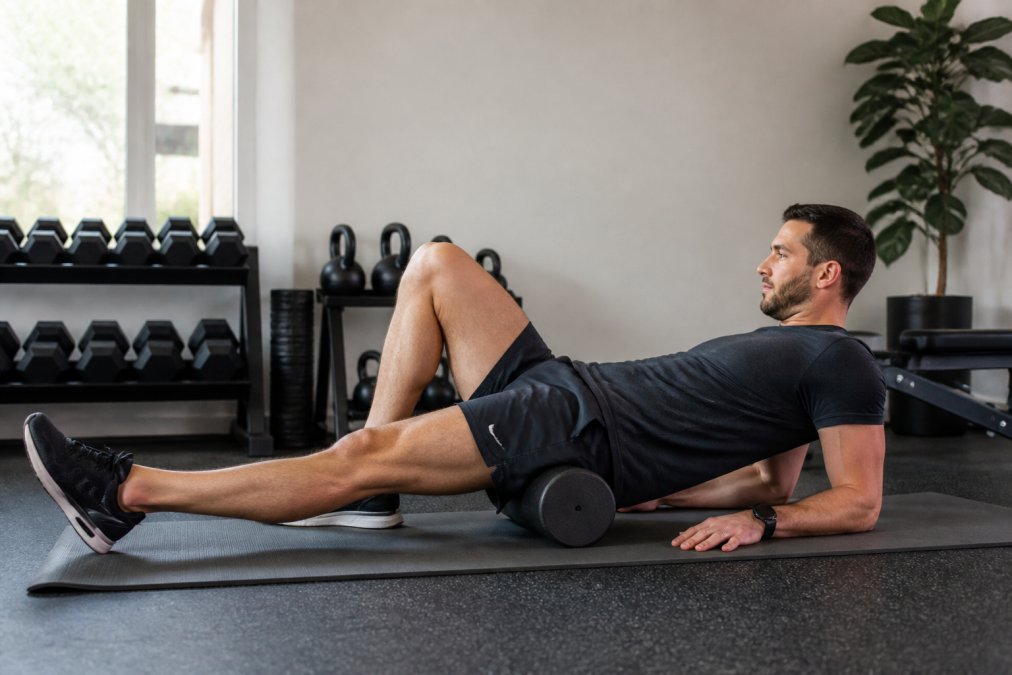
Proper hip flexor foam rolling technique:
-
Position yourself on the floor. Lie face-down with the foam roller positioned just below your hip bone, perpendicular to your body. Place your forearms on the ground for support.
-
Apply controlled pressure. Your body weight provides the pressure. Start with light pressure by shifting weight to one leg. The goal is mild discomfort (4-5 out of 10 intensity), not sharp pain.
-
Roll slowly. Move the roller up and down along the front of the hip and thigh in 2-3 inch increments. Spend 30-45 seconds per leg.
-
Target the psoas specifically. Angle your body slightly toward the side you're rolling. This shifts pressure from the quadriceps to the deeper psoas muscle.
-
Avoid aggressive pressure. The hip flexors are sensitive. Excessive pressure creates inflammation rather than relief.
-
Combine with stretching. After rolling, perform a 90-90 hip stretch or low lunge to lengthen the tissue you just mobilized.
Frequency: 3-4 times per week for most athletes. For maintaining healthy hip mobility, 2-3 times weekly is sufficient.
Timeline: Expect noticeable range of motion improvements within 2-3 weeks of consistent rolling.
Post-Workout Recovery Routine for Athletes
A structured recovery routine accelerates tissue repair, reduces inflammation, and prepares your body for the next training session.
Immediate post-workout (0-30 minutes):
Start with hydration and carbohydrate intake. Consume protein and carbohydrates within 30 minutes of training to support tissue repair and glycogen repletion. Follow with 5-10 minutes of light movement: walking, easy cycling, or dynamic stretching to enhance blood flow.
Short-term recovery (30 minutes to 2 hours post-workout):
Apply compression therapy if available for 15-20 minutes. Use percussion therapy or foam rolling on primary working muscles, spending 60-90 seconds per muscle group. The goal is myofascial release and increased blood flow, not aggressive deep tissue work immediately post-workout.
Evening recovery (4-8 hours post-workout):
Perform deeper myofascial release with foam rollers or massage tools. Include stretching focused on range of motion, holding stretches for 30-45 seconds on muscles trained that day.
Recovery day routine (24-48 hours post-workout):
Combine light movement with recovery tools. Walk, swim, or perform easy yoga, nothing intense, just movement that promotes circulation without creating additional muscle damage. Use all available recovery modalities: foam rolling, stretching, compression if available, and topical relief if needed.
Recovery Tools by Workout Type: What Actually Works
Different training modalities create different recovery demands. Matching your recovery tools to your training type accelerates adaptation.
Strength training (heavy compound lifts):
Strength work creates significant muscle damage and neuromuscular fatigue. Recovery priorities: myofascial release to address tissue tension, compression to manage inflammation, and stretching for range of motion. Best tools: foam rollers for large muscle groups, percussion therapy for deep tissue work, and compression boots for lower body.
Conditioning and metabolic work:
High-intensity conditioning creates systemic fatigue and elevated inflammation. Recovery priorities: enhanced circulation to clear metabolic byproducts, active recovery to promote blood flow, and hydration. Compression therapy is highly effective for metabolic recovery.
Accessory and isolation work:
Isolation work creates localized muscle damage without systemic fatigue. Recovery priorities: targeted myofascial release on worked muscles, stretching for tissue elasticity, and mild compression if available. Best tools: foam rollers, massage guns, and specialized tools like the Chirp Wheel+.
Mixed modal training (strength + conditioning):
Combination training demands comprehensive recovery. Use your full recovery toolkit: compression for systemic recovery, percussion for deep tissue, foam rolling for myofascial release, and stretching for mobility. Recovery frequency: 4-5 recovery sessions weekly for serious athletes.
Common Recovery Mistakes and Safety Considerations
Recovery tools are powerful but require proper application. Misuse creates injury risk rather than benefits.
Mistake 1: Aggressive pressure on sensitive areas. The anterior shin, front of the thigh near the knee, and lower lumbar spine are sensitive to aggressive pressure. Start with light pressure and progress gradually.
Mistake 2: Ignoring pain signals. There's a difference between productive discomfort (4-5 out of 10 intensity) and pain (7-8+ intensity). Pain indicates tissue irritation. Stop immediately if you experience sharp or shooting pain.
Mistake 3: Using recovery tools as a substitute for proper training form. Recovery tools manage the consequences of training. They don't fix underlying movement problems.
Mistake 4: Inconsistent recovery routine. One foam rolling session per week won't produce results. Three 15-minute recovery sessions weekly outperform one aggressive 45-minute session.
Mistake 5: Neglecting hydration during recovery. Tissue repair requires hydration. Drink water throughout recovery sessions and especially in the 2-4 hours post-workout.
Safety considerations for specific tools:
Percussion therapy should start at lower speeds on sensitive areas. Never use percussion directly on bone or joints. Compression therapy should not exceed 60 mmHg pressure for extended sessions. Muscle scrapers require proper technique, aggressive scraping causes bruising. Hip flexor rolling requires light pressure; aggressive pressure creates inflammation.
Conclusion
Muscle recovery tools are the bridge between hard training and consistent progress. Whether managing soreness from strength training, accelerating recovery from conditioning work, or maintaining mobility between sessions, the right tools make the difference between staying consistent and hitting plateaus.
Building a complete recovery toolkit doesn't require spending thousands. Start with a quality foam roller (TriggerPoint GRID at $39.99 offers excellent value), add a specialized tool for your primary weakness (Chirp Wheel+ for back tension, ROLL Recovery R8 for hands-free convenience), and supplement with affordable options like topical balms.
For serious athletes seeking comprehensive recovery, Bodyhackfitness offers a carefully curated selection of premium recovery tools that work together to address every aspect of tissue health, circulation enhancement, and performance optimization. Train harder and recover faster by building your complete recovery environment at home. Shop now and unlock your full potential.
Frequently Asked Questions
What are the most effective recovery tools for muscle soreness?
The most effective tools depend on your soreness type and budget. Foam rollers like the TriggerPoint GRID ($39.99) address delayed onset muscle soreness through myofascial release and improved blood flow. Massage guns like Theragun PRO Plus ($649.99) use percussive therapy with heat and vibration for deeper tissue work. Compression tools like Hyperice Normatec Elite Legs reduce inflammation and swelling. For budget-conscious fitness enthusiasts, topical balms with menthol and arnica provide immediate relief. Combining 2-3 tools in your recovery routine works better than relying on one.
How do recovery tools help improve athletic performance?
Recovery tools enhance performance by accelerating tissue repair, reducing inflammation, and restoring range of motion after intense training. Foam rolling and massage guns increase blood flow and circulation to muscles, delivering oxygen and nutrients needed for repair. Compression therapy promotes lymphatic drainage, removing metabolic waste that causes fatigue. Better recovery means less delayed onset muscle soreness (DOMS), faster return to training intensity, and improved neuromuscular performance. Athletes who use structured recovery protocols report 15-20% faster recovery times and better workout consistency.
Are massage guns worth the investment for post-workout relief?
Massage guns deliver percussive therapy that mimics a deep tissue massage, making them valuable for breaking up muscle tension and trigger points. Devices like Theragun PRO Plus combine percussion with vibration, heat, and LED therapy for comprehensive relief. They're worth the investment if you train 4+ times weekly and struggle with muscle tension or stiffness. However, if you're starting recovery, a foam roller ($39-50) provides similar myofascial release benefits at a fraction of the cost. Many athletes use both: foam rollers for daily maintenance and massage guns for deeper, targeted work.
How often should fitness enthusiasts use recovery accessories?
Recovery tool frequency depends on training intensity. After high-intensity workouts, use foam rollers and massage tools within 2-4 hours post-exercise when muscles are still warm and responsive. For daily users: 5-10 minutes of foam rolling or massage gun work daily supports tissue elasticity and circulation. Compression therapy works best for 20-30 minutes post-workout or before bed. Topical balms can be applied 2-3 times daily as needed. Listen to your body: soreness and stiffness signal when to increase recovery tool use. Overuse of aggressive tools like muscle scrapers can cause bruising, so limit intense scraping to 1-2 times weekly.
What's the difference between foam rolling and massage gun therapy?
Foam rolling uses sustained pressure and your body weight to apply myofascial release, improving circulation and tissue elasticity through slow, controlled movements. Massage guns use rapid percussive vibrations (typically 40-60 Hz) to stimulate muscles, break up tension, and increase blood flow without requiring floor work. Foam rolling works best for general muscle soreness and flexibility improvement, while massage guns target specific trigger points and deeper tissue work. Foam rollers are affordable ($40-100), portable, and require no battery. Massage guns are more expensive ($200-650+) but require less physical effort and provide multi-modal therapy (heat, vibration, percussion). Most athletes benefit from using both in their recovery routine.
This article was written using GrandRanker