


Table of Contents
- Why Recovery Tools Matter for Runners Over 40
- Quick Comparison Table
- 1. NNEDSZ Green Massage Gun: Portable Percussive Relief
- 2. Electric Foam Roller for Muscle Relaxation: Vibration-Assisted Recovery
- 3. Foam Roller Peanut Yoga Roller: Targeted Back and Neck Relief
- Building Your Post-Run Recovery Routine
- Travel Muscle Recovery Bundle and Foot Support: Complete Recovery Kit
- How We Evaluated These Tools
- Frequently Asked Questions
Last Updated: October 10, 2026
Why Recovery Tools Matter for Runners Over 40
Running after 40 demands a different approach to recovery, your body takes longer to bounce back, soreness lingers deeper, and joint stress accumulates faster. This is where recovery tools for runners become essential, not optional.
The challenge is what happens in the 24-48 hours after. Delayed-onset muscle soreness peaks around day two, and without targeted intervention, tightness compounds into the next workout. Adding the right recovery tools transforms training consistency.
Recovery tools for runners break up muscle knots, accelerate blood flow, and prevent soreness from compounding. The best combine portability, durability, and genuine effectiveness, reducing soreness, not just providing temporary relief.
Quick Comparison Table
| Tool | Price | Best For | Key Advantage |
|---|---|---|---|
| NNEDSZ Green Massage Gun | $74.02 | Quick muscle relief | 6 adjustable speeds, portable |
| Electric Foam Roller | $288.68 | Deep tissue recovery | Vibration-assisted, includes storage bag |
| Foam Roller Peanut | $86.60 | Targeted back/neck tension | Peanut shape targets specific muscles |
| Travel Muscle Recovery Bundle | $85.41 | Complete portable kit | Multiple tools in one package |
| Adjustable Foot Support | $12.23 | Plantar fasciitis relief | Affordable, night splint option |
| Standard Foam Roller | $81.42 | General muscle relaxation | Lightweight, portable 45cm option |
1. NNEDSZ Green Massage Gun: Portable Percussive Relief
The NNEDSZ Green Massage Gun delivers percussive therapy at six adjustable speeds, cutting through muscle soreness faster than foam rolling alone.

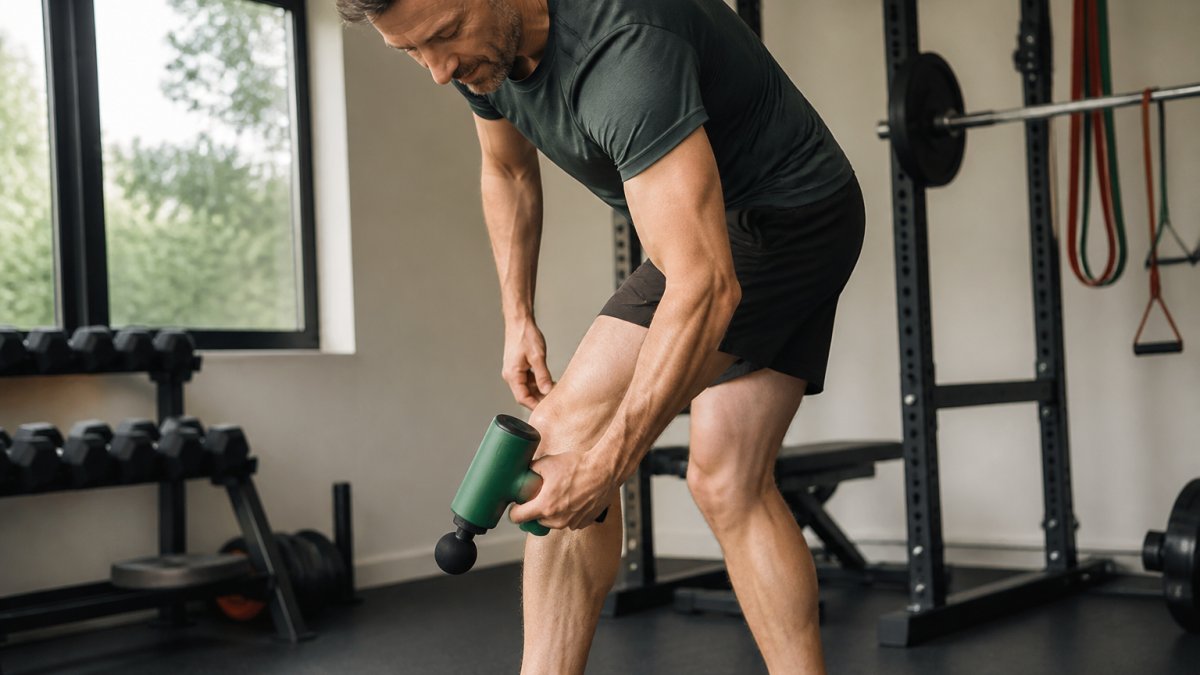
Four massage heads target different muscle groups. At $74.02, it's practical for home use with a large-capacity battery.
For runners over 40, it handles muscles that tighten fastest, calves, glutes, quads. A massage gun breaks up knots in 2-3 minutes per muscle group versus 15 minutes with a foam roller. Ergonomic design prevents fatigue from awkward angles.

2. Electric Foam Roller for Muscle Relaxation: Vibration-Assisted Recovery
The Electric Foam Roller for Muscle Relaxation combines broad muscle coverage with vibration therapy, featuring multiple intensity levels.

It handles larger muscle groups more efficiently than a massage gun, covering entire muscles in one pass. Vibration adds benefit without requiring body weight, important for runners over 40 with shoulder or wrist issues.
At $288.68, high-density EVA foam resists deformation, and the included storage bag enables portability. Multiple vibration settings adjust to soreness level.
3. Foam Roller Peanut Yoga Roller: Targeted Back and Neck Relief
The peanut-shaped design solves a specific problem: most runners neglect their upper back and neck, leading to locked shoulders during races.
Its two rounded lobes separated by a channel target upper back, neck, and shoulder tension with precision.
At $86.60, firm EPP foam lasts longer than EVA. For runners over 40 with postural issues, this becomes a staple.
Building Your Post-Run Recovery Routine
Recovery tools only work if used consistently. A one-size-fits-all approach fails because runners over 40 have different tightness patterns, training volumes, and recovery needs.
The Core 10-Minute Post-Run Routine
-
Massage gun on lower legs (2 minutes). Use the pointed head on calves at medium speed, pausing on tight spots for 5-10 seconds. Switch to the flat head for shins. This breaks up knots and increases blood flow.
-
Foam roller on quads and hamstrings (2.5 minutes). Move slowly from hip to knee on quads (1 minute per leg), then glute to knee on hamstrings (30 seconds per leg). Pause on sore spots for 3-5 seconds rather than rolling over them.
-
Peanut roller on upper back (2 minutes). Position perpendicular to your spine between shoulder blades. Lie on your back with knees bent and slowly roll up and down. This addresses postural tightness that accumulates during running and sitting.
-
Foot massage or trigger point ball on plantar fascia (1.5 minutes). If you have foot pain, use a massage ball on the arch, rolling from heel to toe. Skip if pain-free.
-
Light stretching or mobility work (2 minutes, optional). Gentle static stretches on hip flexors, calves, and hamstrings. Hold each for 20-30 seconds. Stretching after rolling is more effective because tissue is warm.
Timing and Temperature Matter
Do this routine within 30 minutes of finishing your run while muscles are warm. If you shower immediately after, do recovery work first, warm water afterward feels better and won't cool muscles.
Frequency by Training Type
- Easy runs (under 60 minutes). Massage gun on calves (1 minute) plus quad foam rolling (2 minutes).
- Moderate runs (45-90 minutes). Full routine as described above.
- Hard workouts. Full routine plus 2 extra minutes on the most sore area.
- Long runs (90+ minutes). Full routine plus 3-5 minutes on glutes and hamstrings. Consider compression sleeves for 2-3 hours post-run if needed.
- Rest days. Optional light 5-minute roll or skip if fresh.
Symptom-Specific Modifications
NNEDSZ Green Massage Gun - 6-Speed Deep Tissue Massager with 4 Professional →
If you have chronic problem areas, adjust your routine:
- Plantar fasciitis or arch pain. Add 2-3 minutes of foot massage or trigger point ball work daily, even on rest days. Wear the night splint 4-5 nights per week. This is one of the few areas where daily recovery work prevents progression to chronic pain.
- Tight calves or Achilles tendinopathy history. Spend 3 minutes on calf massage gun work post-run. Avoid aggressive foam rolling on the Achilles tendon itself; focus on the calf muscle belly. Consider compression sleeves for 2-3 hours post-run on hard workout days.
- Lower back tightness or stiffness. Prioritize the peanut roller (3 minutes instead of 2) and add 1 minute of trigger point ball work on your glutes and lower back. Upper back tightness often pulls your lower back out of alignment.
- Hip or glute soreness. Add 1-2 minutes of foam roller work on your glutes and hip flexors. Use the trigger point ball on the piriformis (deep glute muscle) if you have hip pain.
- Knee pain or patellar tendinopathy. Focus on quad and hamstring balance: spend equal time on both. Avoid aggressive massage gun work directly on the knee joint; work the muscles above and below instead. Consider compression sleeves on hard workout days.
Common Mistakes and How to Fix Them
- Rolling too fast. Move at 1-2 inches per second, pausing on tight spots. Slow rolling is more effective.
- Skipping the routine on hard workout days. This is when you need it most. A 10-minute routine prevents soreness from compounding.
- Treating recovery tools as optional. For runners over 40, consistent use is the difference between training consistently and dealing with nagging injuries.
- Using the same routine regardless of how you feel. Add 5 minutes if unusually sore; cut to 5 minutes if fresh.
- Applying ice and heat incorrectly. Use ice within 24 hours of acute injury; use heat for chronic tightness lasting more than 48 hours.
Building the Habit
Make the routine automatic by keeping tools visible, using the same location, setting a phone reminder, and pairing it with an existing habit like your post-run meal. This 10-minute investment is the single most effective way to stay healthy and consistent.
Travel Muscle Recovery Bundle and Foot Support: Complete Recovery Kit
The Travel Muscle Recovery Bundle combines five tools: trigger point ball, roller stick, two foot massagers, and mini foam roller. It targets knots, works calves and quads, and addresses plantar fasciitis and arch pain.
At $85.41, the bundle costs less than buying tools individually. The mini foam roller is compact enough for carry-on travel and delivers real massage benefit.
Pair with the Adjustable Foot Inversion Corrector ($12.23), a night splint that keeps plantar fascia stretched, reducing morning stiffness and pain.
How We Evaluated These Tools
Recovery tools are often marketed with broad claims.
Evidence Quality and Realistic Outcomes
Percussive massage guns have moderate evidence supporting soreness reduction. Studies show 2-3 minutes of therapy can reduce DOMS by 10-20% when applied within 24 hours of hard exercise. Expect soreness to decrease noticeably, not vanish. If soreness limits your next workout, you likely need more rest or training adjustment.
Foam rolling improves range of motion and reduces perceived tightness by breaking up adhesions and increasing blood flow, which may prevent compensation injuries.
Compression shows mixed evidence for modest reductions in swelling and soreness when worn 2-4 hours post-workout, but it's not a substitute for movement and elevation.
Ice is most useful within 48 hours of acute injury; heat works better for chronic tightness. The rule: ice for acute swelling or sharp pain; heat for dull, chronic tightness.
When to Seek Professional Care Instead
Seek professional care if pain is sharp and worsens with specific movements, swelling is severe or asymmetrical, soreness doesn't improve after 5-7 days, you have a history of chronic issues with new soreness in that area, or pain radiates with numbness or tingling. Recovery tools manage normal soreness but are not replacements for rest or clinical care.
Selection Criteria: Age-Specific Factors for Runners Over 40
Runners over 40 have different recovery needs: muscle recovery takes longer (48-72 hours), joint stress accumulates faster, upper body strength may be limited, and foot issues are more common. Tools selected here address these factors while offering evidence-based benefit and practical usability. A tool used daily outperforms a premium device that requires too much effort or space.
Frequently Asked Questions
What recovery tools are best for runners over 40?
The most effective recovery tools for runners over 40 include foam rollers for self-myofascial release and massage guns for percussive muscle therapy. A combination approach works best: use a foam roller after easy runs for 5-10 minutes per muscle group and apply a massage gun on high-soreness days. The Travel Muscle Recovery Bundle offers multiple tools in one affordable package at $85.41, making it ideal for runners building a home recovery station.
Do foam rollers actually help runners recover after a run?
Foam rollers improve post-run recovery by increasing blood flow to tight muscles and breaking down adhesions that restrict movement. For runners over 40, this is especially valuable because delayed-onset muscle soreness peaks 24-48 hours after hard efforts. Rolling for 60-90 seconds per muscle group on the day after a long run reduces tightness and accelerates recovery time. The Yoga Foam Roller at $81.42 provides high-density EVA foam that targets deep tissue, making it effective for calf, quad, and IT band work.
How often should runners use a massage gun or foam roller?
Use foam rollers 3-5 times per week, especially after runs that trigger soreness. Massage guns are best used 2-3 times per week on high-soreness days. The NNEDSZ Green Massage Gun at $74.02 offers 6 adjustable speed levels, so you can start gentle on recovery days and increase intensity before harder sessions.
What is the best way to recover after a long run for runners over 40?
A complete post-run recovery routine includes: hydration, light stretching, foam rolling, and adequate sleep. Runners over 40 benefit from starting recovery immediately post-run rather than waiting hours. The Electric Foam Roller at $288.68 combines vibration with deep tissue massage. Consistency matters more than intensity: a short daily routine outperforms sporadic intense sessions.
When should a runner seek medical advice for pain that does not improve?
Seek clinical care if pain persists beyond 10-14 days despite consistent recovery tool use, worsens during or after runs, or is accompanied by swelling, warmth, or visible bruising. Runners over 40 should also consult a healthcare provider if sharp pain occurs (versus dull soreness), pain limits your ability to walk normally, or you develop pain in joints rather than muscles. Recovery tools address muscle soreness and tightness, not structural injuries, so professional evaluation is essential when standard recovery fails.