

Table of Contents
- What Body Hack PT Actually Is
- Manual Therapy Techniques in Body Hack PT
- Functional Movement Assessment for Injury Prevention
- Physical Therapy Recovery Timeline: What to Expect
- Physical Therapy for Athletes: Performance Optimization
- Home-Based Body Hack Routines vs. Traditional PT
- Recovery Metrics and How to Track Progress
- Getting Started with Body Hack PT
Last Updated: August 15, 2026
What Body Hack PT Actually Is
Body Hack PT is a methodology combining evidence-based physical therapy principles with accessible home-based recovery techniques designed to accelerate rehabilitation and optimize physical performance. Unlike traditional clinic-only approaches, body hack pt emphasizes patient autonomy through structured self-directed protocols incorporating manual therapy concepts, functional movement principles, and conditioning strategies.
Traditional physical therapy requires weekly appointments and ongoing practitioner dependency. Body hack pt flips this model: you learn evidence-based techniques, apply them systematically at home, and track measurable progress through recovery metrics that mirror what clinicians monitor professionally. Consistent daily application of correct principles compounds over time in ways a single weekly session cannot.
The methodology rests on three pillars: understanding your movement patterns through functional assessment, applying targeted interventions based on those patterns, and measuring recovery trajectory through objective metrics. This creates a feedback loop where you're tracking progress rather than guessing.
Manual Therapy Techniques in Body Hack PT
Manual therapy in body hack pt refers to hands-on techniques that mobilize soft tissue, improve range of motion, and reduce neuromuscular restrictions. These evidence-based interventions are adapted for self-application or partner-assisted execution in home settings.
Soft tissue mobilization targets muscle tension through sustained pressure or controlled movement patterns. Self-myofascial release using foam rollers or massage balls applies this principle: you apply pressure to restricted areas, hold for 30-90 seconds, and allow tissue to gradually release. This mimics hands-on massage with you controlling intensity and duration.
Joint mobilization involves moving a joint through its available range while applying specific directional forces. For example, shoulder mobility work might involve gentle anterior-to-posterior gliding of the humeral head combined with active arm movement. This restores arthrokinematics, the proper sliding and rolling patterns joints require for pain-free function.
Neuromuscular re-education addresses the nervous system's role in movement. Many injuries stem not from structural damage but from the nervous system restricting movement as protection. Techniques like contract-relax stretching, where you contract a muscle against resistance then relax into a deeper stretch, reset these protective patterns. Body hack pt incorporates these as progressively challenging exercises teaching your nervous system it's safe to move freely.
Research demonstrates that soft tissue mobilization combined with active movement reduces pain and improves function across various conditions. Consistency matters more than intensity: a 10-minute daily protocol beats sporadic intensive sessions.
Functional Movement Assessment for Injury Prevention
A functional movement assessment evaluates how your body performs integrated patterns rather than isolated muscle strength. You're observing movement quality during realistic tasks, not measuring how much weight you can lift.
The assessment typically examines seven key patterns: squat, lunge, push, pull, rotation, carry, and gait. During each pattern, you watch for compensations: Does your knee cave inward during a squat? Does your lower back arch excessively during a push? Does one side move differently than the other? These deviations signal where dysfunction exists and where injury risk concentrates.
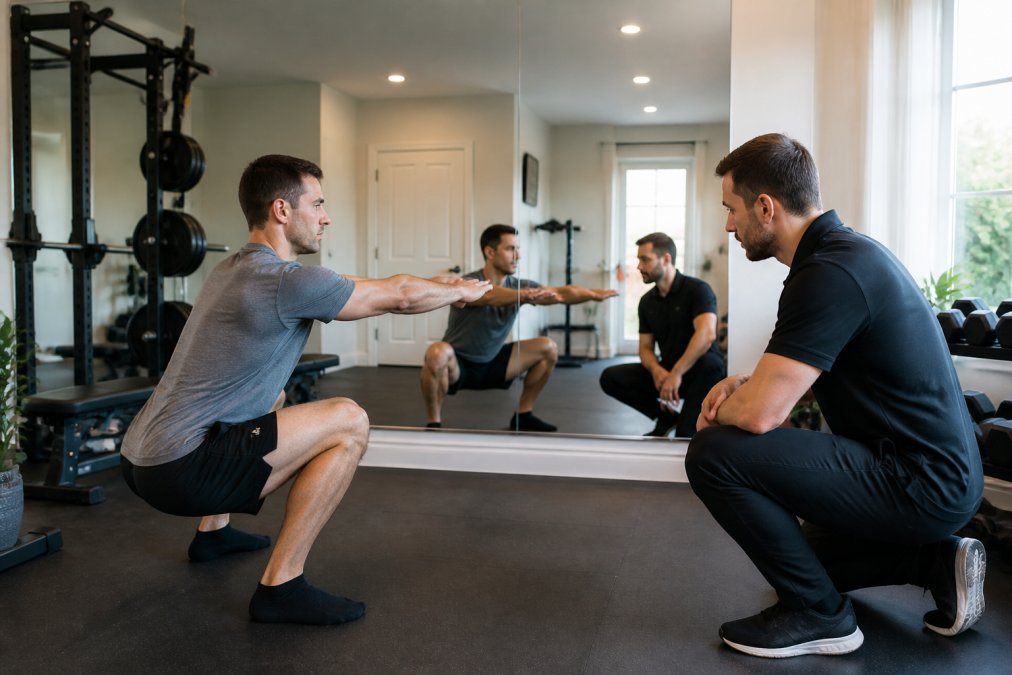
Compensations create chronic stress on specific tissues. A person whose knees cave inward during squats places asymmetric load on knee ligaments and cartilage. Over months, that asymmetry accumulates damage. Identifying and correcting the pattern prevents injury before it occurs.
Body hack pt uses this assessment to prioritize corrective exercises. If your assessment reveals poor hip mobility limiting squat depth, your program emphasizes hip mobility work before adding load. If your assessment shows scapular dyskinesis during overhead movement, your program addresses scapular stability before progressing upper body pressing.
Video record yourself performing these patterns, then review the footage to identify deviations. You're looking for asymmetries, excessive ranges, or restricted ranges. This self-assessment becomes your baseline for measuring whether your body hack pt protocol is actually improving movement quality.
Physical Therapy Recovery Timeline: What to Expect
Physical therapy recovery timeline varies based on injury type, severity, and protocol adherence. Body hack pt follows predictable phases that help you understand what progress looks like.
Phase 1 (Weeks 1-2) focuses on pain reduction and protection. Your nervous system restricts movement as a defense mechanism. Body hack pt emphasizes gentle range-of-motion work, manual therapy for tissue mobilization, and activity modification. You're establishing pain-free movement patterns and preventing further irritation.
Phase 2 (Weeks 3-6) shifts toward restoration of movement quality. As acute inflammation subsides, you introduce corrective exercises targeting identified dysfunctions. Manual therapy continues with increasing intensity. You're rebuilding the nervous system's confidence in movement.
Phase 3 (Weeks 7-12) emphasizes strengthening and load tolerance. Once movement quality improves, you progressively add resistance. Exercises evolve from bodyweight to light resistance to moderate resistance. You're getting stronger in properly-aligned positions, not simply getting stronger at moving wrong.
Phase 4 (Weeks 13+) focuses on performance optimization and return to sport or activity. You're integrating recovered movement patterns into sport-specific or activity-specific demands.
This timeline assumes consistent daily practice.
Physical Therapy for Athletes: Performance Optimization
Physical therapy for athletes extends beyond injury recovery into performance enhancement. Athletes implementing systematic movement assessment, corrective work, and performance optimization protocols consistently outperform those who train without this foundation.

The methodology starts with comprehensive movement assessment identifying asymmetries and restrictions limiting performance. A runner with restricted ankle dorsiflexion compensates by increasing knee flexion, creating inefficient gait and increasing injury risk. A swimmer with poor scapular mobility loses power through the pull phase. A weightlifter with limited thoracic rotation struggles with overhead movements. These aren't injuries yet, they're performance limiters and injury precursors.
Body hack pt addresses these through targeted corrective exercise and manual therapy. The runner performs ankle mobility drills and calf mobilization. The swimmer works scapular stability and thoracic rotation. The weightlifter addresses spinal mobility. These interventions enable the nervous system to access better movement patterns during training.
Performance gains emerge through improved movement efficiency reducing energy expenditure, better joint stability allowing more effective force transmission, and corrected movement patterns reducing compensatory stress on secondary muscles.
Home-Based Body Hack Routines vs. Traditional PT
Traditional physical therapy excels at diagnosis and complex case management. A practitioner can perform orthopedic testing, identify specific tissue pathology, and design highly individualized protocols. For acute injuries or complex presentations, this expertise is invaluable.
Home-based body hack pt excels at consistency and sustainability. You control the schedule with no appointment conflicts, travel time, or waiting rooms. You can perform your protocol at your preferred time in your preferred environment. This environmental control dramatically improves adherence.
The hybrid approach leverages both. You get initial professional assessment through a clinic visit or telehealth consultation. The practitioner identifies your specific dysfunctions and designs a targeted protocol. You then execute that protocol daily at home, tracking progress through objective metrics. You return for reassessment every 4-6 weeks, adjusting based on progress.
Cost considerations differ significantly. Traditional PT requires ongoing appointment costs. Body hack pt requires upfront equipment investment but minimal ongoing cost. For long-term recovery or performance optimization, the per-month cost of body hack pt can be substantially lower. Bodyhackfitness offers curated equipment packages specifically designed for home-based protocols.
Body hack pt isn't meant to replace professional assessment; it's meant to maximize that assessment through consistent daily execution.
Recovery Metrics and How to Track Progress
Measuring recovery progress requires moving beyond subjective feelings to objective metrics.
Range of motion represents the foundational metric. You measure joint mobility in degrees, tracking whether restricted ranges improve over weeks. A person with limited hip internal rotation measures baseline rotation, then tracks weekly progress.
Movement quality scores involve rating your movement during functional patterns on a 0-10 scale. This captures the nervous system's confidence in movement. Improvement indicates that corrective work is reducing protective restriction.
Strength testing measures force production through simple bodyweight tests: how many push-ups with perfect form? How long can you hold a plank? These track whether your strengthening work is actually increasing force capacity.
Symmetry assessment measures whether your left and right sides perform equally. Video analysis comparing single-leg stance, single-leg squat, or single-leg hop reveals asymmetries. Reducing asymmetry is a primary goal.
Return to activity milestones provide outcome validation. Can you run without pain? Can you perform your sport at full intensity? Can you return to your previous training volume?
A simple spreadsheet with weekly entries for ROM, movement quality, and strength tests takes 5 minutes weekly. This data becomes your feedback loop.
Getting Started with Body Hack PT
Beginning a body hack pt protocol requires three foundational steps: assessment, protocol design, and execution infrastructure.
Assessment starts with identifying your specific dysfunctions. Video record yourself performing fundamental patterns, squat, lunge, push, pull, rotation, to reveal where dysfunction concentrates. Alternatively, a single telehealth consultation with a physical therapist can accelerate this process.
Protocol design flows from assessment findings. You're not following a generic program; you're addressing your specific deficits. This specificity is what makes body hack pt effective.
Execution infrastructure involves setting up your environment for consistency: dedicated space, appropriate equipment, and a tracking system. Bodyhackfitness provides curated equipment packages eliminating decision paralysis around what tools you actually need. A simple home gym setup with mirrors, foam rollers, massage balls, and resistance bands supports comprehensive body hack pt protocols.
The execution schedule should be realistic. Five to six days weekly is ideal, but three days weekly consistently outperforms sporadic intensive sessions. Start with what you'll actually sustain, then progress as the protocol becomes habitual.
The first 2-3 weeks feel awkward. Consistency through this phase determines whether body hack pt becomes transformative. By week 4-6, you'll notice movement feeling smoother, pain reducing, and strength improving. This is when the protocol becomes self-reinforcing.
Body hack pt succeeds because it combines clinical expertise with personal consistency. You're applying evidence-based principles systematically over time, measuring progress objectively, and adjusting based on data. This approach works whether you're recovering from injury, optimizing athletic performance, or maintaining movement quality as you age. Bodyhackfitness supports this journey by providing premium equipment and digital programs specifically designed for home-based recovery protocols. Start with assessment, build your protocol around your specific needs, and commit to consistent practice. Progress follows.
| Recovery Phase | Timeline | Primary Focus | Key Metrics |
|---|---|---|---|
| Phase 1: Protection | Weeks 1-2 | Pain reduction, gentle ROM | Pain scale, movement comfort |
| Phase 2: Restoration | Weeks 3-6 | Movement quality, corrective exercise | ROM improvement, symmetry |
| Phase 3: Strengthening | Weeks 7-12 | Progressive resistance, load tolerance | Strength gains, functional capacity |
| Phase 4: Performance | Weeks 13+ | Sport-specific integration, optimization | Return to activity, performance metrics |
Frequently Asked Questions
How does body hack PT differ from traditional physical therapy?
Body hack PT emphasizes evidence-based practice combined with manual therapy, functional movement assessment, and corrective exercise that you can perform at home. Traditional PT often requires clinic visits and may focus more heavily on passive treatment. Body hack PT prioritizes patient-centered care where you understand the biomechanics behind your recovery, enabling faster progression and greater independence in managing your rehabilitation protocols.
What is the typical physical therapy recovery timeline with body hack methods?
Recovery timelines vary based on injury severity, but most people see measurable progress in range of motion and functional movement within 2-4 weeks of consistent body hack PT routines. Soft tissue mobilization combined with therapeutic exercise typically accelerates recovery compared to exercise-only approaches. Full rehabilitation may take 6-12 weeks depending on your injury. Tracking recovery metrics like mobility gains and strength improvements helps you understand your individual physical therapy recovery timeline.
Can body hack PT help improve athletic performance?
Yes. Physical therapy for athletes extends beyond injury recovery into performance optimization. Body hack PT uses movement assessment and conditioning therapy to identify biomechanical weaknesses, improve neuromuscular re-education, and build functional strength specific to your sport. Athletes typically experience improved range of motion, reduced injury risk, and enhanced power output. This proactive approach to musculoskeletal health supports both injury prevention and peak performance.
Do I need special equipment to start body hack PT at home?
You can begin with bodyweight exercises and basic mobility work, but recovery tools like foam rollers, resistance bands, and massage devices accelerate progress. The most important element is following evidence-based protocols and maintaining consistent corrective exercise routines. Start with functional movement assessment to identify your specific needs, then add equipment that addresses your biomechanical limitations. Bodyhackfitness offers curated recovery tools and structured digital programs designed to support your rehabilitation journey.
This article was written using GrandRanker