

Table of Contents
- Why a Dumbbell Set 15 lbs Is a Smart Starting Point for Home Training
- Dumbbell Types: Hex, Vinyl, Neoprene, Rubber-Coated, and Adjustable
- Neoprene vs Rubber Dumbbells: Which Coating Should You Pick?
- Adjustable vs Fixed Dumbbells: Making the Right Call for Your Space and Budget
- Ergonomic Handle and Grip: What Specs Actually Matter
- Dumbbell Workout Routine for Beginners: Building a Foundation with 15 lbs
- Home Gym Storage, Safety, and Space Optimization for Your Dumbbell Set 15 lbs
- Conclusion
Last Updated: August 6, 2026
Why a Dumbbell Set 15 lbs Is a Smart Starting Point for Home Training
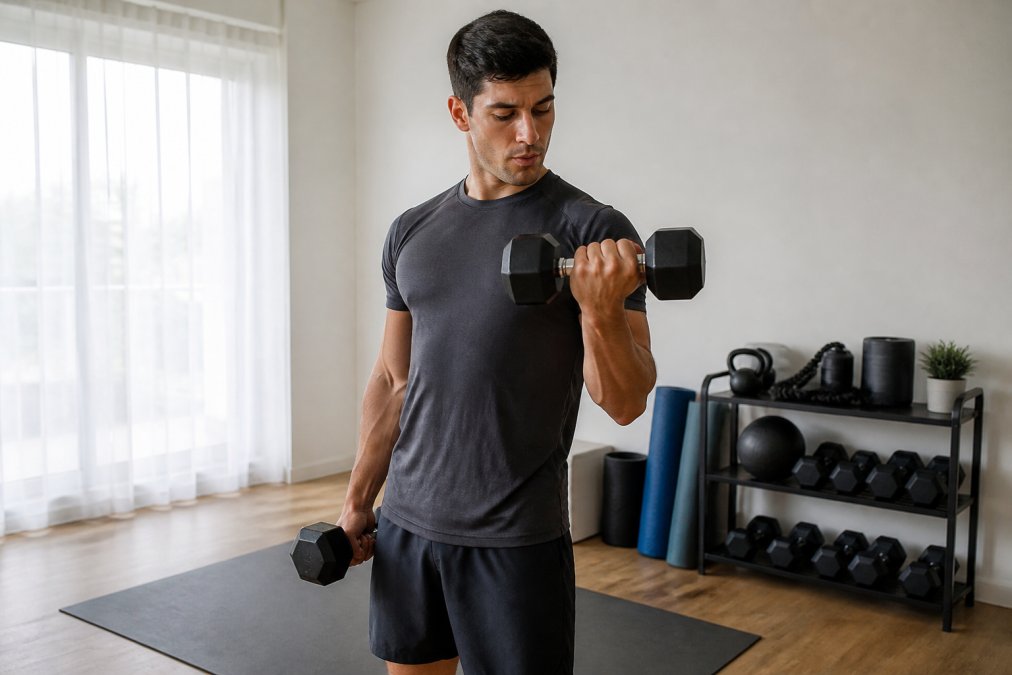
A dumbbell set 15 lbs sits in a genuinely useful middle ground for beginners. It's heavy enough to challenge major muscle groups, light enough to maintain good form during higher-rep work, and compact enough to store under a bed or in a closet. The 15 lb range works across bicep curls, lateral raises, bent-over rows, goblet squats, chest presses, and Romanian deadlifts, versatility that matters when floor space is limited.
For isolation movements like lateral raises and rear delt flyes, many intermediate lifters still train at this weight, so buying a pair now means you're not throwing money away in six months. The kilogram equivalent of 15 lbs is approximately 6.8 kg, which aligns with American Council on Exercise recommendations for beginner resistance training.
Dumbbell Types: Hex, Vinyl, Neoprene, Rubber-Coated, and Adjustable
Not all dumbbells are built the same. The type of coating, head shape, and handle finish affect floor safety, grip quality, storage, and durability.
| Dumbbell Type | Core Material | Coating | Best For | Anti-Roll |
|---|---|---|---|---|
| Hex Cast Iron | Cast iron | Rubber or bare | Heavy use, floor work | Yes |
| Vinyl-Dipped | Cast iron | Vinyl | Light home use, color coding | Partial |
| Neoprene | Cast iron | Neoprene | Comfort grip, quiet workouts | Partial |
| Adjustable | Steel plates | Varies | Space-saving, varied resistance | Depends |
Hex and Cast Iron: The Workhorse Design
The hexagonal design is the most practical choice for home gyms because it does not roll. Hex dumbbells stay put, making them far more useful during floor exercises like renegade rows where the dumbbell doubles as a handle. Cast iron construction gives hex dumbbells calibrated weight accuracy and durability that outlasts most other options. The CAP Barbell 15 lb Coated Rubber Hex Dumbbell features an ergonomic steel handle with medium-depth knurling and rubber coating that protects both floor and dumbbell. These are workhorses that hold up through years of daily training.
Vinyl-Dipped and Neoprene: Color-Coded and Floor-Friendly
Vinyl-dipped dumbbells use a thin plastic shell over cast iron and are typically color-coded for quick identification during circuits. The downside is that vinyl can crack over time, especially in cold storage. Neoprene-coated dumbbells offer a softer feel and are quieter when set down, making them reasonable for apartment workouts. However, neoprene can accumulate sweat and odor without regular cleaning.
Neoprene vs Rubber Dumbbells: Which Coating Should You Pick?
Rubber-coated dumbbells are the better long-term investment for most home gym setups. The rubber encasing protects hardwood and tile floors from impact damage, absorbs shock during drops, and resists cracking in temperature-variable spaces like garages. Rubber also wipes clean easily with a damp cloth.
Neoprene dumbbells win on comfort during low-intensity workouts and offer color coding for faster weight selection. However, neoprene is less durable under heavy use and degrades faster in direct sunlight or high heat.
Adjustable vs Fixed Dumbbells: Making the Right Call for Your Space and Budget
Fixed dumbbells like the CAP Barbell and Yes4All 15 lb pairs are straightforward with no moving parts to fail. They're also typically far more affordable than adjustable sets.
Adjustable dumbbells make sense when you need a range of weights and cannot store multiple pairs. The Bowflex SelectTech 552 replaces 15 sets of weights with a dial system adjusting in 2.5 lb increments up to 25 lbs and beyond. The PowerBlock Elite EXP uses welded steel plate construction and can expand from 5 to 50 lbs per hand. The practical limitation is that adjustable dumbbells are longer than fixed dumbbells at most weight settings, which can feel awkward during pressing movements.
For someone buying their first dumbbell set 15 lbs and planning to add weight over time, a quality adjustable set covering 5 to 25 lbs is a smarter long-term investment. For simplicity and durability, fixed rubber hex dumbbells win.
Ergonomic Handle and Grip: What Specs Actually Matter
Knurling depth is the most important spec most buyers overlook. Medium-depth knurling provides enough texture to prevent slipping during sweaty sets without tearing up your palms during high-rep work.
Handle diameter affects grip fatigue significantly. For most adults, a handle diameter between 28mm and 34mm works well for a 15 lb dumbbell. Handle length should allow a full two-handed grip for goblet squats and other bilateral movements. Non-slip surface treatment matters most during compound movements, chrome-plated handles work well when dry but can become slippery with sweat, while knurled handles maintain grip reliability throughout a full workout.
According to the National Strength and Conditioning Association's resistance training guidelines, grip security directly affects force output and injury risk during free weight exercises.
Dumbbell Workout Routine for Beginners: Building a Foundation with 15 lbs
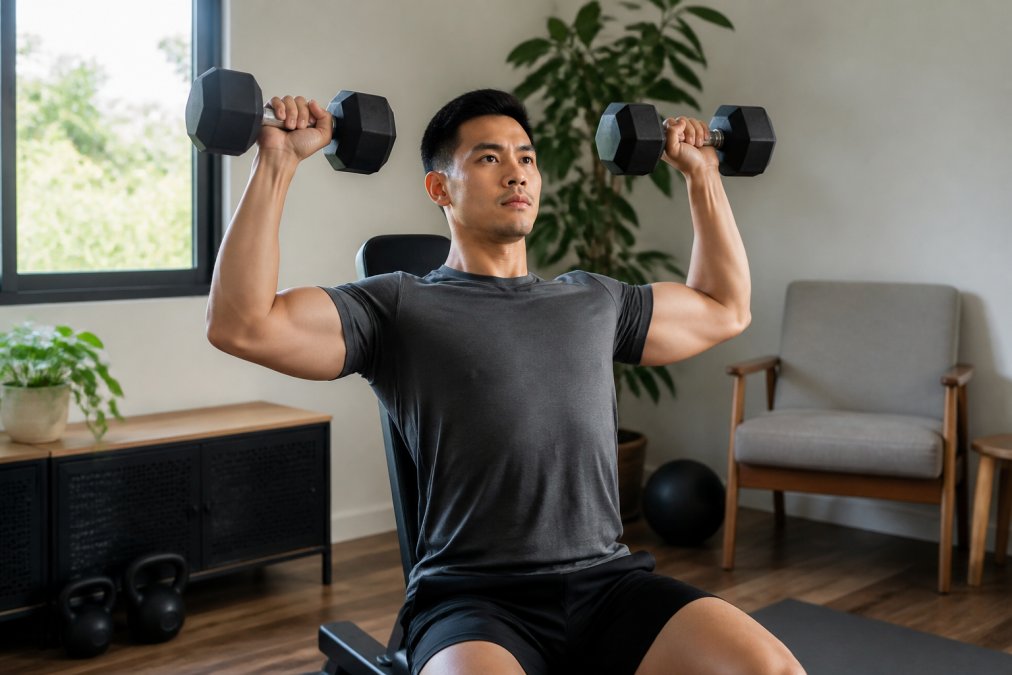
A dumbbell workout routine for beginners built around a 15 lb pair can cover every major muscle group. The key is choosing movements that match the weight to the muscle being trained. Your biceps and shoulders will reach fatigue at different rep ranges with the same 15 lb load, and that is exactly how you want it.
Sample Three-Day Upper and Full-Body Split
This routine uses a dumbbell set 15 lbs across three non-consecutive training days. Rest at least one day between sessions.
Day 1, Upper Body Push
- Dumbbell chest press: 3 sets x 10-12 reps
- Dumbbell shoulder press: 3 sets x 10 reps
- Lateral raises: 3 sets x 12-15 reps
- Tricep kickbacks: 3 sets x 12 reps
Day 2, Upper Body Pull
- Bent-over dumbbell rows: 3 sets x 10-12 reps
- Single-arm row: 3 sets x 10 reps each side
- Bicep curls: 3 sets x 12-15 reps
- Rear delt flyes: 3 sets x 15 reps
Day 3, Full Body Conditioning
- Goblet squat: 3 sets x 12 reps
- Romanian deadlift: 3 sets x 10 reps
- Dumbbell lunge: 3 sets x 10 reps each leg
- Renegade rows: 3 sets x 8 reps each side
- Dumbbell swing: 3 sets x 15 reps
Rest 60 to 90 seconds between sets. Total session time runs roughly 35 to 45 minutes.
Progressive Overload: When to Move Beyond 15 lbs
Progressive overload is the principle of gradually increasing training stress to continue driving adaptation. A dumbbell set 15 lbs supports this in two ways before you need heavier weights.
First, increase reps. If your program calls for 3 sets of 10 and you can complete all sets with clean form, add two reps per set the following week. Once you reach 3 sets of 15, the weight no longer provides sufficient stimulus for strength building.
Second, reduce rest. Shortening rest periods from 90 seconds to 60 seconds increases metabolic demand without changing the weight. Once both strategies are exhausted, it is time to add weight. For most beginners, this happens within eight to twelve weeks on compound movements like rows and presses.
The American College of Sports Medicine's position stand on resistance training progression recommends that beginners progress load by two to ten percent once the target rep range can be completed with proper form across two consecutive sessions.
Home Gym Storage, Safety, and Space Optimization for Your Dumbbell Set 15 lbs
A pair of 15 lb dumbbells takes up minimal floor space. How you store them determines both safety and training efficiency.
Floor storage works for a single pair set flat on the hex face. Compact dumbbell racks designed for two to four pairs are the better solution if you plan to expand. A two-tier A-frame rack holds four pairs in a footprint roughly the size of a small end table. Many adjustable dumbbell sets come with fitted storage trays that keep the unit compact and the adjustment mechanism protected.
Safety considerations for home gym setups:
- Always set dumbbells down on a stable, flat surface. Never balance them on the edge of a bench.
- Keep the training area clear of obstacles for at least two feet in every direction.
- Use a yoga mat or rubber flooring under your training area to protect your floor and reduce noise.
- Store dumbbells at or below waist height.
- Check handle tightness on adjustable models before each session.
A dumbbell set 15 lbs paired with a resistance band set and a single adjustable bench covers most upper body and full-body strength training without requiring more than a 6x6 foot training zone.
| Storage Option | Space Required | Best For | Cost Range |
|---|---|---|---|
| Floor storage (flat) | Minimal | Single pair, small apartments | Free |
| A-frame compact rack | ~2 sq ft | 2-4 pairs, dedicated corner | Low |
| Adjustable dumbbell tray | Included with set | Adjustable dumbbell owners | Included |
| Wall-mounted rack | Wall space only | Multiple pairs, permanent setup | Moderate |
As documented in the NSCA's guidance on home exercise environments, proper flooring and clear training space are the two most commonly overlooked safety factors in home gym setups, yet they have the most direct impact on injury prevention during free weight training.
A dumbbell set 15 lbs is one of the most versatile pieces of home gym equipment you can own. Hex rubber-coated dumbbells offer the best combination of floor safety, durability, and grip performance for most home setups. Fixed weights suit simplicity; adjustable sets suit space constraints and long-term progression.
Bodyhackfitness offers a carefully curated selection of premium gym products designed to help you build a more complete training environment at home. Whether you are starting with a single 15 lb pair or building out a full free weights collection, the focus on quality and training-plus-recovery equipment means you get gear that supports consistent progress at every stage. Shop now at Bodyhackfitness and build the home gym that actually gets used.
Frequently Asked Questions
Are 15 lb dumbbells good for beginners?
Yes, a dumbbell set 15 lbs is a practical starting point for most beginners. It provides enough resistance for upper body exercises like bicep curls, lateral raises, and rows without overwhelming joints or compromising form. Beginners focused on muscle toning and building foundational strength will find 15 lbs challenging for isolation movements while remaining manageable for compound exercises. As your strength develops, you can add weight or transition to an adjustable set.
Should I buy neoprene or rubber-coated 15 lb dumbbells?
Neoprene dumbbells suit lighter home use, they're softer, quieter, and gentler on floors, but less durable under heavy repeated drops. Rubber-coated hex dumbbells handle harder use, resist abrasion better, and protect flooring more effectively during strength training sessions. For a dumbbell set 15 lbs used daily in a home gym, rubber-encased hex dumbbells generally offer better long-term durability. Neoprene works well for lower-intensity routines or when grip comfort is the top priority.
Are 15 lb dumbbells enough to build muscle?
A 15 lb dumbbell set can build real muscle, provided you apply progressive overload, increasing reps, sets, or tempo over time rather than just lifting the same load each session. For smaller muscle groups like biceps, shoulders, and triceps, 15 lbs creates meaningful resistance training stimulus. For larger muscle groups like the back and legs, 15 lbs works well in high-rep conditioning circuits. Pairing fixed 15 lb dumbbells with an adjustable set lets you scale resistance as strength improves.
What exercises can you do with 15 lb dumbbells?
A dumbbell set 15 lbs supports a full upper body workout and most full-body conditioning movements: bicep curls, overhead press, lateral raises, bent-over rows, chest press, tricep kickbacks, goblet squats, Romanian deadlifts, and lunges. For beginners, these free weights cover nearly every major muscle group. Adding tempo variations, slower eccentrics or paused reps, increases difficulty without needing a heavier weight, making 15 lb dumbbells versatile gym essentials for home training.
This article was written using GrandRanker