

Table of Contents
- Why Fitness Consistency at Home Is Harder (and How to Fix It)
- Set SMART Goals and Track Measurable Results
- How to Schedule Workouts at Home Like Appointments
- Create a Home Workout Routine for Beginners
- Use the Best Home Workout Apps for Accountability
- Build Accountability and Track Your Progress
- Overcome Mental Barriers and Handle Home Distractions
- Prevent Burnout Through Active Recovery and Rest Days
Last Updated: August 13, 2026
Why Fitness Consistency at Home Is Harder (and How to Fix It)
Maintaining fitness consistency at home presents unique challenges gym-goers rarely face. Your home lacks environmental cues that trigger workout behavior: no locker room, no equipment waiting to be used, no other people exercising nearby. Instead, your couch, email, and kitchen are one step away. This is why many people start strong with home workouts, then fade within weeks.
The difference between those who maintain consistency and those who quit comes down to one thing: they've engineered their environment and routine to remove friction, not willpower. The good news is that maintaining fitness consistency at home is entirely achievable once you understand the mechanics of habit formation. It's not about finding the perfect program, it's about creating conditions where showing up becomes easier than not showing up.
Set SMART Goals and Track Measurable Results
Your first step toward fitness consistency at home is defining what you're actually trying to achieve. Vague goals like "get in better shape" fail because they give your brain nothing specific to aim for. Instead, use SMART goals, Specific, Measurable, Achievable, Relevant, and Time-bound, to create targets your brain can lock onto.
A SMART fitness goal looks like this: "Complete three 30-minute strength workouts per week for the next 12 weeks" rather than "exercise more." When you know exactly what constitutes a win, you can track it. When you can track it, you stay accountable.
Each checkmark, each logged workout, each week where you hit your target creates a visual record of your commitment. This record becomes motivation in itself. When you're tempted to skip a workout, you see that streak of completed sessions and you don't want to break it.
How to Schedule Workouts at Home Like Appointments
The single most effective strategy for maintaining fitness consistency at home is treating workouts as non-negotiable calendar events, not optional activities. This removes the daily decision of whether to work out.
Block Time in Your Calendar
Open your calendar right now and add your workouts as recurring events. Treat them with the same respect you'd give a client meeting or doctor's appointment. The time block should include your workout duration plus 10-15 minutes of buffer time for setup and cooldown.
Consistency in timing is one of the most underrated levers for maintaining fitness consistency at home. If you work out at 6 AM Monday, Wednesday, and Friday, your brain learns to expect this. Your body's cortisol rhythms begin to align. Your schedule stops conflicting because everyone around you knows those time slots are blocked.
Pick times when you're most likely to follow through. If you're not a morning person, don't schedule 5 AM workouts. Match your workout time to your natural energy patterns and existing schedule constraints.
Prepare Your Home Environment the Night Before
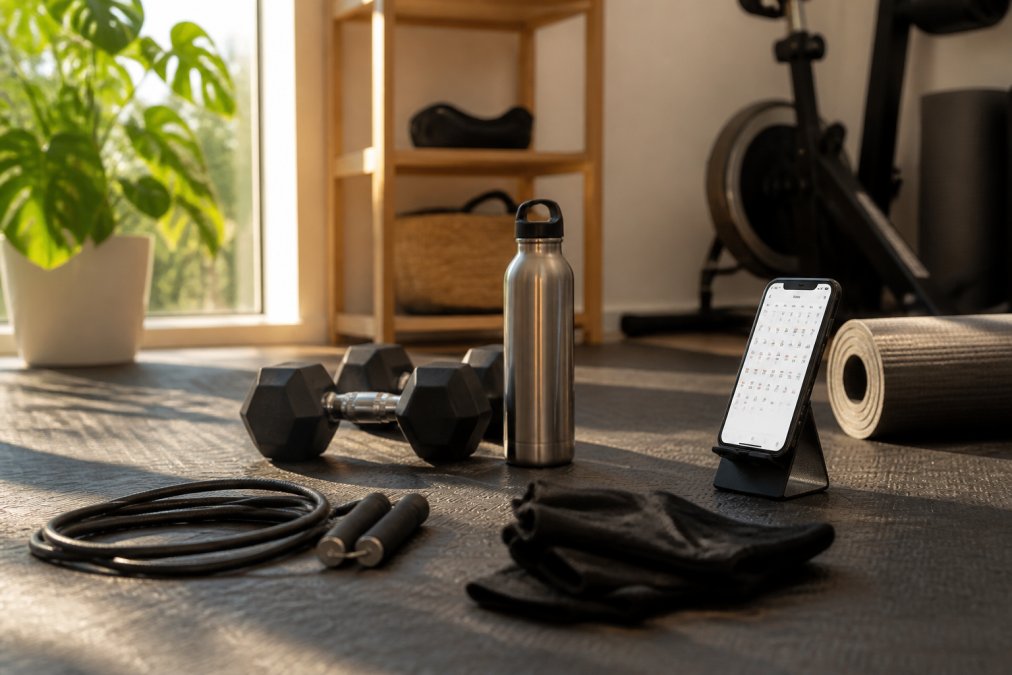
Your environment is your biggest lever for reducing friction. The night before a scheduled workout, lay out your gear: workout clothes, shoes, water bottle, towel, any equipment you'll need. This takes five minutes and eliminates the decision-making that happens when you wake up.
When your gear is ready, the path of least resistance becomes "do the workout" instead of "find your shoes." Prepare your workout space too. If you're using a mat, lay it out. If you need a dumbbell or resistance band, have it accessible. Each small friction point you remove increases the likelihood you'll actually start.
Create a Home Workout Routine for Beginners
A home workout routine for beginners succeeds when it's simple enough to start but structured enough to follow. Too many people attempt complex programs, get overwhelmed, and quit.
Start with Mini-Workouts to Build the Habit
The biggest mistake beginners make is starting too ambitious. A 60-minute home workout routine sounds impressive until you try to fit it into your life. Instead, start with mini-workouts: 15-20 minute sessions that feel achievable even on your busiest days. These short sessions build the habit of showing up. Once the habit is established, usually after 4-6 weeks, you can extend duration.
Mini-workouts have another advantage: they're less intimidating. Your brain is more willing to commit to 20 minutes than 60. Start with three sessions per week. This frequency is low enough that you can recover between workouts but high enough to create a pattern your brain recognizes. After three weeks, the routine feels less like a decision and more like just what you do.
Choose Activities You Actually Enjoy
You won't maintain fitness consistency at home if you hate your workouts. Discipline can carry you for a few weeks. Enjoyment carries you for years.
Your workout doesn't have to be high-intensity to be effective. Walking, bodyweight circuits, yoga, dancing, or resistance training all build fitness. The best choice is whichever one you're most likely to actually do. If you hate running, don't force running. If you love dancing, build your routine around that.
Use the Best Home Workout Apps for Accountability
The right app or digital program removes several friction points simultaneously. It tells you exactly what to do, eliminates decision-making, and provides structure. Look for apps that offer beginner-friendly programming, clear video demonstrations, and the ability to track completed workouts. The best home workout apps for accountability show your progress visually: streaks of completed workouts, cumulative training volume, or weekly summaries.
Bodyhackfitness offers digital fitness programs designed specifically for home-based exercisers who want structured guidance paired with premium recovery tools. The programs are built for consistency: they progress gradually, they adapt to your fitness level, and they integrate with tracking systems so you can see exactly where you stand.
The app or program you choose should feel intuitive to use. If you have to navigate five menus to log a workout, you won't do it consistently.
Build Accountability and Track Your Progress
Accountability is the difference between a workout plan and a workout routine. Without it, skipping workouts becomes easy to rationalize.
Use a Fitness Tracker to Monitor Consistency
A fitness tracker, whether it's a wearable device, a spreadsheet, or an app, creates a visible record of your behavior. Track the metrics that matter most to your goal. If you're building habit consistency, track workouts completed per week. If you're building strength, track weight or reps.
The act of tracking itself changes behavior. Studies on habit formation consistently show that people who track their behavior change more than people who don't, regardless of the tracking method. A simple wall calendar with X marks for completed workouts can be as effective as a sophisticated app, the visibility matters more than the tool.
Find an Accountability Partner or Community
Accountability works best when it's social. Find someone else trying to maintain fitness consistency at home and check in with them weekly. Share your weekly workout count, celebrate wins, and acknowledge setbacks.
An accountability partner doesn't need to do the same workouts you do. They just need to be someone who cares whether you follow through. If you prefer community over one-on-one accountability, join an online fitness group or forum where people share their progress.
Overcome Mental Barriers and Handle Home Distractions
The biggest threat to maintaining fitness consistency at home isn't physical, it's mental. Your brain will generate reasons to skip workouts. These mental barriers are normal. The people who maintain fitness consistency at home have systems to override them.
Use Habit Stacking to Anchor Workouts to Daily Routines
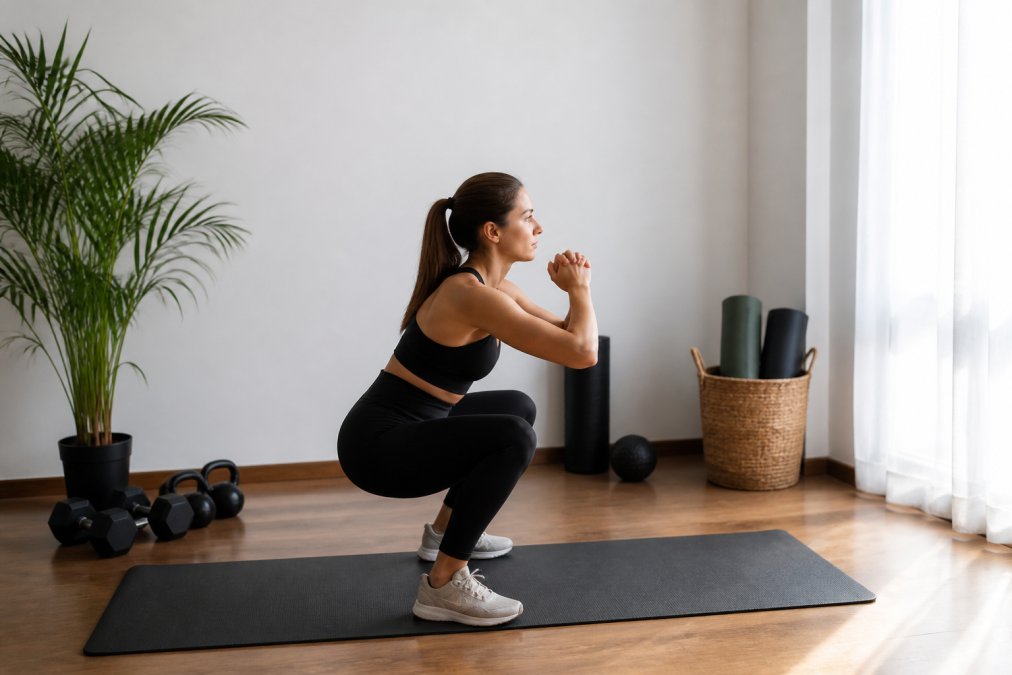
Habit stacking involves attaching a new habit to an existing one. Your brain is already wired to do certain things every day: brush your teeth, make coffee, eat breakfast. These existing behaviors are anchors you can use.
An example: "After I finish my morning coffee, I do my 20-minute workout." You're not creating a new time slot, you're piggybacking on an existing routine. Your brain already knows to do the first part, so the second part becomes automatic over time. This is how people maintain fitness consistency at home without relying on willpower.
Create Environmental Triggers in Your Home
Your home environment should visually remind you to work out. If your workout gear is visible and accessible, you're more likely to use it. If your mat is rolled up in a closet, you're less likely.
Set up a dedicated workout corner if possible. Even a 6-by-6 foot area works. Your brain begins to associate that space with movement. Over time, just walking into that space triggers the workout mindset. Place water bottles in your workout area. Set out your mat the night before. Keep resistance bands visible on a shelf. Each visual cue reduces friction between thinking "I should work out" and actually starting.
Prevent Burnout Through Active Recovery and Rest Days
One of the most overlooked aspects of maintaining fitness consistency at home is recovery. Many people push hard, burn out, and then quit. The people who maintain long-term fitness consistency at home build recovery into their routine from the start.
Active recovery, light movement on rest days, keeps your body mobile and your mind engaged without the intensity of a workout. This could be a 10-minute walk, gentle stretching, foam rolling, or yoga. Rest days are non-negotiable. Your muscles grow during rest, not during workouts. A sustainable routine includes at least one or two full rest days weekly.
When you know a rest day is coming, you can push harder during workouts. When you know you have a plan for recovery, you feel less guilty about taking time off. This prevents the all-or-nothing thinking that derails so many people.
Bodyhackfitness offers recovery tools and accessories that complement your training: foam rollers, massage devices, compression gear, and other recovery equipment. These tools make active recovery more effective and more enjoyable, which makes it more likely you'll actually do it.
| Strategy | Purpose | Frequency |
|---|---|---|
| Mini-workouts | Build habit without overwhelm | 3x per week to start |
| Habit stacking | Anchor workouts to existing routines | Daily |
| Environmental triggers | Reduce friction through design | Ongoing |
| Active recovery | Support adaptation and prevent burnout | 1-2x per week |
| Progress tracking | Maintain accountability and motivation | Weekly review |
| Scheduled rest days | Allow recovery and prevent overtraining | 1-2 per week |
The path to maintaining fitness consistency at home is simpler than most people think. It's not about willpower or finding the perfect program. It's about removing friction through scheduling, environmental design, and habit stacking. When showing up becomes easier than not showing up, consistency becomes automatic.
Start small with mini-workouts, track your progress visibly, and build accountability into your routine. Prepare your space the night before. Stack your workouts onto existing daily habits. Over 12 weeks, you'll move from forcing yourself to work out to genuinely missing workouts when you skip them.
Bodyhackfitness provides the equipment, digital programs, and recovery tools that make home-based training sustainable. Whether you're a complete beginner or returning to fitness after time away, these principles work. Set your schedule, remove friction, and let consistency do the work.
Frequently Asked Questions
How long does it take to form a consistent exercise habit?
Most people need 4-8 weeks to establish a basic workout habit, though true behavioral change typically takes 2-3 months of consistent repetition. The key is showing up regularly, not perfection. Start with mini-workouts of just 10-15 minutes daily to build the habit faster. Once the routine feels automatic, you can increase intensity and duration. Track your consistency on a calendar to see progress and stay motivated.
Why am I so inconsistent with working out at home?
Home distractions, unclear goals, and lack of accountability are the top reasons people struggle with fitness consistency at home. Your couch, phone, and family members compete for your attention. Without scheduled time blocks and environmental triggers, it's easy to skip sessions. The solution: treat workouts like non-negotiable appointments, use a fitness tracker for accountability, and prepare your space the night before. Adding an accountability partner or community also dramatically improves adherence.
What are the best ways to build a sustainable home workout habit?
Build sustainability by combining four elements: realistic SMART goals, scheduled workout times, enjoyable activities, and progress tracking. Start small with a home workout routine for beginners, just 3 days per week, and use habit stacking to anchor workouts to existing daily routines like morning coffee or lunch breaks. Choose activities you genuinely enjoy, not ones you think you should do. Use the best home workout apps for structure and accountability, and celebrate small wins to maintain long-term motivation.
How can I stay motivated to work out at home every day?
Motivation fades; discipline and systems win. Create environmental triggers by laying out your workout gear the night before and designating a dedicated home gym space. Use habit stacking to link workouts to existing routines. Track progress with a fitness tracker or app to see measurable results, which fuels motivation. Include active recovery days to prevent burnout, rest is part of consistency. Finally, find an accountability partner or online community to share wins and stay connected to your fitness goals.
This article was written using GrandRanker