

Table of Contents
- Step 1: Build Your Full Body Strength Framework
- Best Compound Exercises for Strength
- Step 2: Set Volume, Intensity, and Rep Ranges
- Step 3: How Long Should a Full Body Workout Last?
- Step 4: Plan Rest Days Between Full Body Workouts
- Full Body Workout Routine for Beginners
- Home vs. Gym Equipment Modifications
- Common Mistakes to Avoid
- Frequently Asked Questions
Last Updated: October 3, 2026
Step 1: Build Your Full Body Strength Framework
Building a full body strength workout starts with picking the right exercises and putting them in the right order.
That approach saves time and builds strength fast, which is why it works so well for busy people training at home.
The American College of Sports Medicine physical activity guidelines recommend strength training for all major muscle groups at least two days per week.
Below, we break down exactly how to structure a full body strength workout, from your first warm-up to your last rest day.
Exercise Selection and Sequencing
Start each session with compound movements, then move to smaller isolation work. This order matters because your central nervous system is freshest at the start.
Here is the sequence we recommend:
- Warm-up first: 5-10 minutes of light cardio and dynamic mobility
- Big lifts next: squats, presses, rows, hinges
- Accessory work after: arms, calves, core
- Cool-down last: easy stretching and breathing
This framework holds up whether you own a full rack or just a pair of dumbbells.

The biggest mistake is starting with curls. Small muscles fatigue fast, and you want your energy for the heavy compound lifts.
Best Compound Exercises for Strength
The best compound exercises for strength are movements that train multiple joints and muscle groups at once. These lifts let you load heavier weight and drive real strength gains.
Compound movements also create a bigger metabolic demand than isolation work. That means more calories burned and better body composition over time.
But a list of exercises is not a program. The real skill is picking one movement from each pattern so nothing gets left out and nothing gets overworked.
The Six Movement Patterns Every Full Body Session Needs
Most strength coaches organize compound lifts into six patterns. Hit one from each and your full body session is structurally complete.
- Squat, knee-dominant, quad and glute focus
- Hinge, hip-dominant, hamstring and glute focus
- Horizontal push, chest, front delts, triceps
- Horizontal pull, mid-back, rear delts, biceps
- Vertical push, shoulders, triceps
- Vertical pull, lats, biceps
You do not need all six in every session. A common pattern is to pick four: one squat or hinge, one push, one pull, and one carry or core movement. Rotate the patterns you skip across the week so nothing falls behind.
Upper Body Push and Pull
Balance pushing and pulling to keep your shoulders healthy. A practical target is a 1:1 ratio of push to pull volume, and many lifters do better closer to 1:1.5 in favor of pulling because pressing dominates most people's daily posture.
Push exercises (horizontal):
- Dumbbell bench press
- Push-ups
- Floor press
- Dips
Push exercises (vertical):
- Overhead press
- Dumbbell shoulder press
- Pike push-ups
- Landmine press
Pull exercises (horizontal):
- Bent-over rows
- Dumbbell rows
- Chest-supported rows
- Face pulls
Pull exercises (vertical):
- Pull-ups or assisted pull-ups
- Lat pulldowns
- Band pull-aparts
Pair one push with one pull in each session. That balance protects your shoulders and builds a stronger upper body.
Lower Body and Core
Your legs and core do the heavy lifting in any full body strength plan. Skip them and you leave the biggest strength gains on the table.
Squat pattern:
- Goblet squats
- Back squats
- Front squats
- Bulgarian split squats
Hinge pattern:
- Romanian deadlifts
- Conventional deadlifts
- Hip thrusts
- Kettlebell swings
Single-leg and lunge pattern:
- Walking lunges
- Reverse lunges
- Step-ups
Core picks:
- Planks
- Dead bugs
- Hanging knee raises
- Farmer carries
Aim for two lower body moves and one core move per session. That keeps training volume manageable while still hitting every muscle group.
How to Choose Between Two Similar Exercises
When two exercises train the same pattern, pick based on three factors:
- Joint stress: If a barbell back squat irritates your knees or low back, swap to a goblet squat or front squat. The pattern stays, the load on the spine drops.
- Equipment access: No barbell? A dumbbell or kettlebell version of the same pattern works. Goblet squat replaces back squat. Dumbbell floor press replaces bench press. Single-arm row replaces barbell row.
- Skill demand: Beginners progress faster on movements that are hard to get wrong. A trap-bar deadlift is more forgiving than a conventional deadlift. A chest-supported row is easier to feel than a bent-over row.
That pattern-first approach is what separates a workout that looks good on paper from one that actually builds strength week after week.
Step 2: Set Volume, Intensity, and Rep Ranges
Volume and intensity decide whether your full body strength workout builds muscle or just makes you tired. Get these numbers right and progress follows.
For strength, the sweet spot sits in the 3-6 rep range at a heavy load.
| Goal | Rep Range | Sets | Rest Between Sets |
|---|---|---|---|
| Strength gains | 3-6 | 3-5 | 2-3 minutes |
| Hypertrophy | 8-12 | 3-4 | 60-90 seconds |
| Muscular endurance | 15-20 | 2-3 | 30-45 seconds |
Rest intervals matter more than most people think. Short rests keep your heart rate up. Long rests let you lift heavier on the next set.
Progressive overload is the engine behind all of it. Add a little weight, a rep, or a set each week. Small jumps beat big ones.
Step 3: How Long Should a Full Body Workout Last?
A full body workout should last 45 to 60 minutes for most people. That window gives you enough time for a warm-up, four to six compound lifts, and a short cool-down.
Premium 20LB Rubber Coated Cast Iron Dumbbell with Ergonomic Chrome Handle →
Beginners often do better with 30-40 minutes. Longer sessions add fatigue without adding much benefit when you are just starting out.
Advanced lifters may push toward 75 minutes, but only if rest periods run long because the weights are heavy.
Here is how to split the time:
- Warm-up: 5-10 minutes
- Main lifts: 25-35 minutes
- Accessory work: 10-15 minutes
- Cool-down: 5 minutes
If your sessions regularly run past 90 minutes, cut exercises rather than rush your rest. Rushed rest means sloppy form and higher injury risk.
Step 4: Plan Rest Days Between Full Body Workouts
Rest days between full body workouts should be at least one full day.
Recovery time is when muscle repair and strength gains actually happen. Skip it and you get soreness, stalled lifts, and central nervous system fatigue.
A simple weekly pattern works well:
- Monday: full body strength
- Tuesday: rest or light walking
- Wednesday: full body strength
- Thursday: rest or mobility work
- Friday: full body strength
- Saturday: active recovery
- Sunday: rest
Three sessions per week with a day between each one suits most people. Two sessions a week still builds strength if you are short on time.
Sleep and protein do as much for recovery as the days off do. Aim for 7-9 hours of sleep and spread protein across the day.
Full Body Workout Routine for Beginners
A beginner full body workout routine should use simple movements, light-to-moderate loads, and three sessions per week. Master form before you chase heavier weights.
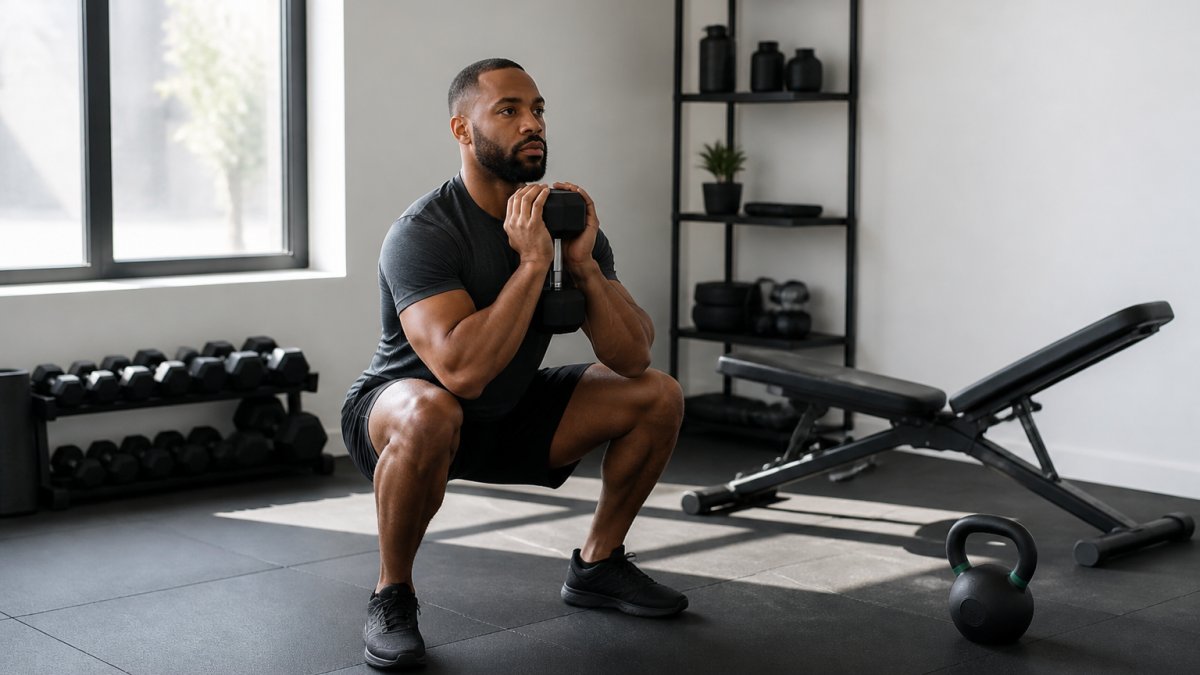
Start with two sets per exercise and build to three. Keep rest periods around 60-90 seconds.
Beginner session template:
- Goblet squat: 2-3 sets of 8-10 reps
- Dumbbell bench press: 2-3 sets of 8-10 reps
- Bent-over dumbbell row: 2-3 sets of 8-10 reps
- Romanian deadlift: 2-3 sets of 8-10 reps
- Plank: 2-3 sets of 20-30 seconds
Add a rep or a small amount of weight each week. That is progressive overload in its simplest form.
For home training, a pair of dumbbells and a bench covers nearly every movement above. The Premium 20LB Rubber Coated Cast Iron Dumbbell has a knurled chrome handle that stays grippy even when your hands get sweaty.
Pair it with the Heavy-Duty Foldable Weight Bench. It folds flat for storage, supports up to 1000 lbs, and needs no assembly.

Sample 3-Day Weekly Schedule
| Day | Focus | Key Movements |
|---|---|---|
| Monday | Full body A | Squat, bench press, row, plank |
| Wednesday | Full body B | Deadlift, overhead press, pull-up, dead bug |
| Friday | Full body C | Lunge, incline press, cable row, carries |
Alternate the A, B, and C sessions each week. Varying exercise selection keeps training interesting and spreads stress across your joints.
Home vs. Gym Equipment Modifications
Home training works if you pick the right tools.
Barbell and rack: Best for heavy squats and presses. Takes up space and costs the most.
Dumbbells: The most versatile home option. Adjustable sets save space and money.
Kettlebell: Great for swings, goblet squats, and carries. One adjustable model can replace a whole rack.
Cable machine: Excellent for rows, pulldowns, and face pulls. Rare in home setups.
Bodyweight: Push-ups, split squats, and planks cover a lot of ground with zero equipment.
If space is tight, an adjustable kettlebell is a smart first buy. The Versatile Adjustable Kettlebell offers seven weight levels in one unit.

For structured guidance, the Bodyhackfitness 30-Day Home Strength Program lays out workouts, resistance-band exercises, and trackers in one place.
Common Mistakes to Avoid
Most stalled progress comes down to a handful of fixable mistakes. Here are some common ones.
- Skipping the warm-up. Cold muscles and stiff joints raise injury risk. Five minutes is enough.
- Chasing weight over form. Ego lifting stalls progress and hurts your joints.
- Ignoring rest days. Recovery is part of the program, not a break from it.
- Changing exercises every week. Stick with a movement for 4-6 weeks to see real gains.
- Neglecting mobility and stability work. Add hip and shoulder mobility drills twice a week.
- Under-eating protein. Muscle repair needs fuel. Spread protein across the day.
- Doing too much too soon. Start with two sets and build up over several weeks.
Training age matters here. A true beginner can add weight almost every session. Someone with a few years of lifting needs smaller jumps and more planned recovery.
That is the framework. Pick your compound lifts, set your volume and reps, cap the session at an hour, and leave a day between workouts. Then repeat, week after week.
Frequently Asked Questions
What is a good full body workout schedule?
Train three days per week with at least one rest day between sessions. A Monday-Wednesday-Friday schedule works well because it gives your muscles 48 hours to recover. Each session should include 5-6 compound movements covering push, pull, and legs. If you are more advanced, try four days per week using an upper-lower split, but beginners see excellent results with three focused full body strength sessions.
How many exercises should be in a full body workout?
Aim for 5 to 7 exercises per session. Start with 2 lower body movements like squats and Romanian deadlifts, then add 2 upper body pushes such as overhead press and bench press, 2 pulls like rows and pull-ups, and finish with 1 core exercise. This keeps training volume manageable while hitting every major muscle group. More than 8 exercises often leads to fatigue that hurts your form on the final sets.
Is it better to do full body or split training for strength?
Full body training suits beginners and anyone training 2-3 days per week because each muscle group gets worked three times weekly, which drives faster strength gains. Split routines make more sense for advanced lifters training 4-6 days per week who need higher training volume per muscle. Research consistently shows that training frequency matters less than total weekly volume, so pick the structure you can recover from and repeat consistently.
How do you balance push and pull exercises in a full body session?
Match every push movement with a pull of equal difficulty. If you do 3 sets of bench press, pair it with 3 sets of rows. This balance protects shoulder health and prevents posture problems from overdeveloped chest and front delts. A simple rule: alternate push and pull exercises throughout the workout rather than doing all pushes first. This also keeps rest intervals productive while opposing muscle groups recover.
Building a full body strength workout that actually sticks takes more than a list of exercises. It takes the right equipment sitting within arm's reach, a plan you can follow, and recovery tools that keep you moving. Bodyhackfitness exists for exactly that reason. We stock the dumbbells, benches, kettlebells, and digital programs that turn a spare corner into a working home gym. Shop now and build the training space that keeps you consistent.