

Table of Contents
- Why Peloton Falls Short for Strength Training
- Strength Training Apps for Home Workouts That Deliver Results
- Best Home Gym Equipment for Weight Loss and Muscle Gain
- Progressive Overload at Home: Building Strength Without a Gym
- Equipment-Free vs. Weighted Strength Training at Home
- Comparing Subscription Models: Cost-Effective Alternatives to Peloton
- Conclusion
Last Updated: August 18, 2026
Why Peloton Falls Short for Strength Training
Peloton built its empire on cycling. The bike excels at cardio but is fundamentally limited for strength-focused athletes. If you're serious about building muscle, progressive overload, and tracking strength metrics, a stationary bike becomes a constraint rather than a tool.
The core problem: Peloton's ecosystem is designed around spinning. The app offers strength content, but it's supplementary. Its metrics (cadence, resistance, output) don't translate to traditional strength training where you measure weight lifted, rep ranges, and movement patterns across dozens of exercises. You can't log a barbell squat, track deadlift progression, or structure periodized programming that accounts for compound movements, isolation work, and recovery cycles.
At Bodyhackfitness, we empower fitness enthusiasts to train harder and recover faster by offering a seamless, customer-focused shopping experience for both training and recovery equipment, enabling you to create a more complete training environment at home. The alternatives we'll cover address what Peloton doesn't: dedicated strength programming, equipment compatibility beyond one device, and data portability so your training history belongs to you.
Strength Training Apps for Home Workouts That Deliver Results
Strength-focused digital coaching platforms build around the barbell, dumbbell, and kettlebell. They measure what matters: weight, reps, form cues, and progression over time.
The best platforms provide exercise libraries with hundreds of variations, allow you to log custom weights and track progression across sessions, adapt difficulty based on your actual performance, and offer real-time feedback through video form coaching or detailed written cues. Many offer subscription-based access to multiple training programs, progressive overload frameworks, and community features.
What separates a good strength app from a mediocre one comes down to three things: the quality of the programming (is it scientifically sound, periodized, and adaptable?), the exercise database (can you log what you actually do?), and the coaching layer (do you get real feedback or just video playback?). The best ones deliver all three.
Best Home Gym Equipment for Weight Loss and Muscle Gain
Equipment matters because it supports progressive overload, gradually increasing weight, reps, or difficulty to drive adaptation. You don't need a room full of machines; you need the right tools.
The most effective home gym setups combine three categories: adjustable resistance (dumbbells, kettlebells), bodyweight progression tools (pull-up bars, plyometric boxes), and specialty equipment for specific movements.
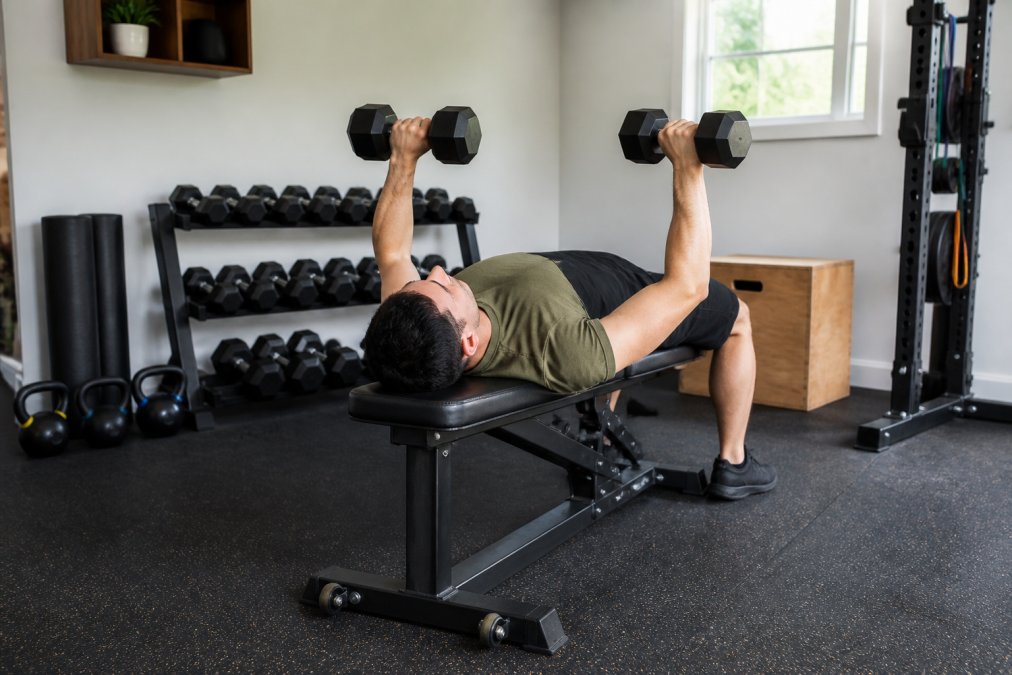
Dumbbells are the foundation. The Adjustable 15lbs Rubber Hex Dumbbell Set at $55.80 is a practical entry point. The hexagonal design prevents rolling, the rubber coating protects floors, and the ergonomic handles support safe, controlled movements across pressing, rowing, and isolation exercises.

Kettlebells deliver full-body training in a single implement, demanding stability and engaging your core through every movement. The Versatile Adjustable Kettlebell with 7 Weight Levels at $117.02 scales with your progression.

For lower body and explosive work, the 3-in-1 Wooden Plyometric Jump Box at $66.14 offers three height options (24, 20, and 16 inches). The smaller 16/14/12 Inch Jump Box at $43.10 works for apartments.

Pull-up bars enable upper body pulling strength. The Portable Pullup Bar Station at $100.70 supports 330 lbs with 9 height adjustments.
Specialized machines target weak points. The 2-in-1 Bicep Preacher Curl Bench at $167.86. The Deep Squat Machine at $84.98 uses resistance bands to assist or challenge lower body training.
| Equipment Type | Best For | Price Range | Key Feature |
|---|---|---|---|
| Adjustable Dumbbells | Upper body pressing, rowing, isolation | $55.80 | Progressive weight increments |
| Kettlebell | Full-body functional strength | $117.02 | 7 adjustable weight levels |
| Plyometric Box | Lower body power, explosive training | $43-66 | Multiple height options |
| Pull-up Bar | Upper body pulling, core | $100.70 | 9 height adjustments, 330 lb capacity |
| Preacher Curl Machine | Arm isolation, form control | $167.86 | |
| Squat Machine | Leg strength, glute activation | $84.98 | Resistance band assistance |
The equipment you choose depends on your current strength level and goals. Beginners benefit from dumbbells and bodyweight work. Intermediate lifters add kettlebells and plyometric boxes. Advanced athletes layer in specialized machines to address weak points. The key is selecting tools that support progressive overload.
Progressive Overload at Home: Building Strength Without a Gym
Progressive overload is the single most important principle in strength training. It's the mechanism that drives adaptation. Without it, your workouts plateau.
Progressive overload means systematically increasing the demands placed on your muscles through weight increases, rep increases, set increases, reduced rest periods, improved form, or exercise variations that increase difficulty.
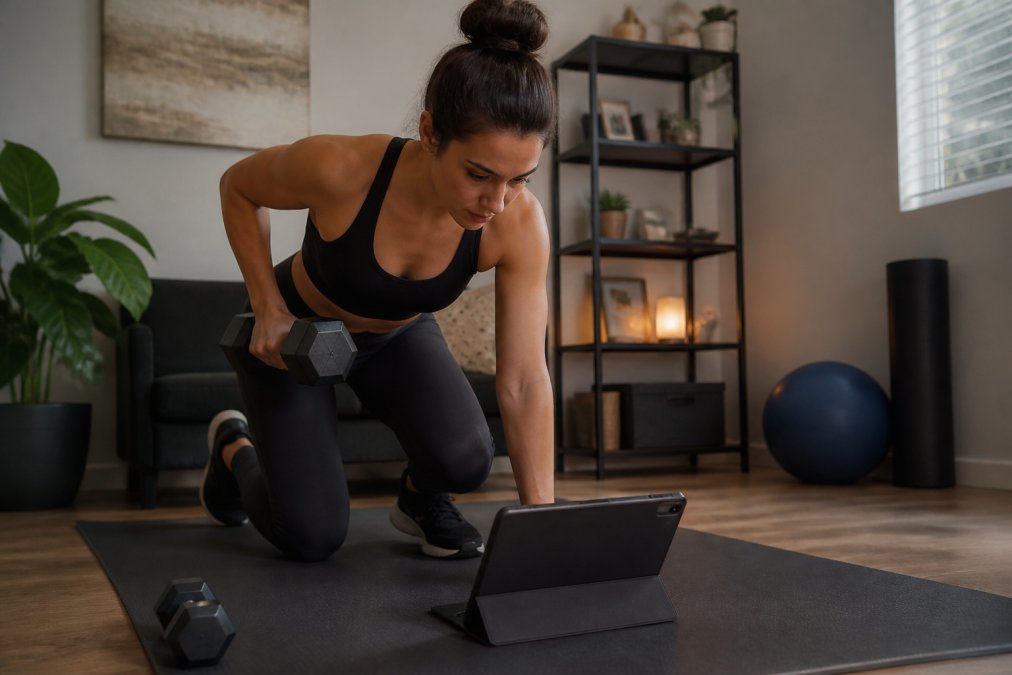
Building progressive overload at home requires equipment that allows incremental loading and a tracking system that captures your actual numbers. Start with a baseline: pick an exercise, do it with a weight you can control for 8-12 reps, and record it. Next session, try to add one more rep or a small weight increment. If you hit it, progress again. If you stall, maintain that weight for another session or reduce volume slightly and rebuild.
The progression path varies by exercise and goal. For hypertrophy (muscle growth), target 8-12 reps per set, 3-4 sets per exercise, with weight increases every 2-3 sessions. For strength, target 3-6 reps with heavier loads, progressing more conservatively. For strength endurance, target 12-20 reps with moderate weight, increasing either reps or weight every session.
Equipment like the adjustable kettlebell eliminates progression friction. Seven weight levels mean you're never stuck choosing between too light and too heavy. Track everything: exercise, weight, reps, and sets. Over 12 weeks, you should see measurable progression. If you're not, either your progression is too aggressive (causing form breakdown) or too conservative (not driving adaptation).
Equipment-Free vs. Weighted Strength Training at Home
Bodyweight training builds foundational strength and movement quality. Push-ups, pull-ups, squats, and planks are legitimate strength tools. The limitation becomes clear at intermediate levels: your bodyweight is fixed. To progress, you must increase reps or reduce range, but these have diminishing returns.
Weighted training removes that ceiling. You can load progressively forever. A 200-pound person can press 100, 150, 200 pounds, each milestone drives continued adaptation. Weighted training also allows you to target specific rep ranges and training goals more precisely.
The optimal approach combines both. Start with bodyweight mastery: solid push-ups, pull-ups, squats, and planks. Once you can perform 15-20 controlled reps of a movement, add weight using dumbbells, kettlebells, or weighted vests to continue progression.
The Curved Weight Vest Plates from Bodyhackfitness at $29.66 bridge this gap elegantly. They add 5.75 lbs of load to any weighted vest, letting you progress bodyweight movements like push-ups, pull-ups, and dips without needing separate equipment.
Comparing Subscription Models: Cost-Effective Alternatives to Peloton
Peloton's subscription model ($44/month for digital access, $39/month for the app alone) is optimized for one use case: cycling. A realistic home strength training setup involves a strength app subscription (programming and coaching) and equipment purchases.
Consider the math: a decent strength app runs $10-15 per month ($120-180 annually). Quality equipment, dumbbells, kettlebell, pull-up bar, plyometric box, costs $300-500 one-time. Equipment is the real investment and lasts years.
Many strength-focused apps offer free tiers with limited programming or 7-14 day trials. Start with free or trial access while building your equipment base. Once your setup is solid, invest in the subscription that matches your training goals.
The advantage of app-based training over Peloton's model is flexibility. You can switch apps monthly if your goals change. You're not locked into a hardware ecosystem. Your data often exports, maintaining training history even if you change platforms.
For budget-conscious athletes, equipment purchases offer better value than subscription-heavy models. A $55.80 dumbbell set and a $117.02 adjustable kettlebell give you 200+ exercise variations and years of progression. Compare that to 24 months of Peloton subscription ($528-$1,056) for access to a fixed bike and cycling-focused programming.
| Approach | Equipment Cost | Annual Subscription | Total Year 1 | Notes |
|---|---|---|---|---|
| Peloton Bike | $1,495-$2,000 | $480-$1,056 | $1,975-$3,056 | Cycling-focused, limited strength |
| Home Strength Setup | $300-$500 | $120-$180 | $420-$680 | Versatile, scalable, equipment-agnostic |
| Hybrid (Equipment + App) | $500-$800 | $240-$360 | $740-$1,160 | Best for serious lifters |
Conclusion
Peloton alternatives for strength training exist because cycling is not strength training. Building real strength at home requires equipment that supports progressive overload, programming that adapts to your actual numbers, and a tracking system that captures your data.
The path forward combines three elements: equipment from a provider like Bodyhackfitness that supports your specific goals, a strength-focused app that provides programming and coaching, and personal discipline to track progression consistently. Start with adjustable dumbbells and a kettlebell. Add a pull-up bar and plyometric box as you progress. Layer in specialized machines to address weak points. Track everything.
Frequently Asked Questions
Is there a better alternative to Peloton for pure strength training?
Yes. Peloton focuses on cardio and light resistance work, not progressive overload. Apps like JEFIT, Boostcamp, and Shred provide structured strength programming with progressive resistance increases, form coaching, and detailed tracking. Pair these with adjustable dumbbells or kettlebells, like the Adjustable 15lbs Rubber Hex Dumbbell Set ($55.80), to build muscle effectively at home.
What are the best strength training apps for home workouts?
JEFIT, Boostcamp, and Shred are top choices for strength-focused programming. They offer customizable workout plans, exercise libraries, and real-time tracking of weight, reps, and volume. Each supports progressive overload through structured rep ranges and weight increases. Combine app-based coaching with quality equipment like adjustable kettlebells for complete home strength training.
Can you build muscle at home without a gym membership?
Absolutely. Bodyweight exercises, dumbbells, kettlebells, and resistance bands create a complete strength training environment. Progressive overload at home means gradually increasing weight, reps, or difficulty over time. Start with a jump box ($43.10-$66.14) for plyometric work and adjustable weights, then track progress in a strength app to ensure consistent muscle-building stimulus.
What's the most cost-effective way to start strength training at home?
Begin with bodyweight exercises and a single adjustable kettlebell ($117.02), then add dumbbells ($55.80) as budget allows. A jump box ($43.10) adds variety for lower-body power. Use a free or low-cost strength app to program workouts. This approach costs under $220 and covers all major movement patterns needed for full-body strength development.
The most effective home strength training setup is one you'll actually use. Shop now at Bodyhackfitness for premium equipment that supports real strength progression, dumbbells, kettlebells, plyometric boxes, and specialized machines designed to help you build muscle, increase strength, and maintain consistency without leaving home.
This article was written using GrandRanker