

Table of Contents
- Planning Your Professional Home Gym Layout
- Essential Professional-Grade Equipment for Strength Training
- Best Home Gym Flooring for Heavy Weights
- How to Organize a Home Gym for Efficiency
- Home Gym Recovery Station Ideas and Setup
- Structural Requirements and Safety Protocols
- Smart Gym Connectivity and Equipment Integration
- Budgeting and Getting Started
Last Updated: August 30, 2026
Planning Your Professional Home Gym Layout
A professional home gym setup begins with intentional space planning. Before buying equipment, understand your available square footage, ceiling height, floor load capacity, and how different zones will function together.
Start by measuring your space precisely. A power rack requires roughly 7 feet of length and 4 feet of width. Add barbells, adjustable dumbbells, and a bench, and you're looking at a minimum of 200 square feet for serious strength training. Plan 300-400 square feet for a complete setup including cardiovascular work.

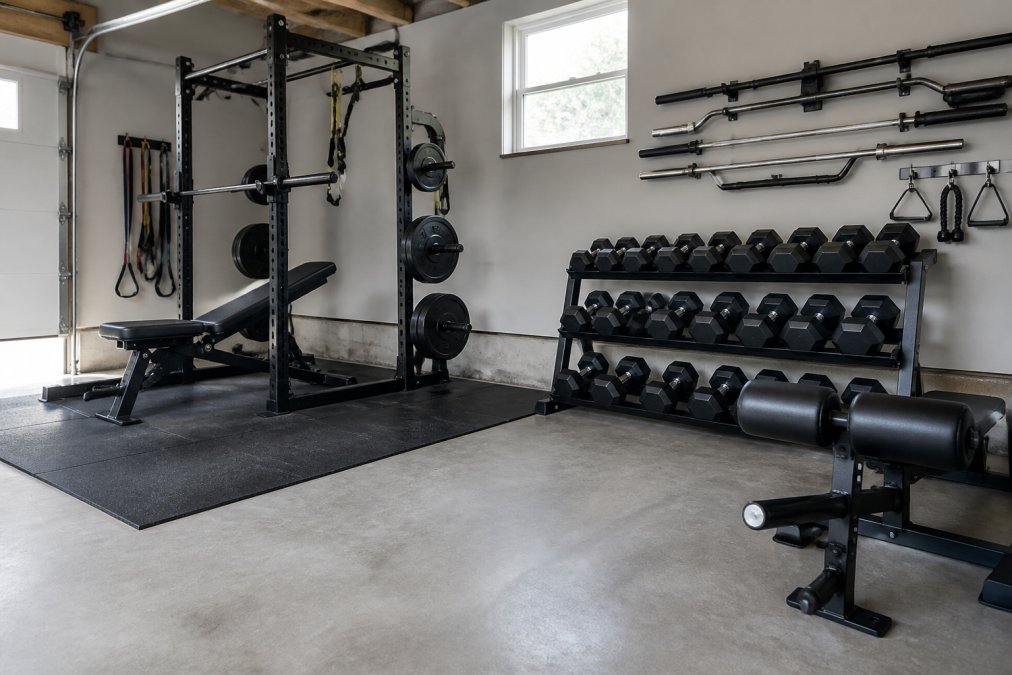
Ceiling height matters significantly. Olympic lifting, pull-ups, and explosive movements require clearance. Aim for 10 feet minimum if you plan overhead pressing or plyometric training. Eight feet works for bench pressing and horizontal exercises, but it limits your options.
Position your strength training zone near your heaviest equipment and power rack. Create a separate cardio area if space allows, away from free weights. This prevents traffic patterns from interfering with lifts. Recovery equipment and stretching areas should occupy a quieter corner. Group similar items together: dumbbells in one area, cable equipment in another, cardio machines in a third. This organization reduces setup time and makes your professional home gym setup more efficient.
Essential Professional-Grade Equipment for Strength Training
Professional-grade equipment separates serious training from recreational fitness. The foundation includes a power rack, barbell, weight plates, and adjustable dumbbells.
A power rack is non-negotiable for strength training. It provides safety pins, spotter arms, and attachment points for cables and accessories. Look for racks rated for at least 1,000 pounds of load capacity, with adjustable pin heights and solid welds.
Barbells and Olympic plates form your primary resistance tools. A standard Olympic barbell weighs 45 pounds and accommodates 2-inch diameter plates. Professional setups include multiple barbells: a power bar for heavy squats and deadlifts, a lighter bar for accessory work, and possibly a specialty bar for variation. Quality plates should be calibrated and durable.
Adjustable dumbbells eliminate the need for dozens of individual pairs. A quality set like Bodyhackfitness's Premium Adjustable Dumbbell Set - 44lbs Cast Iron Barbell Kit offers multiple weight increments, saving space while maintaining progressive overload capability.
A multi-functional bench with squat rack integration amplifies your exercise options. The Multi-Functional Adjustable Weight Bench for Ultimate Home Gym Strength Training provides incline, decline, and flat positions, plus integrated pull-up handles and squat rack attachment points.

Cable machines and functional trainers expand your movement vocabulary by allowing constant tension training and planes of motion that barbells cannot address effectively.
Best Home Gym Flooring for Heavy Weights
Flooring determines whether your professional home gym setup protects your structure and equipment. Heavy weights create impact and pressure that ordinary flooring cannot withstand.
Rubber flooring is the industry standard. It absorbs impact, dampens noise, protects your floor underneath, and provides stable footing for lifts. Interlocking rubber tiles offer flexibility. Aim for 0.75 to 1 inch of rubber minimum. Commercial-grade rubber is durable and affordable, ideal for most home setups.
Concrete is a common base, but it's unforgiving. Heavy drops cause concrete to crack and dust. Add a thin rubber layer over concrete before placing equipment. If your garage has bare concrete, this single step extends equipment life and protects your structure.
Wooden subfloors require additional protection. Never place heavy equipment directly on wood. Install a plywood base layer first, then rubber matting on top. This creates a stable, protected surface that distributes weight effectively.
Stall mats, thick rubber mats originally designed for horse stalls, offer an economical option. They're durable, affordable, and easy to install, though they can feel unstable for certain exercises.
How to Organize a Home Gym for Efficiency
Organization transforms a pile of equipment into a functional professional home gym setup. Efficiency means finding what you need immediately and training without wasted motion.
Implement a vertical storage system for dumbbells and plates. Wall-mounted racks, pegboards, and hanging storage keep equipment off the floor, making your space feel larger and more accessible. When adjustable dumbbells sit in a rack at eye level, you grab them faster than digging through a pile.
Create dedicated zones for different training styles. Your strength training area needs clear floor space around your power rack and bench. Your cardiovascular area should be separated, allowing you to run, cycle, or jump without interfering with lifters. Your recovery station should be quiet and away from heavy lifting.
Label everything. Use tape, markers, or printed labels to identify weight increments, equipment functions, and storage locations. This eliminates the guessing game and speeds up workout transitions.
Implement a cleaning schedule. Wipe down equipment after use, especially bars and handles. Check bolts and connections monthly. Inspect rubber flooring for wear. A 10-minute weekly maintenance routine prevents rust, deterioration, and equipment failure.
Create a workout log station with a whiteboard, notebook, or tablet where you track your sessions. This removes the mental burden of remembering what you did last week and keeps your training structured and progressive.
Home Gym Recovery Station Ideas and Setup
Recovery is where adaptation happens. A professional home gym setup includes dedicated recovery infrastructure, not just training equipment.
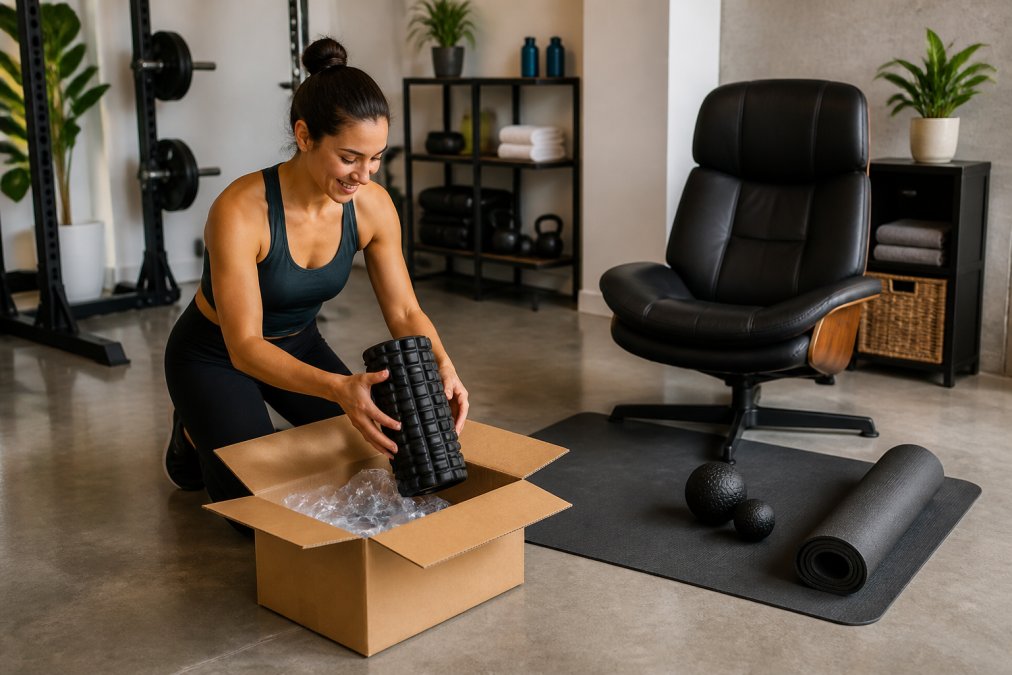
Foam rolling equipment forms the foundation. Foam rollers address muscle tension, improve mobility, and support blood flow. Position a roller and massage balls in your recovery zone.
Stretching areas require minimal equipment but maximum intention. Designate a clean, quiet corner with a yoga mat. Add a resistance band or suspension trainer for assisted stretching. The space should feel separate from your training area, a mental transition zone where you slow down and restore.
Recovery chairs and ergonomic seating support proper positioning during stretching and mobility work. A simple stool, bench, or specialized recovery chair allows you to stretch hamstrings, hip flexors, and calves with proper support.
Temperature and humidity affect recovery. A well-ventilated recovery area stays cool and prevents excessive sweating during stretching. Ensure airflow reaches your recovery station.
Mirror placement supports recovery work. A mirror in your stretching area lets you check alignment during mobility drills. Seeing your position corrects common mistakes like rounding your spine during forward folds.
Structural Requirements and Safety Protocols
Professional-grade equipment demands structural integrity. Your home's framing, flooring, and electrical systems must support the loads and demands of serious training.
Floor load capacity is critical. Residential floors typically support 40 pounds per square foot. A loaded barbell in a power rack can weigh 500+ pounds in a concentrated area. Calculate your equipment weight plus your body weight plus the bar weight. Ensure your floor can handle it.
If your floor is questionable, reinforce it. Install additional support beams, thicken the subfloor, or move your setup to a basement with concrete flooring. Structural failure means injury risk and property damage.
Electrical requirements depend on your equipment. Cardio machines and smart gym devices draw power. Run dedicated circuits to your gym area. Avoid overloading outlets. If you're planning Home Gym Ready: Adjustable Indoor Exercise Bike with 300 lbs Capacity for Ultimate Cardio Workouts and other powered equipment, consult an electrician about circuit capacity.

Ventilation prevents heat buildup and moisture accumulation. A home gym generates significant body heat during intense training. Poor ventilation creates uncomfortable conditions and promotes rust on equipment. Install fans or ensure adequate airflow.
Establish clear safety rules: no dropping weights on non-rubber surfaces, always use collars on barbells, inspect equipment before use, and never train alone with heavy loads.
Smart Gym Connectivity and Equipment Integration
Modern professional home gym setups integrate smart technology. Connected equipment, apps, and sensors track your training and support progression.
Smart mirrors and interactive displays bring coaching into your home. These devices stream live or on-demand workouts, provide real-time form feedback, and track your performance metrics.
Wearable devices monitor recovery metrics. Heart rate variability, sleep quality, and readiness scores inform your training intensity. A professional home gym setup paired with wearable data creates a feedback loop that optimizes your training decisions.
Connected scales and body composition monitors track progress beyond the barbell. Smart scales measure weight, body fat percentage, and muscle mass, providing data that motivates and informs nutrition decisions.
Smart lighting systems support circadian rhythm and training focus. Bright, cool-toned light during training sessions promotes alertness. Warm lighting in your recovery area supports relaxation.
Fitness apps integrate data from multiple sources. Your barbell lifts, cardio sessions, recovery metrics, and nutrition data sync into a single dashboard. This holistic view reveals patterns invisible to individual data streams.
Bodyhackfitness recognizes that a professional home gym setup extends beyond physical equipment. Digital programming and smart tools amplify your training effectiveness.
Budgeting and Getting Started
Building a professional home gym setup requires realistic budgeting. Costs vary based on your goals, space, and equipment quality.
A basic professional home gym setup, power rack, barbell, plates, adjustable dumbbells, and a bench, costs between $1,500 and $3,000. The Multi-Functional Adjustable Weight Bench for Ultimate Home Gym Strength Training at $121.91 and the Premium Adjustable Dumbbell Set - 44lbs Cast Iron Barbell Kit at $113.03 represent excellent value.
Adding cardio equipment increases costs. An Home Gym Ready: Adjustable Indoor Exercise Bike with 300 lbs Capacity for Ultimate Cardio Workouts at $113.69 provides cardiovascular training affordably. A professional home gym setup with both strength and cardio capacity runs $2,500 to $4,500.
Recovery equipment and accessories add $500-$1,000. The Versatile 3-in-1 Wooden Plyometric Jump Box for Home Gym Training at $66.14 adds explosive training capability affordably.
Flooring, mirrors, and structural improvements represent significant costs. Rubber flooring runs $500-$2,000 depending on coverage. Mirrors and wall improvements add another $200-$500. Electrical work, if needed, costs $300-$1,000.
A complete, professional-grade home gym setup typically costs $4,000 to $8,000 initially. Amortized over 10-20 years of training, it's cheaper than gym memberships. You own the equipment, control your environment, and never deal with crowded facilities.
Start with essentials and expand progressively. Buy a power rack, barbell, and plates first. Add adjustable dumbbells next. Then invest in flooring and mirrors. Finally, add cardio and recovery equipment. This phased approach spreads costs and lets you verify your commitment before major purchases.
| Equipment Category | Budget Range | Key Items |
|---|---|---|
| Strength Foundation | $1,500-$2,500 | Power rack, barbell, plates, bench, dumbbells |
| Cardio Addition | $400-$800 | Exercise bike or rowing machine |
| Recovery Station | $300-$800 | Foam roller, massage equipment, stretching area |
| Flooring & Structure | $500-$2,000 | Rubber matting, mirrors, electrical work |
| Smart Integration | $200-$1,000 | Smart mirror, wearable devices, apps |
Building a professional home gym setup is an investment in your health and consistency. You're creating an environment where serious training happens daily. The space, equipment, recovery infrastructure, and smart integration work together to support progressive strength gains and long-term fitness commitment. At Bodyhackfitness, we've curated products specifically designed to help you create this complete training environment. Shop now and take control of your fitness journey with professional-grade equipment built to last.
Frequently Asked Questions
What are the essential components of a professional-grade home gym?
A professional home gym setup includes strength training equipment like a power rack, adjustable dumbbells, and a multi-functional weight bench; cardiovascular equipment such as an exercise bike; proper flooring with rubber mats for weight capacity and durability; mirrors for form feedback; and recovery equipment like foam rollers. The specific combination depends on your fitness goals and available space, but these core elements create a complete training environment that supports both resistance training and functional fitness.
How do you plan a home gym layout for optimal space utilization?
Start by measuring your available space and identifying which fitness goals matter most, whether that's strength training, cardiovascular endurance, or high-intensity interval training. Invest in multi-functional equipment like adjustable dumbbells and benches that serve multiple purposes. Vertical storage solutions and wall-mounted pull-up handles maximize floor load capacity without consuming floor space. Prioritize equipment that aligns with your primary training focus first, then add complementary pieces as space allows.
What flooring is recommended for heavy-duty home gym equipment?
Rubber flooring is the best choice for professional home gyms using heavy weights. It protects your floor from damage, reduces noise during strength training, and provides cushioning that improves ergonomics during high-impact exercises. Interlocking rubber tiles offer flexibility for custom layouts and are easy to install. For areas under power racks and cable crossovers, use thicker rubber (3/4 inch or more) to handle the weight capacity demands of professional-grade equipment and ensure durability.
How can you optimize a home gym for both strength and recovery?
Dedicate separate zones: one for strength training with resistance equipment like dumbbells and benches, another for cardiovascular work with an exercise bike, and a recovery station with foam rollers and stretching space. Proper lighting and ventilation support both training intensity and recovery comfort. Include ergonomic seating or a recovery area where you can perform mobility work and cool-down routines. This zoning approach prevents equipment clutter and creates a professional training environment that supports your complete fitness journey.
What safety standards apply to installing professional fitness equipment at home?
Ensure your floor can support the weight capacity of your equipment, most professional-grade strength equipment requires 150+ lbs per square foot capacity. Secure wall-mounted equipment like pull-up bars and cable crossovers according to manufacturer specifications, typically to studs rated for the load. Verify electrical safety if using smart equipment, keeping cords away from moisture and high-traffic areas. Check that your ceiling height accommodates equipment like power racks and pull-up bars with adequate clearance for safe movement during exercises.
How much does it cost to set up a professional home gym?
A functional professional-grade home gym can start around $400-$600 with essential equipment. Our adjustable dumbbell set costs $113.03, a multi-functional weight bench is $121.91, and an exercise bike is $113.69. Adding a plyometric box ($66.14) and kettlebell ($117.02) brings a solid starter setup to under $600. Professional setups with power racks, cable machines, and complete recovery stations can range from $1,500-$5,000+ depending on space and equipment choices. Start with foundational pieces and expand as your fitness progresses.
This article was written using GrandRanker