

Table of Contents
- What Is a Reverse Sit Up Bench and How It Works
- Reverse Crunch Benefits for Core Strength
- How to Perform Reverse Sit Ups With Proper Form
- Key Features That Make a Reverse Sit Up Bench Effective
- Best Core Workout Equipment for Home Training
- Progressive Overload and Workout Variations
- Injury Prevention and Biomechanical Efficiency
- Conclusion
Last Updated: August 28, 2026
What Is a Reverse Sit Up Bench and How It Works
A reverse sit up bench is specialized core training equipment designed to target lower abdominal muscles and obliques through reverse crunch movements. Unlike traditional ab benches that focus on forward flexion, a reverse sit up bench positions your body at a decline angle, allowing you to lift your hips and knees toward your chest against gravity.
You sit on the bench with your back against the padded support, grip the reverse crunch handle, and curl your hips upward while keeping your upper body relatively still. The decline angle amplifies the resistance, forcing your lower abdominal muscles to work harder. Most benches include adjustable foot rollers and multiple height and incline settings to scale intensity based on your fitness level.
What makes a reverse sit up bench different from general ab equipment is its specificity. Your lower abs are notoriously difficult to activate during standard crunches because the upper abs tend to dominate. A reverse sit up bench forces that lower region to do the work, making it invaluable if you're trying to strengthen the lower abs or improve hip flexor performance for athletic power.
Reverse Crunch Benefits for Core Strength
The reverse crunch is one of the most effective lower abdominal isolation movements available. When performed on a properly designed bench, you build functional core stability that translates to better posture, reduced lower back strain, and improved athletic power.
Lower abdominal strength matters significantly. Your lower abs anchor your core and stabilize your pelvis during compound movements like squats and deadlifts. Weak lower abs often lead to anterior pelvic tilt, which manifests as lower back pain and poor posture. By isolating the lower abs through reverse crunches, you correct this imbalance and build a foundation that supports everything else you do in the gym.
The reverse crunch also engages your obliques more effectively than forward crunches. The hip flexion component requires oblique activation to prevent torso rotation, meaning a single set works multiple layers of your core simultaneously. Research from the American Council on Exercise emphasizes that multi-planar core work produces superior functional strength compared to single-plane exercises.
One often-overlooked benefit is the reduced spinal compression that reverse crunches provide compared to traditional forward crunches. Forward crunches load your cervical and lumbar spine through repeated flexion. Reverse crunches eliminate that stress almost entirely, making them safer for long-term training.
How to Perform Reverse Sit Ups With Proper Form
Step-by-Step Reverse Crunch Technique
Proper form on a reverse sit up bench is non-negotiable. Poor technique reduces effectiveness and increases injury risk.
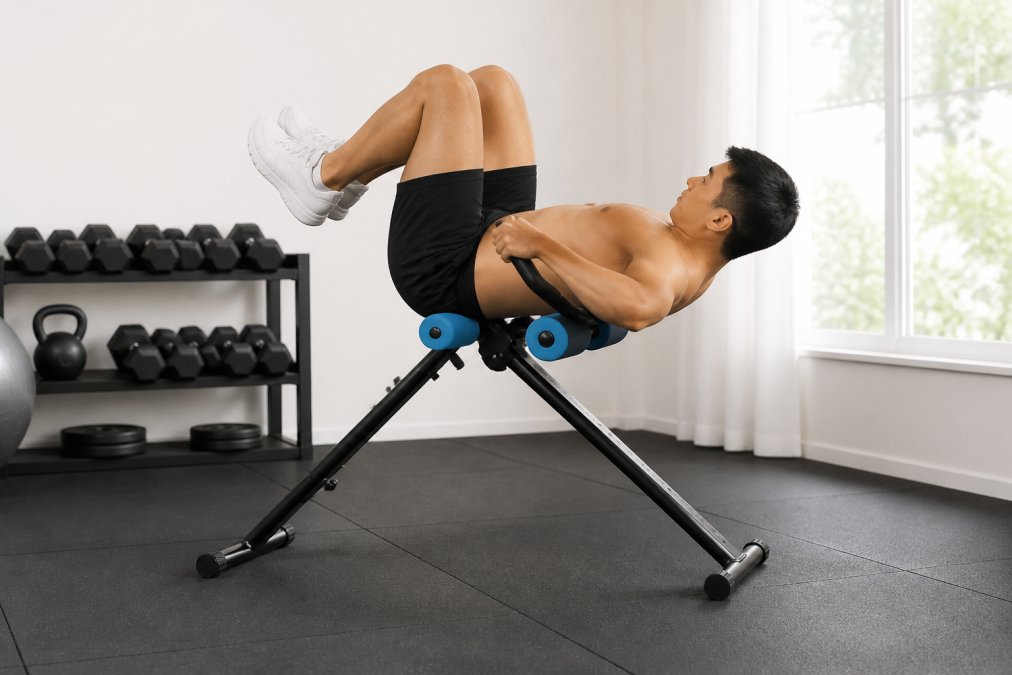
Setup: Sit on the bench with your back firmly against the padded support. Your hips should be positioned so your lower back maintains light contact with the pad throughout the movement. Grip the reverse crunch handle with both hands at chest level. Your feet should rest on the foot roller, with your legs roughly at a 90-degree angle at the knees.
The Movement: Exhale and curl your hips upward by contracting your lower abdominals. Your knees should travel toward your chest in a controlled arc. The movement is short, typically 6-12 inches of hip displacement. Do not use momentum. Your upper back should remain stationary against the pad; only your hips and lower torso move. Hold the top position for one second, squeezing your lower abs hard.
Return: Inhale and slowly lower your hips back to the starting position. Control the descent; the eccentric phase should take 2-3 seconds, where much of the muscle damage and growth stimulus occurs.
Rep Range: Perform 12-20 reps per set for hypertrophy and strength endurance. The lower abs respond well to higher rep ranges because they contain a higher percentage of slow-twitch muscle fibers. Start with 3 sets per session, 2-3 times per week.
Common Form Mistakes to Avoid
The most frequent error is using momentum instead of muscular contraction. Trainees swing their hips upward using leg drive or hip flexor momentum, which defeats the purpose of the movement. Your lower abs should initiate the movement, not your legs. If you're swinging, reduce the range of motion and focus on squeezing at the top.
Another common mistake is excessive spinal flexion. Some people try to curl their entire torso forward during the reverse crunch, which shifts tension away from the lower abs and toward the hip flexors. Remember: your upper back stays planted. Only your hips move.
Gripping the handle too tightly is another culprit. Many trainees unconsciously pull themselves upward using their arms, which reduces lower ab activation. Hold the handle lightly for balance only.
Key Features That Make a Reverse Sit Up Bench Effective
Adjustable Height and Incline Settings
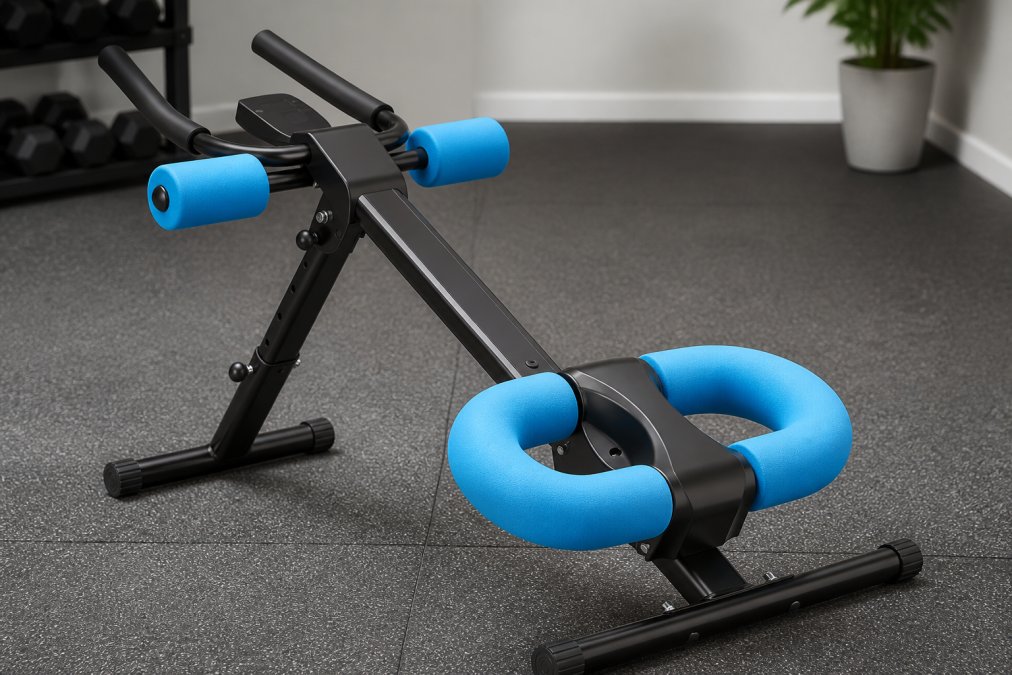
The best reverse sit up benches offer multiple adjustment points to match your body size and training intensity. Height adjustments allow shorter and taller users to position themselves correctly so their hips align with the pivot point. Incline settings are equally critical. A flat bench provides baseline difficulty. As you progress, increasing the decline angle amplifies the gravitational load on your lower abs. Most quality benches offer 2-4 incline positions.
The Journal of Strength and Conditioning Research documents that incline angle directly correlates with abdominal muscle activation, with steeper angles producing greater EMG activity. The Adjustable Ab Machine from Bodyhackfitness exemplifies this principle with 5 height levels and 2 incline positions, giving you multiple difficulty configurations.

Weight Capacity and Frame Stability
A flimsy reverse sit up bench that wobbles during use is worse than useless. Your bench must have a heavy-duty steel frame capable of supporting your bodyweight plus the force you generate during movements. Most quality benches support 300-440 lbs.
Frame stability matters because any movement in the bench dissipates energy that should be going into your muscles. A solid steel frame with triangular support structures keeps the bench rock-solid during your set. Look for benches with wide base footprints and non-slip feet that prevent sliding on hardwood or tile floors. Welded joints are superior to bolted connections for long-term durability.
Comfort and Support Features
Padding thickness and material directly impact both comfort and safety. The backrest and seat should feature at least 1.5 inches of high-density foam that doesn't compress flat after a few months of use. Cheap padding flattens quickly, reducing comfort and increasing pressure on your spine.
Foot roller design is critical. Your feet need secure contact with the roller to prevent your legs from slipping during the set. Rollers should have a slight curve that accommodates the contour of your shins and should be padded to distribute pressure evenly.
The reverse crunch handle should be positioned at a comfortable height for your arm length. Most quality benches position the handle at mid-chest height when you're seated.
Best Core Workout Equipment for Home Training
A reverse sit up bench is powerful alone, but it's even more effective as part of a comprehensive core training setup. The best home gym cores combine equipment that addresses all three planes of motion: sagittal (forward-backward), frontal (side-to-side), and transverse (rotational).
For sagittal plane work, a reverse sit up bench is your primary tool. Pair it with a pull-up bar or suspension trainer for upper ab work. For frontal plane work, add a cable machine or resistance band setup for side planks and oblique crunches. For transverse plane work, Pallof presses using a cable machine or resistance bands train anti-rotation, which is often the most neglected plane in home gyms.
The Multi-Functional Adjustable Weight Bench from Bodyhackfitness complements a reverse sit up bench nicely. It includes a squat rack, pull-up handles, and flat bench surface, covering sagittal and frontal plane work. Combined with a reverse sit up bench, you have a complete lower body and core training environment in minimal space.

Progressive Overload and Workout Variations
Building a stronger core requires progressive overload, just like any other muscle group. With a reverse sit up bench, you have several overload variables: rep range, set volume, incline angle, and range of motion.
Progression Strategy 1: Incline Progression. Start with a shallow incline and perform 3 sets of 15-20 reps with perfect form. Once you can complete all reps without momentum or form breakdown, increase the incline angle by one notch. This is the safest progression method because it increases resistance gradually.
Progression Strategy 2: Volume Progression. Keep the incline constant but add one additional set per week until you reach 5 sets. Once you're performing 5 sets of 15 reps with control, you're ready to increase the incline.
Exercise Variation 1: Weighted Reverse Crunches. Once bodyweight reverse crunches become easy, hold a light weight plate (5-10 lbs) across your chest during the movement.
Exercise Variation 2: Single-Leg Reverse Crunches. Perform reverse crunches with one leg extended and one leg bent. This reduces the mechanical advantage and increases core stabilization demands.
Exercise Variation 3: Reverse Crunch Holds. Instead of continuous reps, curl your hips up and hold the top position for 20-30 seconds. This isometric variation builds muscular endurance.
Most trainees progress through variations in this order: incline progression first, then volume, then range of motion, then weighted variations. This sequence ensures you master movement quality before adding external load.
Injury Prevention and Biomechanical Efficiency
The lower back is vulnerable during core training, particularly during movements that combine spinal flexion with heavy loading. A reverse sit up bench mitigates this risk because it eliminates spinal compression entirely. Your spine stays neutral or slightly flexed throughout the movement.
However, injury risk still exists if you ignore biomechanical principles. The most common injury from reverse crunches is hip flexor strain, which occurs when trainees use excessive hip flexor activation instead of abdominal contraction. This happens when the incline is too steep for your current strength level. The fix is simple: start with a shallow incline and master the movement pattern before increasing difficulty.
Proper bench setup is the best injury prevention tool available. Your feet must be secure on the foot roller. Your lower back must be in light contact with the pad. The reverse crunch handle must be positioned so your arms remain relatively relaxed. When these elements align, injury risk drops dramatically.
According to the American Physical Therapy Association, controlled eccentric training reduces injury risk and produces superior strength gains compared to explosive concentric-only training. This principle applies directly to reverse crunches: slow, controlled lowering is superior to fast, bouncy reps.
Conclusion
A reverse sit up bench is one of the most underrated pieces of core training equipment available for home gyms. It isolates your lower abdominals and obliques with precision that bodyweight exercises cannot match, and the adjustable designs available today accommodate every fitness level from beginner to advanced.
At Bodyhackfitness, we are committed to helping fitness enthusiasts unlock their full potential and support consistent progress with the right equipment and programming. The Adjustable Ab Machine with its 5 height levels, 2 incline positions, and 440-lb weight capacity gives you the flexibility to progress for years while maintaining perfect form. Shop now and start building the core strength that transforms your entire training.
=== FAQ ANSWERS (audit these too, same rules) ===
[1] Q: What muscles does a reverse sit up bench work? A: A reverse sit up bench targets your lower abdominal muscles, obliques, and hip flexors. The reverse crunch motion isolates the lower abs more effectively than traditional crunches because it minimizes upper abdominal dominance. By lifting your hips and lower back off the bench, you engage core stabilization muscles throughout your entire midsection. The adjustable foot rollers and incline settings allow you to increase intensity and shift emphasis to different areas of your core.
[2] Q: What are the main reverse crunch benefits? A: Reverse crunches build lower abdominal definition, improve spinal support, and enhance hip flexion strength. They can reduce strain on your neck and spine compared to traditional sit-ups, making them a potentially safer option for long-term training. The movement strengthens core stabilization muscles essential for posture and injury prevention. Regular reverse crunch training also increases range of motion, supports progressive resistance training, and can contribute to visible muscle hypertrophy in your lower abs and obliques when combined with proper nutrition.
[3] Q: How do I know if a reverse sit up bench is right for my home gym? A: A reverse sit up bench is ideal if you want dedicated lower abdominal isolation work and have limited floor space. Look for models with adjustable height levels, a heavy-duty steel frame rated for your body weight, and ergonomic padding for comfort. The Adjustable Ab Machine for Stomach Workout ($70.73) offers 5 height levels and 440 lbs weight capacity, making it versatile for beginners through advanced users. Choose a foldable design if storage is a concern, and verify the frame stability and foot roller quality before purchasing.
[4] Q: What's the difference between a reverse sit up bench and a regular ab bench? A: A reverse sit up bench positions you to lift your lower body toward your chest, isolating lower abs and obliques. A regular ab bench typically supports upper body crunches that engage the rectus abdominis more broadly. Reverse benches often include a reverse crunch handle and adjustable foot rollers for hip flexion work, while flat benches focus on general core stability. The incline adjustment on reverse benches lets you control workout intensity and target different muscle groups, making them more versatile for progressive resistance training and full-body muscle engagement.
Frequently Asked Questions
Q: What muscles does a reverse sit up bench work?
A: A reverse sit up bench targets your lower abdominal muscles, obliques, and hip flexors. The reverse crunch motion isolates the lower abs more effectively than traditional crunches because it minimizes upper abdominal dominance. By lifting your hips and lower back off the bench, you engage core stabilization muscles throughout your entire midsection. The adjustable foot rollers and incline settings allow you to increase intensity and shift emphasis to different areas of your core.
Q: What are the main reverse crunch benefits?
A: Reverse crunches build lower abdominal definition, improve spinal support, and enhance hip flexion strength. They can reduce strain on your neck and spine compared to traditional sit-ups, making them a potentially safer option for long-term training. The movement strengthens core stabilization muscles essential for posture and injury prevention. Regular reverse crunch training also increases range of motion, supports progressive resistance training, and can contribute to visible muscle hypertrophy in your lower abs and obliques when combined with proper nutrition.
Q: How do I know if a reverse sit up bench is right for my home gym?
A: A reverse sit up bench is ideal if you want dedicated lower abdominal isolation work and have limited floor space. Look for models with adjustable height levels, a heavy-duty steel frame rated for your body weight, and ergonomic padding for comfort. The Adjustable Ab Machine for Stomach Workout ($70.73) offers 5 height levels and 440 lbs weight capacity, making it versatile for beginners through advanced users. Choose a foldable design if storage is a concern, and verify the frame stability and foot roller quality before purchasing.
Q: What's the difference between a reverse sit up bench and a regular ab bench?
A: A reverse sit up bench positions you to lift your lower body toward your chest, isolating lower abs and obliques. A regular ab bench typically supports upper body crunches that engage the rectus abdominis more broadly. Reverse benches often include a reverse crunch handle and adjustable foot rollers for hip flexion work, while flat benches focus on general core stability. The incline adjustment on reverse benches lets you control workout intensity and target different muscle groups, making them more versatile for progressive resistance training and full-body muscle engagement.
This article was written using GrandRanker