

Table of Contents
- Why Lifters Look for a Tonal Alternative for Strength Training
- What to Look For in a Tonal Alternative
- Tonal vs. Speediance: Digital Resistance Head to Head
- Tonal vs. Vitruvian: Motorized Resistance Compared
- Tonal vs. OxeFit: Coaching and Guided Workouts
- Tonal vs. Free Weights: Which Builds Strength Better?
- The Best Tonal Alternative for Your Training Style
- Conclusion
- Frequently Asked Questions
Last Updated: October 6, 2026
Why Lifters Look for a Tonal Alternative for Strength Training
A wall-mounted digital resistance system costs thousands upfront and locks most guided programming behind a monthly subscription. That is why so many lifters search for a Tonal alternative for strength training. At Bodyhackfitnesss, customers tell us the same thing: they love motorized resistance but want equipment they own outright, that fits a spare corner, and that does not bill them monthly.
The case for looking elsewhere is simple. Wall-mounted systems need studs, space, and a permanent commitment. They also tie your training to one company's software. Free weights, bands, and adjustable tools train the same muscles, cost a fraction as much, and never stop working when a subscription lapses.
Below, we break down what matters in a Tonal alternative, compare the leading motorized options, and show which setup fits your training style and room.
What to Look For in a Tonal Alternative
The right alternative comes down to three things: resistance delivered, space and installation demands, and whether it charges monthly. Get those right and the rest is preference.
Most buyers fixate on maximum resistance and ignore the other two. That is a mistake: a machine that pulls heavy but eats half your living room, or needs professional mounting, can cost more in money and hassle than a simpler setup.
Resistance Range and Maximum Load
Resistance range matters more than peak resistance. A machine that starts too heavy forces awkward positions on light movements. One that tops out too low stops challenging you once you get stronger.
Digital systems use motors, so their range is fixed by the hardware; free weights and adjustable tools scale with what you own. Training for years? Check the top end. Starting out? Check the bottom end and how finely you can adjust between levels.
Space, Installation, and Subscription Costs
This is where the real money hides. A wall-mounted unit needs a dedicated wall and often professional installation; a floor-standing unit needs a footprint you can live with. Both may require a monthly membership for classes and coaching.
Subscription-free equipment is worth more than it looks. Add up a monthly fee over three years against a one-time purchase, for many lifters, that math decides the choice.
Tonal vs. Speediance: Digital Resistance Head to Head
Speediance is the closest thing to a direct swap for a wall-mounted digital system: same motorized digital resistance, but it stands on the floor instead of hanging on your wall. That difference changes everything about installation, which is why most shoppers study this category first.
Here is how the two approaches differ once you strip the marketing away.
Mounting and installation. A wall-mounted digital system needs two studs, a level mounting plate, and clear wall height for the arms' full range, usually a permanent modification to a room you own.
Resistance delivery. Both use motors and cables rather than plates or a weight stack.
Footprint and clearance. A floor-standing tower needs roughly a 4-foot by 4-foot training zone for cable work, plus a few feet behind for the base. A wall-mounted unit frees that floor space but consumes the wall. Neither is strictly better; they trade one kind of space for another.
Subscription and ownership. Both wall-mounted and floor-standing digital systems typically gate guided classes, form feedback, and progress tracking behind a recurring membership. Cancel it and the hardware usually still generates resistance for basic cable work, but the coaching layer, the part most people pay for, goes dark.
Who this category is for. To replicate the guided, cable-based experience without drilling into a wall, a floor-standing digital unit is the honest answer, and Speediance is the name you will keep running into.
For lifters who want that cable-like feel at home without a motor or a subscription, our 5-Piece Latex Resistance Training Band Set delivers adjustable resistance up to 102.06 kg with a door anchor, so you get pulling angles without a motor or a monthly fee.

Tonal vs. Vitruvian: Motorized Resistance Compared
Vitruvian takes a different approach from both wall-mounted and tower-style systems. Instead of a vertical unit, it uses a compact motorized platform that sits flat on the floor with a single cable running to a handle or bar. You stand on the platform, and the motor adjusts resistance in real time based on how you move.
The catch is the same as every connected system, and it is worth spelling out in dollars.
How the resistance mechanism differs. A platform-style unit generates load through a motor and a single cable, so resistance is applied along one line of pull. That is excellent for squats, deadlifts, rows, and presses performed standing on the platform, but less natural for two-independent-arm movements, a dumbbell bench press, split-stance row, or single-arm overhead press, because you work against one cable rather than two.
Progressive overload and the app. This is where platform systems earn their reputation. The motor adds resistance in small increments automatically, and the app logs every rep so you can see whether you are getting stronger week to week. For a lifter who has plateaued on a fixed dumbbell rack, that automatic progression is genuinely useful. The trade-off: the progression logic lives in software you do not control.
The ownership-cost gap nobody covers. When you buy a motorized platform, you buy two things: hardware and a software service. The hardware is yours forever; the software is not.
Premium 20LB Rubber Coated Cast Iron Dumbbell with Ergonomic Chrome Handle →
That is the tension with all motorized resistance: excellent at guided progression, poor at being something you keep forever with no ongoing cost. For progression without the dependency, build progressive overload yourself with adjustable tools, add a rep, a set, a small increment, and track it in a notebook or a free app you control.
Who this category is for. Choose a platform-style motorized system if you train mostly standing compound lifts, want automatic progression, and are comfortable with a recurring fee. Skip it if you train a lot of unilateral or two-arm dumbbell work, or want equipment that works the same way in ten years with no app involved.
Tonal vs. OxeFit: Coaching and Guided Workouts
OxeFit competes on coaching, pairing robotic resistance with form feedback and guided sessions to replicate a trainer's eye. For a beginner worried about technique, that is genuinely valuable.
For an experienced lifter, the value drops fast. Once you know how to brace, hinge, and press, you do not need a machine correcting your form, you need load that goes up over time. Coaching features are worth paying for early and easy to outgrow.
The honest read: if you are new and nervous, guided coaching earns its keep; if you have trained for years, put that money into weight you can add to.
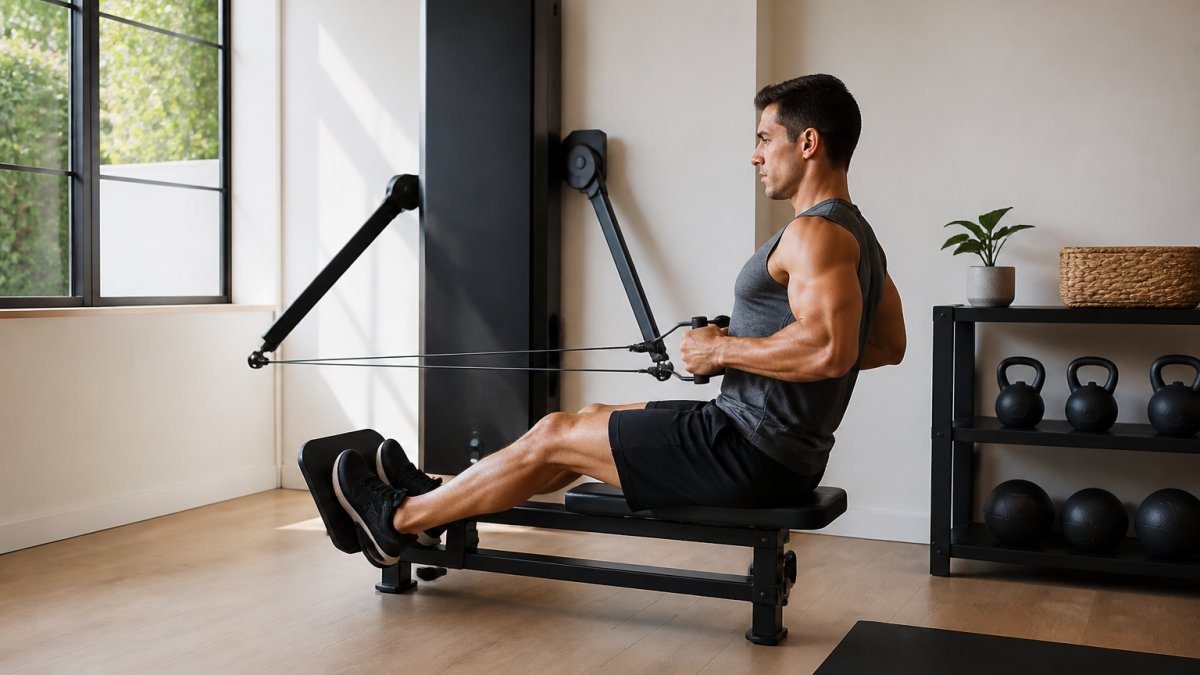
Tonal vs. Free Weights: Which Builds Strength Better?
Free weights still win for raw strength, and it is not close. The reason is progressive overload: to get stronger, you must gradually add load, and free weights let you add it in small, precise increments. A rack of dumbbells and a barbell scale with you indefinitely.
Digital resistance can replicate the feel, but not the granularity or ceiling of iron. A motor has a top-end limit; a barbell does not.
That said, free weights need more floor space and a bit more knowledge to load safely. The practical answer is not either-or: most home lifters build around free weights and use bands or cables for accessory work. To start that build, our Premium 20LB Rubber Coated Cast Iron Dumbbell is a solid first pair.

The Best Tonal Alternative for Your Training Style
The best Tonal alternative depends on your training style, not on which machine has the biggest spec sheet. Match the tool to how you actually train and you will stick with it.
That is the part most guides skip: they rank machines without asking whether you are a lifter chasing numbers or a renter with one spare corner. Here is how we would split it.
For Progressive Overload on a Budget
To add weight over time without a subscription, build around free weights and adjustable tools. Start with a pair of dumbbells and a bench, then add a kettlebell as you grow. Our Versatile Adjustable Kettlebell covers seven weight levels in one unit, replacing a whole rack and saving money and floor space.

A Heavy-Duty Foldable Weight Bench rounds out the setup. It folds flat for storage and holds up to 1000 lbs, so it grows with you.
For Small Spaces and Renters
If you rent or train in a tight space, skip anything that needs mounting and choose tools that store away without drilling. A resistance band set with a door anchor, a doorway pull-up bar, and a weighted vest cover nearly every movement pattern without touching a wall.
For upper-body work, our Doorway Pull-Up Bar installs without drilling, and the Adjustable Pull-Up Assistance Resistance Band helps beginners build toward unassisted reps.
Conclusion
The hard part is not finding a Tonal alternative, it is choosing one you will still use in six months, without a monthly bill or a wall full of hardware. Match the tool to your space and goals, and consistency follows.
At Bodyhackfitnesss, we stock the pieces that make that easy: adjustable kettlebells that replace a rack, foldable benches that store in seconds, and subscription-free equipment you own outright. Shop now and build a home gym that works as hard as you do.
Frequently Asked Questions
What are some good alternatives to Tonal for smart strength training?
Smart options include Speediance, Vitruvian, and OxeFit, which use digital or motorized resistance and guided workouts. If you want to skip subscriptions, free weights, resistance bands, and adjustable kettlebells deliver strength training without ongoing fees. A foldable bench paired with an adjustable kettlebell covers most full-body movements for a fraction of the cost.
Is Tonal as effective as free weights for building muscle?
Free weights allow precise progressive overload because you add fixed increments and control the movement path yourself. Tonal's digital resistance adjusts quickly and tracks volume, which helps consistency. For raw strength and lifting experience, free weights remain the standard. For convenience and guided programming, a smart gym works well. Many lifters combine both.
What should I look for in a Tonal alternative?
Check maximum resistance and resistance range, mounting style (wall-mounted vs. floor-standing), space requirements, installation difficulty, and whether guided workouts require a subscription. Also weigh long-term ownership costs. A $117 adjustable kettlebell or a $74.91 resistance band set can replace many Tonal functions without monthly fees.
Can beginners use a Tonal alternative at home?
Yes. Adjustable kettlebells with seven weight levels and resistance bands that adjust up to 102.06 kg suit beginners through advanced users. A doorway pull-up bar with an assistance band helps build upper body strength progressively. Start with lighter resistance, focus on form, and increase load as your strength improves.
Are free weights or a cable machine a better alternative to Tonal?
Free weights like dumbbells and kettlebells build strength through natural movement patterns and cost less upfront. Cable machines offer constant tension and more exercise variety for isolation work. For home gyms with limited space, free weights and bands are more practical. A $59.70 dumbbell or $90.25 aqua water bag adds instability that engages more muscles.