


Quick Summary
A personalized recovery routine starts with an honest audit of your training load, daily time, budget, and preferences. Turn that audit into two or three measurable goals, then stack small habits for sleep, nutrition, and mobility, and review your recovery routine every two weeks.
- Write a one-page profile covering training load, time constraints, equipment, and preferences before choosing habits.
- Use active recovery the day after hard training and save full rest days for high soreness or fatigue.
- Aim for a consistent bedtime and seven to nine hours of sleep, with screens put away 30 minutes before bed.
- Check progress every two weeks for the first two months, then monthly once the routine feels stable.
- If an indicator does not improve after two check-ins, change the plan rather than doubling down.
Table of Contents
- Recovery Routine vs. Addiction Recovery: Which One This Guide Covers
- Step 1: Assess Your Needs, Goals, and Constraints
- Step 2: Set Realistic Recovery Goals and Identify Warning Signs
- Active Recovery vs Passive Recovery: Building Both Into Your Week
- Step 3: Build Your Daily Routine With Sleep, Nutrition, and Mobility
- Best Recovery Tools for Athletes and Home Setups
- Recovery Routine Template: Fill in the Blanks and Start This Week
- Measuring Progress, Revising Your Plan, and Knowing When to Get Help
- Frequently Asked Questions
Recovery Routine vs. Addiction Recovery: Which One This Guide Covers
Last Updated: November 3, 2026
Many people searching for a recovery routine want to get stronger, sleep better, or bounce back faster after training. Others mean recovery from substance use or a behavioral habit. This guide covers the physical kind: a personalized recovery routine for athletes and active adults who train hard and want to feel better between sessions.
The two topics share a word but little else. Physical recovery is about rest, nutrition, mobility, and tools that help muscles repair. Addiction recovery involves medical care, counseling, and support networks. This guide does not replace that care.
- Physical recovery: sleep, food, hydration, mobility, and recovery tools
- Addiction or behavioral recovery: medical treatment, therapy, and support groups
If you are dealing with addiction, speaking with a licensed professional is the right first step for that kind of recovery.
Step 1: Assess Your Needs, Goals, and Constraints
Start with an honest look at where you are today. A routine built for a marathon runner will not fit a desk worker who lifts three times a week, and a routine built for a 25-year-old with no caregiving duties will not fit a parent who is up at night with a newborn. Personalization is not a personality quiz; it is a short audit of your body, your schedule, and your resources.
Run this four-part audit and write the answers down. The goal is to leave this step with a one-page profile you can actually build a routine around.
1. Body and training load. Note your weekly training hours, the days you go hardest, and any sore spots that recur. A common pattern is soreness that shows up in the same place every week, which usually points to load management rather than a recovery-tool problem. Also note any current injury, recent illness, or medical condition, because those change what is safe.
2. Time and schedule constraints. Be specific about the minutes you truly have, not the minutes you wish you had. Count work shifts, commutes, caregiving, school pickup, and the hours you are on your feet. If you have 10 minutes on weekdays and 45 on Sundays, build the routine around that split instead of pretending every day is the same.
3. Budget and equipment. Recovery does not require a full home gym. List what you already own (foam roller, massage gun, resistance bands, a bathtub, a freezer for ice packs) and set a monthly ceiling for anything new. A routine that depends on a $200 device you will not buy is not personalized; it is aspirational.
4. Access and preferences. Note whether you have a gym, a physical therapist, a pool, or safe outdoor space nearby, and whether you prefer solitude or company. Preferences matter for adherence: if you hate cold plunges, a cold-plunge habit will not survive week two no matter how good the evidence is.
Then translate the audit into a short profile:
- My hard days: ____________________
- My realistic recovery minutes per day: ______
- My recurring sore spots: ____________________
- My fixed constraints (work, caregiving, disability, budget): ____________________
- What I already own: ____________________
- What I will not do (preferences): ____________________
Watch out: if your audit reveals a new injury, unexplained pain, or a medical condition you have not discussed with a clinician, treat that as a safety issue first and build the routine around professional guidance rather than around a template.
This profile is the input for every later step. When you set goals in Step 2, they should fit the minutes and constraints you just wrote down, not an idealized week.
Step 2: Set Realistic Recovery Goals and Identify Warning Signs
Pick two or three goals you can measure. Examples include sleeping seven to nine hours most nights, reducing morning stiffness, or feeling ready for your next workout.
Watch for warning signs that your body needs more rest:
- Resting heart rate creeping up over several days
- Persistent soreness that lasts longer than usual
- Trouble sleeping or waking up tired
- Losing motivation or dreading workouts
- Frequent minor injuries or nagging joint pain
If these show up for more than a week or two, cut back on intensity before you push harder.
Active Recovery vs Passive Recovery: Building Both Into Your Week
Active recovery means gentle movement that increases blood flow without adding stress. Examples include a 20-minute walk, light cycling, or easy swimming. Passive recovery means full rest, such as sleep, a day off, or a warm bath.
NNEDSZ Green Massage Gun - 6-Speed Deep Tissue Massager with 4 Professional →
Most people need both. Use active recovery on the day after hard training. Save full rest days for when soreness or fatigue is high.
A simple weekly pattern:
- Hard training days: 2 to 3 per week
- Active recovery days: 1 to 2 per week
- Full rest days: 1 per week, or more during heavy blocks
Step 3: Build Your Daily Routine With Sleep, Nutrition, and Mobility
Your daily routine works best when it stacks small habits on top of each other. Anchor each habit to something you already do, like brushing your teeth or making coffee.
- Sleep: Aim for a consistent bedtime. Dim lights and put screens away 30 minutes before bed.
- Nutrition: Include protein at each meal and eat enough carbohydrates to fuel training. Drink water through the day and add electrolytes after long sweaty sessions.
- Mobility: Spend 5 to 10 minutes stretching or rolling tight areas after training or before bed.
Best Recovery Tools for Athletes and Home Setups
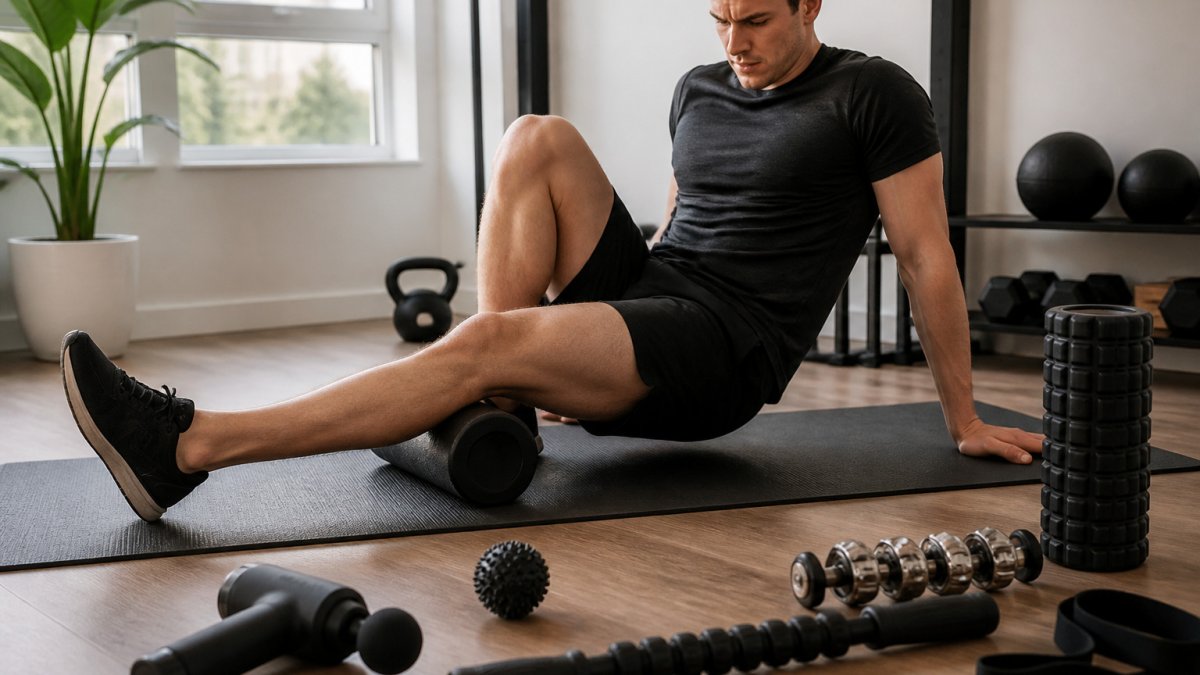
Recovery tools can make mobility work faster and more comfortable, but you do not need all of them. Start with one or two that match your soreness pattern.
- Massage gun: The NNEDSZ Green Massage Gun - 6-Speed Deep Tissue Massager with 4 Professional Massage Heads offers six speed levels and four massage heads, so you can adjust intensity and target different muscle groups. It is priced at $74.45.
- Foam roller: The Foam Massage Roller for Muscle Relief is a lightweight option for home or gym use.
Pick the tool that fits your routine.


The article compares two tools you can start with, based on your soreness pattern.
| Tool | Price | Key feature |
|---|---|---|
| NNEDSZ Green Massage Gun | $74.45 | Six speed levels, four massage heads |
| Foam Massage Roller | Not stated | Lightweight for home or gym use |
Recovery Routine Template: Fill in the Blanks and Start This Week
Copy this template and fill in the blanks. Keep it on your phone or print it.
My recovery routine
- My main goal: ____________________
- Training days per week: ______
- Hard days: ____________________
- Active recovery days: ____________________
- Full rest day: ____________________
- Bedtime goal: ______ (target 7-9 hours of sleep)
- Daily protein target: ______ grams
- Daily water target: ______ liters
- Mobility routine (5-10 min): ____________________
- Recovery tool I will use: ____________________
- My warning signs: ____________________
- Next check-in date: ____________________
Start with just the sleep and mobility lines this week. Add more once those feel automatic.
Measuring Progress, Revising Your Plan, and Knowing When to Get Help
A recovery routine is a draft, not a contract. The point of measuring is to find out which parts are working so you can keep them and change the rest. Pick a small set of indicators you can track without turning your life into a spreadsheet.
Indicators worth tracking. Choose two or three, not all of them:
- Sleep consistency: the gap between your earliest and latest bedtime across the week, and whether you wake feeling rested most mornings.
- Soreness duration: how many days soreness lasts after a hard session, and whether it is trending shorter.
- Adherence: how many of your planned recovery minutes you actually completed. A routine you follow 80% of the time beats a perfect one you follow 30% of the time.
- Training readiness: a simple 1-to-5 rating before each session, or whether your warm-up feels harder than usual.
- Cravings or mood, if relevant: for anyone also managing a behavioral habit, note whether cravings or low mood are rising, because that is a signal to lean on support rather than push harder.
Review cadence. Check in every two weeks for the first two months, then monthly once the routine feels stable. At each check-in, ask three questions: Are my indicators moving in the right direction? Which habit did I actually complete? Which habit did I skip, and why? Change one variable at a time so you can tell what made the difference. If you want proven ways to stay consistent once your routine is set, that guide covers practical habits. If sleep is the problem, adjust the bedtime anchor first; if soreness is the problem, adjust training load before adding more recovery tools.
A simple revision rule. If an indicator has not improved after two check-ins, change the plan rather than doubling down. Common revisions include cutting one hard day, moving mobility work to the evening, or replacing a tool-based habit with a walk you will actually take. If an indicator is improving, keep the habit and resist the urge to add five more.
When to get help. Contact a clinician or physical therapist if you notice:
- Pain that is sharp, sudden, or worsening, or pain at rest
- Swelling, numbness, weakness, or loss of range of motion
- Symptoms that last more than two weeks despite rest and load reduction
- Sleep problems that persist for weeks, or fatigue that does not improve with more rest
- For anyone managing substance use or a behavioral habit: increasing cravings, withdrawal symptoms, or a return to use. The Substance Abuse and Mental Health Services Administration (SAMHSA) runs a free, confidential helpline at 1-800-662-4357, and a licensed professional is the right first step for that kind of recovery.
Recovery tools support your routine, but they do not replace a proper diagnosis. The measure-and-revise loop is what turns a generic plan into a personalized one over time.
Frequently Asked Questions
What are the essential components of a personalized recovery routine?
A personalized recovery routine usually combines sleep, nutrition, hydration, mobility work, and active recovery such as easy walking or light stretching. Start by identifying where your training load is highest and which habits you already keep. Then add one or two components at a time so the routine stays sustainable. Track how you feel over two to three weeks and adjust the pieces that are not helping, rather than adding everything at once.
How do you tailor a recovery routine to your specific training intensity?
Match recovery to load. After high-intensity sessions or heavy lifting, plan longer sleep, more protein, and a gentler mobility session the next day. On lighter days, a short walk or foam rolling session may be enough. Use simple markers such as soreness, sleep quality, and energy levels to decide how much recovery work each week needs, and scale back when several markers drop at once.
How often should you adjust your recovery routine?
Review your routine every two to four weeks, or sooner if your training changes, you start a new program, or you notice persistent fatigue or soreness. Look at sleep consistency, energy, and how quickly you bounce back between sessions. Small adjustments, like moving a mobility session or changing bedtime, are usually more effective than rebuilding the whole plan.
What role does nutrition play in a personalized recovery routine?
Nutrition supports recovery by supplying protein for muscle repair, carbohydrates to refill energy stores after hard training, and enough fluid to maintain hydration. Many people benefit from a protein source at each meal and a carbohydrate-rich snack after intense sessions. Adjust portions based on your training volume and body needs, and consider a registered dietitian if you have specific dietary restrictions.
