

Table of Contents
- How Red Light Therapy Works for Muscle Recovery
- Red Light Therapy for Muscle Soreness: Does It Really Help?
- Red Light Therapy Dosage for Muscles: What Actually Works
- Which Red Light Therapy Is Best for Muscle Recovery?
- Red Light Therapy Risks and Side Effects
- Red Light Therapy vs. Other Recovery Tools: Cost and Value
- Who Benefits Most (and Least) from Red Light Therapy
- Frequently Asked Questions
Last Updated: October 6, 2026
How Red Light Therapy Works for Muscle Recovery
Red light therapy uses specific wavelengths of red and near-infrared light to interact with cells in your muscles and other tissues. Is it worth it for muscle recovery?

Here is the short version. Too much can stall progress. NIH overview of photobiomodulation research notes that results vary widely across studies, largely because light dose, wavelength, and treatment timing are rarely standardized.
Below, we break down the mechanism, what the research supports, how to dose it, and how it stacks up against cheaper recovery tools.
Photobiomodulation and Cellular Energy
Photobiomodulation is the scientific term for how red and near-infrared light interact with living tissue. The light is absorbed by mitochondria, which may support ATP production, the molecule your muscles use for fuel. The effect is modest and cumulative; one session will not transform your recovery.
What the Research Says About Muscle Tissue
Research on muscle tissue is promising but mixed. Some human trials show reduced soreness and faster strength recovery after damaging exercise; others show no meaningful difference. Studies that do show benefits share one trait: consistent dosing over multiple sessions. A negative study often used the wrong dose, too weak to reach the muscle, or strong enough to blunt the adaptation you want.
Red Light Therapy for Muscle Soreness: Does It Really Help?
Red light therapy for muscle soreness appears to help some people, particularly when applied consistently in the days after hard training. The evidence is strongest for short-term relief, not long-term performance gains. Soreness is not the same as damage: feeling less sore does not always mean you recovered faster, and pushing through soreness can dig a deeper hole.
Delayed-Onset Muscle Soreness and Inflammation
Delayed-onset muscle soreness (DOMS) is the stiffness and tenderness that peaks a day or two after unfamiliar or intense exercise, driven partly by inflammation and oxidative stress. Red and near-infrared light may reduce some inflammation markers and improve local blood flow, supporting cellular repair. Many users report soreness feels less sharp and fades sooner, but the effect is a nudge, not a switch.
Red Light Therapy Dosage for Muscles: What Actually Works
Dose is the single biggest factor in whether red light therapy works for muscle recovery, and the factor most buyers never check. Two devices with identical wavelengths can produce wildly different results because dose depends on four variables: wavelength, irradiance (power density), distance, and time. Get one wrong and you either underdose (no effect) or overdose (blunting adaptation).

The Four Variables That Determine Dose
Wavelength sets how deep the light reaches. Most muscle-recovery devices use two peaks:
- Red light (around 660nm): absorbed in the upper layers, skin, fascia, and shallow tissue
- Near-infrared light (around 850nm): penetrates deeper into muscle and joint tissue
For muscle recovery, near-infrared is the more relevant wavelength because it reaches the tissue you are treating.
Irradiance is the power density delivered at the skin, usually expressed in milliwatts per square centimeter (mW/cm²). This is the number most product listings bury or omit.
Distance changes irradiance fast. Light falls off with distance, so a panel held 6 inches from the skin delivers a very different dose than the same panel at 24 inches.
Time is the variable you control session to session.
A Practical Starting Protocol
A common pattern practitioners use for muscle recovery looks like this:
| Variable | Starting Point | Why It Matters |
|---|---|---|
| Wavelength | 660nm and 850nm | Dual-spectrum covers surface and deep tissue |
| Session length | 10-20 minutes per area | Longer is not better; dose plateaus |
| Frequency | 3-5 sessions per week | Consistency beats intensity |
| Timing | Within a few hours after training | Pre-exercise treatment is a separate use case |
| Distance | Follow the device instructions | Too far reduces dose, too close can overheat |
Treat this as a starting point, not a prescription. The right session length depends on your device's irradiance, which is why a device that publishes its power density is easier to use correctly.
Why Dose Explains the Conflicting Study Results
When human trials on light therapy for muscle recovery disagree, the disagreement usually traces back to dose. A study reporting no benefit often used a dose too low to reach the muscle, or high enough to blunt the inflammatory signaling that drives adaptation. A study reporting a benefit typically used consistent, repeated dosing over multiple sessions. Light therapy is cumulative, and the effect is modest per session.
The most common mistake is buying a device, using it twice, and concluding it does not work. Give it several weeks of consistent, correctly dosed use before judging.
Which Red Light Therapy Is Best for Muscle Recovery?
The best red light therapy for muscle recovery delivers both 660nm and 850nm wavelengths at a dose you can repeat consistently. Power and price matter less than matching the device to the body part you want to treat. Here are the options in our catalog:
| Product | Price | Best For | Key Feature |
|---|---|---|---|
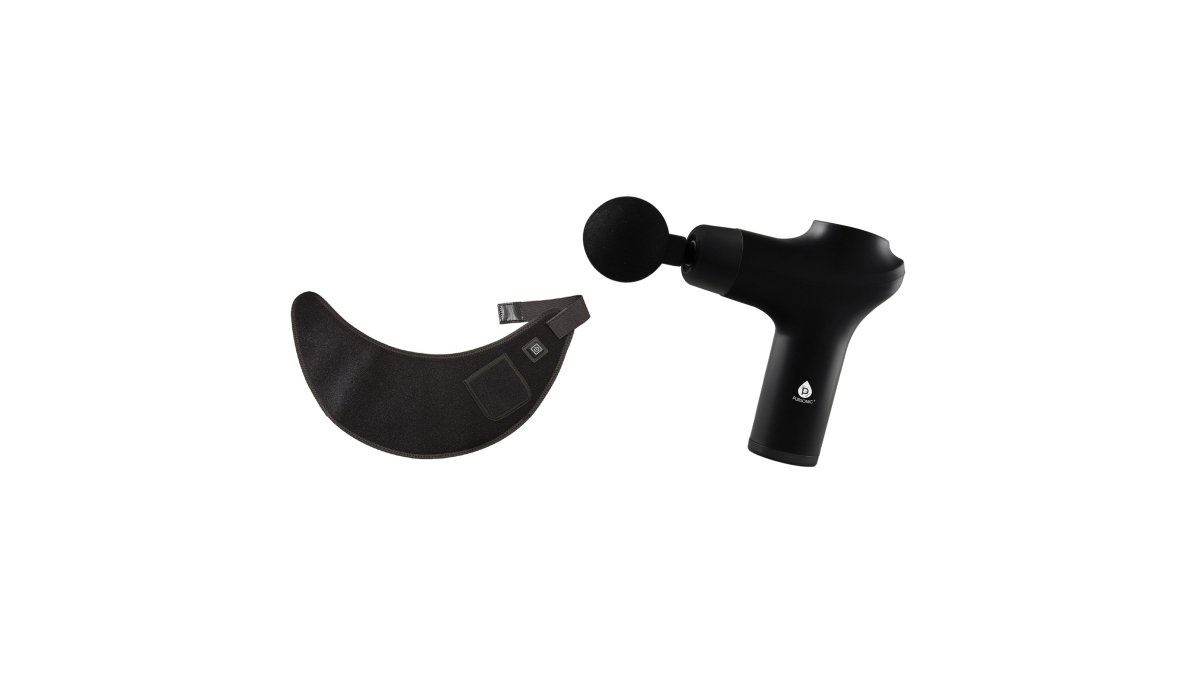
| Red Light Therapy Neck Wrap & 3-Speed Massage Gun | $54.85 | Neck, shoulders, desk-related stiffness | 660nm and 850nm dual-spectrum wrap plus percussive massage |
| Electric Foam Roller for Muscle Relaxation | $288.51 | Large muscle groups, post-workout rolling | Electric vibration with textured deep-tissue surface |
| Travel Muscle Recovery Bundle | $85.41 | On-the-go recovery, trigger points | Trigger point ball, roller stick, foot and mini rollers |
| NNEDSZ Green Massage Gun | $73.97 | Deep tissue knots, targeted relief | 6 speeds and 4 interchangeable heads |
Our top pick for most people is the Red Light Therapy Neck Wrap & 3-Speed Massage Gun. It is the only item in our lineup that combines true red and near-infrared light with percussive massage, and at $54.85 it is the lowest-cost way to test whether light therapy works for you. Where it falls short: it is built for the neck and shoulders, not large muscle groups like quads or glutes.
Red Light Therapy Neck Wrap & 3-Speed Massage Gun →

Red Light Therapy Risks and Side Effects
Red light therapy risks and side effects are generally mild. The most common issues are skin redness, warmth, and occasional irritation at the treatment site, usually fading within hours. Serious side effects are rare when devices are used as directed, but a few cautions apply:
- Do not use light therapy over the eyes without protective eyewear
- Avoid treating areas with active skin infections or open wounds
- If you take medication that increases light sensitivity, talk to your doctor first
This is not a treatment for a diagnosed condition, and it is not a substitute for medical care. If you have chronic pain, rheumatoid arthritis, or morning stiffness that does not improve, see a clinician.
Red Light Therapy vs. Other Recovery Tools: Cost and Value
The honest framing is not 'does it work' but 'does it work well enough, for enough people, to justify its cost compared with cheaper or free recovery methods.'
The Real Cost Picture
Red light therapy has a different cost structure than most recovery tools: you pay once, then use it indefinitely, so the per-session cost falls the more you use it.
| Recovery Method | Cost Structure | Evidence Strength | Best For |
|---|---|---|---|
| Red light therapy device | One-time purchase, then free per session | Mixed, dose-dependent | Soreness, stiffness, circulation |
| Foam rolling | Low one-time cost | Moderate | Flexibility, tension, blood flow |
| Massage gun | Low to moderate one-time cost | Moderate | Knots, trigger points, circulation |
| Sleep and nutrition | Free | Strong | Overall recovery and adaptation |
| Active recovery (walking, easy cardio) | Free | Strong | Circulation, soreness reduction |
| Professional massage or bodywork | Per-session fee, recurring | Moderate | Tension, stress, circulation |
The value case for red light therapy is strongest if you would otherwise pay for recurring professional sessions, and weakest if you have not yet nailed the basics: sleep, protein intake, and not training the same muscle hard two days in a row.
The Benefit-Per-Dollar Question
Sleep, nutrition, and active recovery are free and have the strongest evidence base of any recovery method. No device out-recovers poor sleep. If your soreness comes from too little sleep or too much training volume, spending on a light device before fixing those fundamentals is a poor use of money.
Red light therapy earns its place when the free and cheap options are already handled and you still have a specific, recurring problem, persistent soreness, desk-related neck and shoulder stiffness, or slow recovery between sessions.
How to Judge Whether It Is Worth It for You
Ask three questions before buying:
- Have I already handled sleep, nutrition, and training volume? If not, fix those first, they are free and they work.
- Do I have a specific, recurring problem that cheaper tools have not solved? A vague goal like 'recover better' is not enough to justify the spend.
- Will I actually use it several times a week? The per-session value depends entirely on consistency. A device used twice is the most expensive recovery tool you own.
If you can answer yes to all three, red light therapy is a reasonable value. If you cannot, the cheaper options above will get you further for less.
Who Benefits Most (and Least) from Red Light Therapy
People who train hard, recover slowly, and will actually use a device several times a week benefit most.
Most likely to benefit:
- Strength training athletes dealing with persistent soreness
- Adults with desk-related neck and shoulder stiffness
- People doing structured digital fitness programs at home who want a recovery routine to match
Least likely to benefit:
- Beginners who have not yet built a consistent training habit
- Anyone expecting results from one or two sessions
- People whose soreness comes from too little sleep or too much volume
If you fall into the second group, fix the fundamentals first. The device will still be there.
Red light therapy can be worth it for muscle recovery, but only if you treat it as one tool in a complete routine rather than a shortcut.
Frequently Asked Questions
What's the downside of red light therapy?
Red light therapy is generally well-tolerated, but side effects can include skin irritation, redness, or mild discomfort at the treatment site. Some people experience headaches or dizziness. The main downside is cost and time commitment: at-home devices range from around $55 to $290, and you need consistent sessions over weeks to see potential benefits. Results vary, and it is not a guaranteed fix for muscle recovery.
How long does it take for red light therapy to work on muscles?
Some studies show short-term effects like reduced soreness within 24 to 48 hours after a single session. For longer-term benefits like improved recovery outcomes or strength gains, consistent use over several weeks is typically needed. Research evidence varies, and individual results depend on the light dose, wavelength, and how regularly you use it. Setting realistic expectations matters more than chasing quick fixes.
Does red light therapy reduce muscle soreness after exercise?
Research on red light therapy for muscle soreness suggests it may help reduce delayed-onset muscle soreness when used after damaging exercise. Some human trials found lower pain ratings and reduced inflammation markers. However, findings are mixed, and not every study shows a clear benefit. Using it as part of a broader recovery routine, alongside sleep, nutrition, and active recovery, gives you the best chance of noticing a difference.
How often should you use red light therapy for muscle recovery?
Most protocols suggest using red light therapy three to five times per week, with sessions lasting 10 to 20 minutes per muscle group. Some people use it daily during intense training blocks. The key is consistency rather than intensity. Overdoing it does not speed up results and may cause skin irritation. Following the device manufacturer's recommended treatment frequency is the safest starting point.
Is red light therapy better before or after a workout?
Both pre-exercise and post-exercise treatment have support in research. Pre-exercise treatment may help warm up muscle tissue and improve exercise performance slightly. Post-exercise treatment targets inflammation and supports recovery time. Many athletes use it after training to manage soreness. If you only have time for one session, post-workout use tends to be more popular for recovery-focused goals.