


Table of Contents
- Step 1: Choose the Right Massage Gun and Attachments for Back Pain
- Step 2: Massage Gun Safety Precautions Before You Start
- Step 3: Where Not to Use a Massage Gun on Your Back
- Step 4: How to Apply the Massage Gun to Your Back Muscles
- Step 5: How Long to Use a Massage Gun on Tight Muscles
- Step 6: Using a Massage Gun for Lower Back Pain
- Common Mistakes and When to Stop
- Conclusion
- Frequently Asked Questions
Last Updated: October 13, 2026
Step 1: Choose the Right Massage Gun and Attachments for Back Pain
A massage gun back pain routine works best when you match the device and head to the muscle group you're treating. Most people grab the biggest, hardest attachment and go straight for the spine.

Percussion therapy is the use of rapid, repeated pulses to work soft tissue. The goal is to relax tight muscles and ease soreness, not to pound your back into submission.
For back work, look for these features:
- Adjustable speed settings so you can start low and build up
- Multiple massage heads for different muscle groups
- A long enough handle to reach your upper back without help
- A quiet motor for home use
At Bodyhackfitnesss, we stock options like the NNEDSZ Green Massage Gun, which comes with 6 speed levels and 4 professional heads. That range matters, because your lower back and upper back need very different treatment.
Step 2: Massage Gun Safety Precautions Before You Start
Before you touch your back, run through a short safety check. This step prevents most injuries, and it is the part most articles skip.
Who should not use a massage gun without medical clearance
A massage gun is a mechanical tool that pounds tissue. That is fine for a healthy muscle and risky for some bodies and conditions. Do not use one on your back, or anywhere, until you have talked to a clinician if any of the following apply:
- You have a pacemaker, implanted defibrillator, insulin pump, or another implanted electronic device. Percussion near the device is a known concern; get clearance first.
- You are pregnant. Ask your obstetric provider before using percussion on the lower back or abdomen area.
- You have a bleeding disorder, take blood thinners, or bruise easily. Percussion can cause bruising and, in rare cases, deeper bleeding.
- You have osteoporosis, a known fracture, or a recent back injury. Bone that is fragile or already broken is not a percussion target.
- You have a herniated disc, spinal stenosis, sciatica, or any diagnosed spine condition. A massage gun does not treat these, and pressure in the wrong place can aggravate them.
- You have cancer, an active infection, a fever, or a blood clot. Skip it and get medical guidance.
- You have diabetes with neuropathy or any loss of sensation in the back. You may not feel pressure that is too high.
- You have a skin condition, open wound, bruise, or swelling in the area. Never run the device over broken or irritated skin.
- You recently had surgery in the area. Follow your surgeon's instructions, not a general article.
If none of those apply and you are otherwise healthy, you can proceed. If you are unsure, treat "unsure" as a reason to ask.
The pre-session checklist
Run this every time, not just the first time:
- Check your skin. No cuts, rashes, bruises, or swelling where you plan to work.
- Warm up first. A few minutes of walking or light movement makes cold muscle more forgiving.
- Start at the lowest speed. Always. Your back needs to acclimate to the pressure.
- Choose a soft, broad head. Save the firm, pointed attachments for later, if at all.
- Set a timer. Two to three minutes per area, no exceptions on the first few sessions.
- Keep the gun moving. Glide; never park it in one spot.
Movement matters as much as pressure. A stationary head concentrates all the energy into one small patch of tissue.
When to stop and when to call a professional
Stop the session immediately and do not resume if you feel:
- Sharp, shooting, or electric pain
- Numbness, tingling, or a pins-and-needles sensation
- Pain that travels down a leg or arm
- Dizziness, nausea, or a headache that starts during use
- Pain that gets worse instead of easing
- New weakness in a leg or foot
Some of those signs point to nerve involvement rather than a tight muscle, and a massage gun is the wrong tool for a nerve. Contact a physician or physical therapist if symptoms persist, worsen, or come with weakness, loss of bladder or bowel control, or numbness in the groin area, those are reasons to seek care promptly rather than wait.
A massage gun is for healthy, accessible soft tissue. It is not a diagnostic tool and it does not treat every cause of back pain. If your pain is new, severe, or comes with nerve symptoms, get it evaluated before you self-treat.
Step 3: Where Not to Use a Massage Gun on Your Back
Most back-pain articles tell you to "avoid the spine and bones" and stop there. That is not enough to keep you safe, because the back is not one uniform surface. It is a stack of bony landmarks, thin-skinned zones, and large muscles, and each region has its own rules. Use this map before you turn the device on.
The no-go zones (all regions)
- The spinous processes, the bony bumps you can feel running down the center of your back. Never place the head directly on them.
- The cervical spine, the neck bones. The neck is thin, close to nerves and blood vessels, and not a do-it-yourself target.
- The ribs, the curved bones wrapping from the spine around to the front. The tissue over them is thin, so percussion there is bone-first, not muscle-first.
- The iliac crest, the top rim of your hip bones, which you can feel as a hard ledge low on each side of your back.
- The sacrum and coccyx, the triangular bone at the base of the spine and the tailbone below it.
- The kidney region, the area roughly between the bottom of the rib cage and the top of the hip bones, a few inches out from the spine on each side. Percussion here is not muscle work.
- Any area with numbness, tingling, burning, or sharp, shooting pain.
A simple test: press with your fingers first. If you feel a hard, unyielding surface under thin tissue, move the device. If you feel a thick, squishy muscle belly, that is a candidate target.
Region-by-region map
Lower back (lumbar). Safe targets are the long muscles running vertically on either side of the spine (the erector spinae) and the quadratus lumborum, which sits deeper and lower, near the top of the hip.
Middle back (thoracic). The muscles alongside the spine and over the shoulder blades are the targets.
Upper back and shoulder area. Safe targets are the trapezius (the large diamond across the upper back), the rhomboids between the shoulder blades, and the rear deltoid at the back of the shoulder.
Why this matters mechanically
Percussion therapy delivers rapid, repeated pulses into tissue. Muscle absorbs that energy and responds; bone and the structures near it do not have the same cushioning, and nerves and organs sit behind thin walls in some of these zones. That is the whole reason the map exists: the device is a soft-tissue tool, and your job is to keep it on soft tissue.
A massage gun belongs on muscle bellies only. If you can feel bone, a rib edge, or a hip ledge under the head, you are in the wrong spot, move inward toward the thick muscle or skip the area.

If you are unsure whether a spot is muscle or bone, err on the side of skipping it and ask a physical therapist or physician to show you the safe target for your body.
NNEDSZ Green Massage Gun - 6-Speed Deep Tissue Massager with 4 Professional →
Step 4: How to Apply the Massage Gun to Your Back Muscles
Set up in a seated position so you can reach your back and stay relaxed. Then follow these steps.
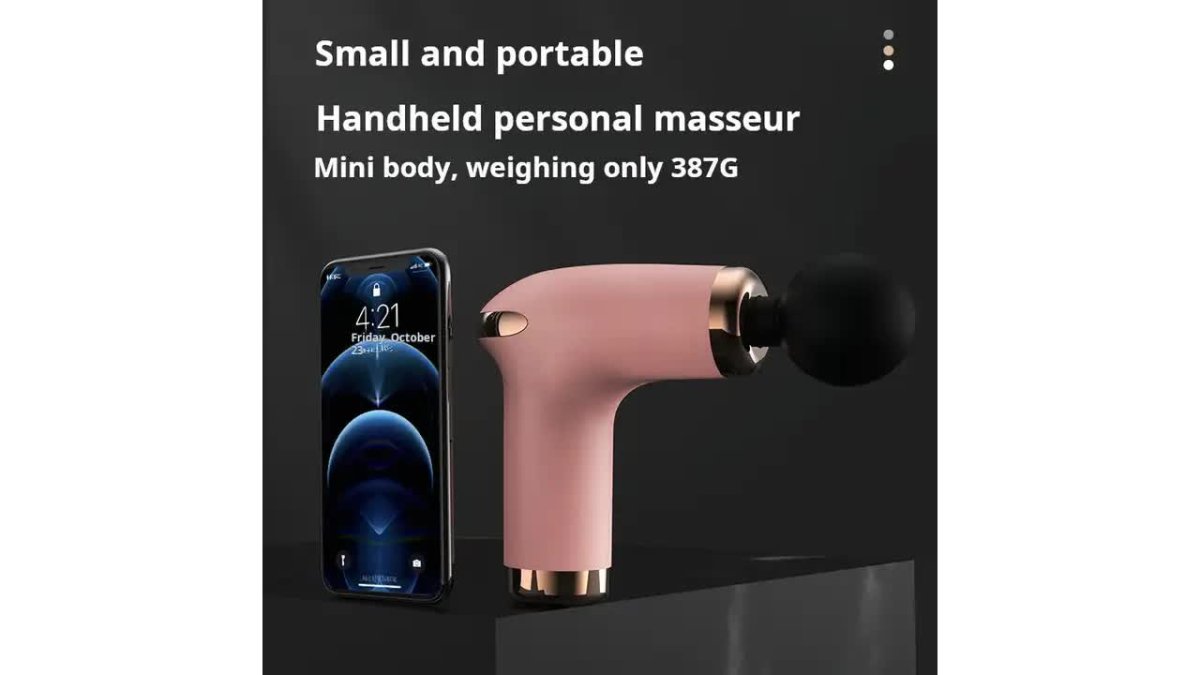
- Turn the device on at its lowest speed
- Place the flat or round attachment on a large muscle group
- Glide slowly along the muscle, not across bone
- Move the device in small passes over each area
- Use light pressure and let the motor do the work
- Switch to a fork or bullet attachment for knots near the shoulder blade
- Breathe and keep your shoulders down
The application technique matters more than the power. Let the head float over the muscle. Don't press down hard.
Your back muscles are big, so they can take more than your neck. Still, start gentle.
Step 5: How Long to Use a Massage Gun on Tight Muscles
Keep each treatment area to about two to three minutes. That's the time limit most practitioners suggest.
Then move to the next muscle group. A full back routine usually takes 10 to 15 minutes.
- Stiff muscles: 2 minutes per area
- Sore muscles after a workout: 1 to 2 minutes per area
- Large muscle groups: up to 3 minutes
- Sensitive or small areas: 1 minute or less
More time doesn't mean more relief. Overdoing it can leave you sorer than when you started.
Use a timer on your phone. It's easy to lose track when a knot finally starts to release, and that's exactly when people overwork an area.
Step 6: Using a Massage Gun for Lower Back Pain
Massage gun back pain relief works best on the lower back when you target the muscles beside the spine, not the spine itself.

Focus on the quadratus lumborum and the muscles along either side of your lower back. These carry a lot of tension from sitting and lifting.
For lower back pain, keep the speed low. This area is close to your kidneys and spine, so precision beats power.
If your pain runs down your leg, or you feel numbness or tingling, stop. That pattern often points to a nerve issue, not a tight muscle. A massage gun won't fix it, and a doctor should take a look.
Common Mistakes and When to Stop
Even careful users slip into bad habits. Watch for these.
- Pressing too hard to "get in there"
- Using the highest speed right away
- Staying on one spot too long
- Working over the spine or ribs
- Skipping the warm-up on cold muscles
Stop right away if you feel:
- Sharp or shooting pain
- Numbness or tingling
- Dizziness or nausea
- Pain that gets worse, not better
Muscle soreness feels dull and spread out. Nerve pain feels sharp, burns, or travels. If it's the second kind, put the device down and talk to a doctor.
Conclusion
Back tension builds up fast and slows you down, but the wrong technique can make it worse. A few simple rules, low speed, light pressure, soft tissue only, and short sessions, keep your recovery safe and effective. At Bodyhackfitnesss, we carry recovery tools like the NNEDSZ Massage Gun with 6 heads and the Electric Mini Massage Gun to help you train hard and recover well. Shop now and build a home setup that supports every stage of your progress.
Frequently Asked Questions
Should you use a massage gun on a hurt back?
It depends on the type of pain. A massage gun can help with muscle soreness or tension, but if you have sharp, shooting, or nerve-related pain, skip it and see a doctor. If you're unsure, start with a low speed and light pressure on a small area. Stop immediately if the pain worsens or feels different from muscle soreness.
Where should you avoid using a massage gun?
Avoid the spine, neck bones, hip bones, rib bones, and any areas with little muscle cover. Also avoid using it over bruises, swelling, or open wounds. For back pain, focus on the large muscle groups alongside the spine, not directly on it. Following these where not to use a massage gun guidelines helps prevent injury.
How long should you use a massage gun on tight muscles?
Keep it to two to three minutes per muscle group. For very tight spots, you can do a second short session later in the day. Exceeding this time can cause irritation instead of relief. If you're using it for lower back pain, start with one minute and gradually build up as tolerated.
Can you use a massage gun directly on your spine?
No. The spine and surrounding bony areas should never be targeted with a massage gun. Doing so can cause injury. Instead, use the gun on the muscles on either side of the spine, like the erector spinae. Always keep the device moving and avoid pressing hard on any bony prominence.