

Table of Contents
- Strength Training vs Cardio for Fat Loss: The Direct Comparison
- Calories Burned Per Session: Cardio Wins the Hour
- Muscle Mass and Resting Metabolic Rate: Strength Wins the Week
- The EPOC Effect Explained: Why Your Workout Keeps Burning After You Stop
- How to Combine Cardio and Weights for Fat Loss
- How Long Should a Workout Be for Fat Loss?
- Body Composition vs Weight Loss: Why the Scale Lies
- Building a Home Setup That Supports Both Goals
- Conclusion: The Answer Is Both, in the Right Doses
- Frequently Asked Questions
Last Updated: September 24, 2026
Strength Training vs Cardio for Fat Loss: The Direct Comparison
The strength training vs cardio for fat loss debate has a clear answer: the two aren't rivals, they're partners. Cardio burns more calories during a session, while strength training builds the lean muscle that raises your resting metabolic rate. This guide from Bodyhackfitness breaks down exactly how each method works, so you can stop guessing and start training with a plan.
Here's what most guides get wrong: they frame this as a winner-take-all contest. It isn't. The real question is dosage, timing, and what your body actually needs.
Calories Burned Per Session: Cardio Wins the Hour
A 30-minute steady-state cardio session typically burns more calories than a 30-minute lifting session. That's the simple math, and it's why cardio gets the reputation it does.
Running, cycling, and rowing keep your heart rate elevated for the full duration. Resistance training involves rest between sets, so the per-minute burn is lower.
But here's the catch: calories burned during exercise are only part of the equation. What happens in the other 23 hours matters just as much.
| Method | Calories Burned (30 min) | Primary Fuel | Recovery Demand |
|---|---|---|---|
| Steady-state cardio | Higher | Fat and glycogen | Low |
| HIIT | Moderate-high | Glycogen | High |
| Resistance training | Lower | Glycogen | Moderate |
| Circuit training | Moderate | Mixed | Moderate |
Muscle Mass and Resting Metabolic Rate: Strength Wins the Week
Lean muscle mass is metabolically active tissue. The more you carry, the more calories your body burns at rest, which is why resistance training quietly outperforms cardio over a full week.
Cardio burns calories now. Strength training changes your basal metabolic rate so you burn more later. That shift compounds over months.
The EPOC Effect Explained: Why Your Workout Keeps Burning After You Stop
EPOC stands for excess post-exercise oxygen consumption, the extra oxygen your body consumes after training to restore homeostasis. It is the mechanism behind the so-called after-burn effect, and it is the single most overhyped and most misunderstood variable in the strength training vs cardio for fat loss debate.
Here is what actually happens. After a hard session, your body has to replenish phosphocreatine stores, clear lactate, restock oxygen in muscle tissue, restore body temperature, and repair micro-damage in muscle fibers. Every one of those processes costs calories. The size of that cost depends almost entirely on how much metabolic disruption the session created.
Why Heavy Lifting and Intervals Beat Steady-State Cardio on EPOC
Steady-state cardio at a conversational pace produces a small EPOC, the recovery demand is low because the work was aerobic and repeatable. You finish, you cool down, and your metabolism returns to baseline quickly.
Heavy resistance training and high-intensity intervals produce a larger EPOC because they create more cellular disruption.
Do not pick a training style because of EPOC. Pick it because you can repeat it three to five times a week for a year. The after-burn is real, but it is a rounding error next to consistency.
The Hormonal Layer Most Guides Skip
Calories are only half the story. The other half is the hormonal response, and this is where strength training and cardio diverge sharply.
- Steady-state cardio elevates cortisol, the primary stress hormone. That is normal and healthy in a single session, but long, frequent endurance blocks without adequate recovery can keep cortisol chronically elevated, which is associated with muscle breakdown and stubborn abdominal fat storage.
- Heavy resistance training triggers a short-term spike in testosterone and growth hormone, both of which support muscle protein synthesis and help preserve lean mass while you are in a caloric deficit. The spike is transient, it is not a reason to expect dramatic hormonal transformation, but over months of consistent training, the muscle-preserving signal matters for body composition.
- High-intensity intervals sit in between: they elevate cortisol acutely but also drive growth hormone release, which is part of why they are efficient for fat loss when dosed correctly.
How to Combine Cardio and Weights for Fat Loss
Learning how to combine cardio and weights for fat loss comes down to four levers: frequency, intensity, order, and recovery. Most people get frequency right and botch the other three.
- 3 resistance sessions targeting major muscle groups
- 2 cardio sessions, mixing steady-state and intervals
- 1 active recovery day, such as walking or light cycling
- 1 full rest day
Age-Specific Programming: The Variable Nobody Talks About
Fat loss programming is not the same at 25 as it is at 55. The physiology shifts, and so should the plan.
The older you are, the more your fat loss plan should look like a muscle-preservation plan with cardio attached, not a cardio plan with some lifting bolted on.
Home Gym Ready: Adjustable Indoor →
Equipment-Free vs Gym-Based: Both Work If You Dose Them Right
You do not need a commercial gym to run this protocol. The variables that matter are progressive overload and total weekly volume, not the logo on the dumbbells.
Home, minimal equipment:
- Resistance: bodyweight progressions (push-up variations, split squats, single-leg hip thrusts), a set of adjustable dumbbells, and a kettlebell cover nearly every major movement pattern.
- Cardio: an indoor bike, jump rope, or brisk outdoor walking. Intervals can be done on a bike or with bodyweight circuits.
- Weekly structure: 3 full-body lifting sessions of 30-40 minutes, 2 cardio sessions of 20-30 minutes, 1-2 walking days.
Gym-based:

- Resistance: barbell compound lifts plus accessory work allow heavier loading and more precise progressive overload.
- Cardio: access to rowers, stair climbers, and treadmills makes interval dosing easier to standardize.
- Weekly structure: same as above, but sessions can run 45-60 minutes because equipment transitions are faster.
Order of Operations: Cardio Before or After Weights
Lift first if your goal is muscle preservation. Resistance training demands fresh energy and good form, and doing it after a long cardio session compromises both. If fat loss is the priority and strength is not, cardio first is fine.
Doing hard cardio before heavy lifting is one of the most common mistakes. You will lift lighter, recover slower, and blunt the muscle-building signal that protects your metabolism.
The Recovery Lever
Recovery is where most plans fail. Two rules keep it intact:
- Never stack a hard interval session the day before a heavy lower-body lifting day. The legs will not be ready, and form degrades before effort does.
- Keep at least one full rest day per week. Active recovery, walking, light cycling, mobility work, counts as recovery, not training.
How Long Should a Workout Be for Fat Loss?
Most fat loss workouts should run 30 to 60 minutes. Anything longer raises recovery time without adding meaningful fat oxidation.
Body Composition vs Weight Loss: Why the Scale Lies
Body composition measures fat mass against lean mass. Weight loss only measures total pounds, and the two can move in opposite directions.
The Skinny Fat Phenomenon
The 'skinny fat' pattern describes a normal-weight body with a high body fat percentage and low muscle mass. It's common in people who diet aggressively without resistance training.
Building a Home Setup That Supports Both Goals
A home gym that handles both cardio and resistance removes the biggest excuse: travel time. You need less equipment than you think to cover both sides of the strength training vs cardio equation.
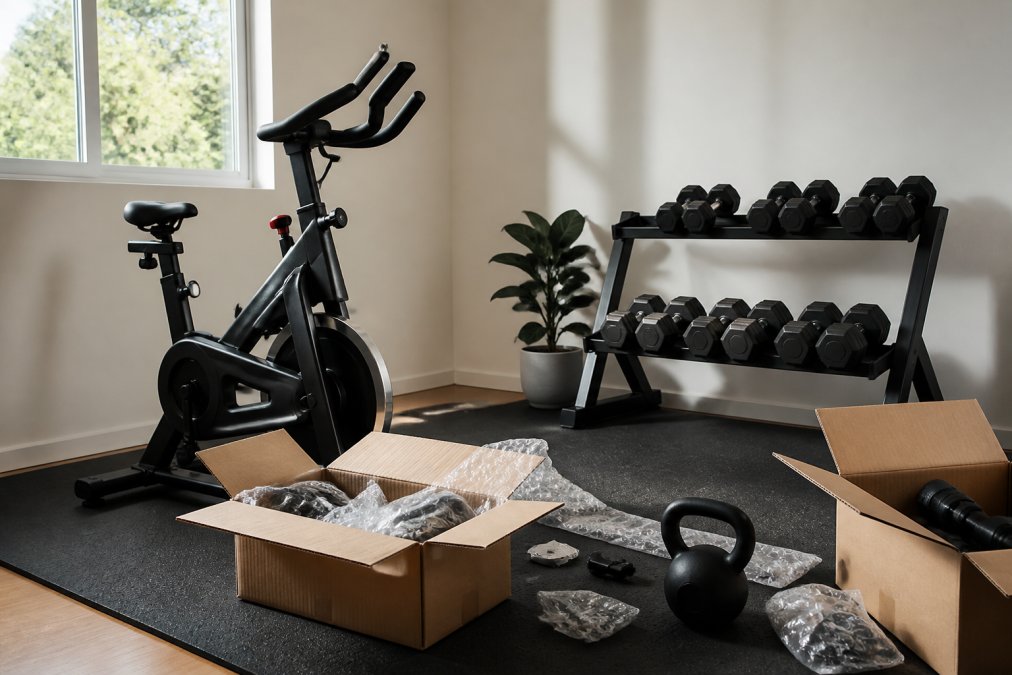
Three pieces cover nearly everything:
- Adjustable dumbbells for presses, rows, squats, and curls. The Premium Adjustable Dumbbell Set converts to a barbell, so one purchase covers two training styles.
- An adjustable kettlebell for swings, goblet squats, and carries. The Versatile Adjustable Kettlebell offers seven weight levels in a single unit.
- An indoor bike for low-impact cardio and intervals. The Home Gym Ready Adjustable Indoor Exercise Bike tracks time, speed, distance, calories, and pulse, which makes progressive overload on the cardio side far easier to manage.
Conclusion: The Answer Is Both, in the Right Doses
The strength training vs cardio for fat loss question has a boring, correct answer: you need both, dosed intelligently. Cardio handles the immediate caloric deficit. Strength training protects the muscle that keeps your metabolism high. Skip either one and progress stalls.


Frequently Asked Questions
Does cardio or strength training burn more calories per hour?
Cardio generally burns more calories during the session itself. A 155-pound person running at a moderate pace for 30 minutes burns roughly 350 to 400 calories, while the same 30 minutes of resistance training burns closer to 110 to 220 calories. Strength training closes the gap through excess post-exercise oxygen consumption (EPOC), which keeps metabolism elevated for hours afterward, plus the lean muscle mass it builds over time.
Can you lose fat by lifting weights without doing cardio?
Yes. Resistance training builds lean muscle mass, which raises your resting metabolism, and it triggers the EPOC effect that keeps calorie burn elevated after the session. The catch is the caloric deficit: if your eating stays the same, lifting alone may not create enough of a gap to drop body fat quickly. Many people pair three or four strength sessions per week with a modest calorie reduction and see steady body composition changes.
How should a beginner balance strength training and cardio?
Start with two or three full-body strength sessions per week on non-consecutive days, then add two 20 to 30 minute cardio sessions. Beginners build muscle quickly, so protect recovery time and avoid stacking heavy leg work next to long runs. Once the habit sticks, you can add a third cardio day or extend sessions toward the 45 to 60 minute range. Consistency matters more than the exact split in the first eight weeks.
What is the most effective way to lose belly fat through exercise?
Spot reduction does not work. You cannot target belly fat with crunches or any single movement. The most effective approach is a combination: resistance training to preserve and build lean muscle mass, cardio to widen the caloric deficit, and a moderate calorie reduction to drive fat oxidation. Body fat percentage drops across the whole body, and the midsection usually responds once overall fat stores fall.