


Quick Summary
Active recovery is low-intensity movement, such as easy walking, gentle bodyweight squats, hip circles, cat-cow and slow glute bridges, performed after hard training to ease sore muscles. A systematic review found strong evidence that low-intensity exercise may be more effective than total rest. Keep the effort easy enough that you can speak in full sentences.
- Easy walking for 10 to 20 minutes at a conversational pace is a simple starting point.
- Grade soreness from 1 to 10 first, and skip structured exercise when it is severe.
- Match movements to the sore area and stay one step below its intensity.
- Stop any movement that makes soreness sharper, and seek medical advice for swelling or weakness.
- Research on active recovery is mixed, so treat it as comfort and circulation, not a repair shortcut.
Table of Contents
- What Active Recovery Is and How It Differs From Rest Days
- Active Recovery Exercises for Sore Muscles No Equipment Needed
- Low-Impact Cardio Options: Walking, Cycling, and Swimming
- Foam Rolling and Mobility Tools for Sore Muscles
- Full Body Active Recovery Workout Built Around Soreness Location
- A 30 Minute Recovery Workout You Can Scale Up or Down
- Start Your Next Recovery Session With These Picks
- Frequently Asked Questions
What Active Recovery Is and How It Differs From Rest Days
Last Updated: November 2, 2026
Active recovery is low-intensity movement performed after hard training to help sore muscles feel better and ease the body back to baseline. A meta-analysis of post-exercise recovery techniques and muscle soreness reviewed how different recovery methods affect delayed-onset muscle soreness, and the broader body of research keeps returning to the same idea: gentle movement can help.
The difference from a rest day is simple. A rest day means no structured training and little physical effort. Active recovery means moving at an easy effort, usually well below your hard-training intensity, so blood keeps flowing through tired tissue without adding new stress.
A systematic review of recovery strategies after high-intensity exercise reports that strong evidence suggests active recovery, mainly low-intensity exercise, may be more effective than total rest. That does not mean rest days are wrong. It means that on a day after a brutal session, a 20-minute easy walk often beats lying on the couch.
Watch out: pushing "easy" too hard turns active recovery into another workout. If your breathing gets heavy or your legs feel worse afterward, dial it back.
Active Recovery Exercises for Sore Muscles No Equipment Needed
You do not need any gear to start. Bodyweight movements and simple flow sequences work well for sore muscles.
Good no-equipment options include:
- Easy walking for 10 to 20 minutes at a conversational pace
- Gentle bodyweight squats with a slow tempo, staying in a pain-free range
- Hip circles and leg swings to move the joints without loading them
- Cat-cow and child's pose to loosen the spine and lower back
- Slow glute bridges to wake up the posterior chain
Keep reps low and effort light. Stop any movement that sharpens pain rather than easing stiffness. For most people, five to ten minutes of this beats a long, hard session.
Low-Impact Cardio Options: Walking, Cycling, and Swimming
Low-impact cardio raises your heart rate gently and moves fluid through sore tissue. Walking is the easiest starting point. Cycling on a stationary bike keeps the load off your joints, and swimming offers full-body movement with almost no impact.
Keep the pace easy. A useful check is whether you can speak in full sentences.
Foam Rolling and Mobility Tools for Sore Muscles
Foam rolling is a popular way to ease tight, sore muscles. Rolling slowly over the calves, quads, or upper back can make tissue feel looser, and many people find it a helpful part of a recovery routine. Roll at a moderate pressure, pause on tender spots for a few breaths, and avoid rolling directly over joints or bones.
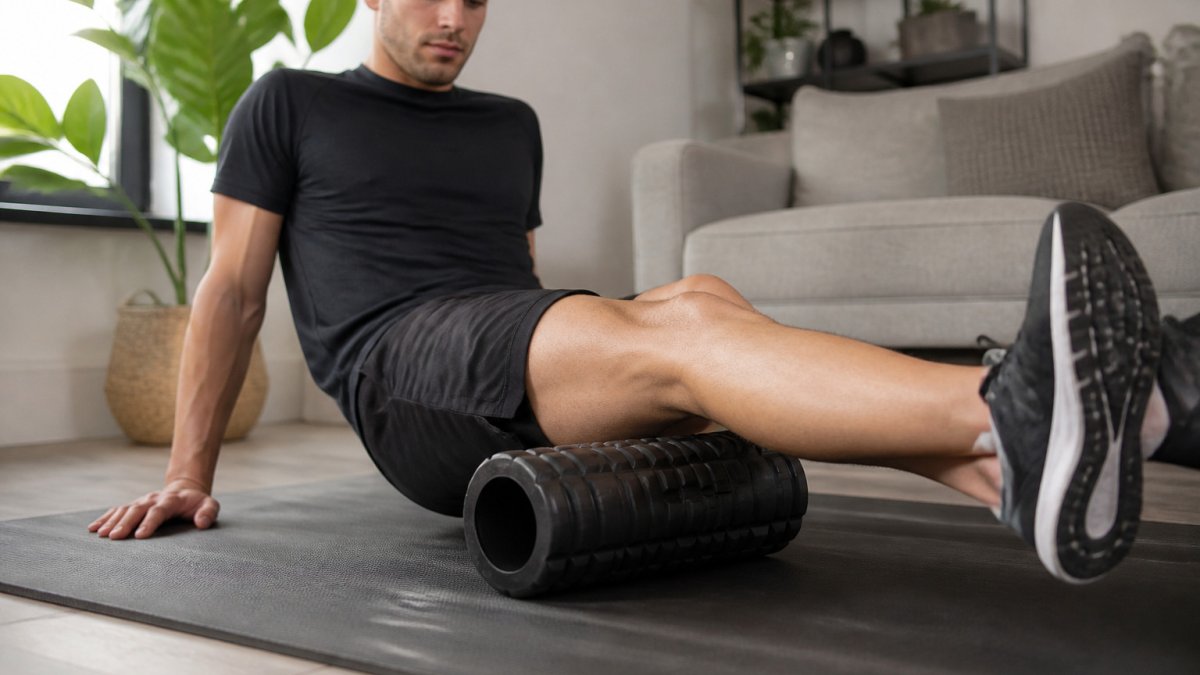
If you are picking a roller, the main choices are density and size. A softer roller is gentler for beginners, while a firmer one applies more pressure. Options in this range include a foam roller for body relief with a 33 cm length and a high-density roller rated for up to 136 kg.


A common mistake is rolling too hard, too fast. Slow, controlled passes usually feel better the next day.
Full Body Active Recovery Workout Built Around Soreness Location
Matching movement to where you are sore is the single most useful skill in active recovery, and most guides stop at a short list. The missing piece is severity. Before you pick an exercise, grade the soreness so you know whether to move, modify, or stop.
Use a simple three-level check:
- Mild (1-3 out of 10): Stiff and tender to the touch, but you can walk, sit, and stand normally. Full active recovery is appropriate.
- Moderate (4-6 out of 10): Noticeable ache on stairs or when first standing, and range of motion is reduced but not blocked. Keep effort easy and shorten the session.
- Severe (7-10 out of 10): Pain with normal walking, swelling, or weakness that makes a limb feel unreliable. Skip structured exercise and treat this as a rest-and-reassess day.
Then choose movements by location, staying one step below the soreness:
- Sore quads and glutes: easy walking on flat ground, slow bodyweight squats to a comfortable depth, and glute bridges. Avoid hills, stairs, and deep lunges until the ache fades.
- Sore hamstrings: short, easy walks and gentle hip hinges without load. Skip sprinting, Romanian deadlifts, and any stretch that pulls sharply behind the knee.
- Sore calves: stationary cycling at low resistance and ankle circles. Avoid jumping, running, and aggressive calf stretching.
- Sore back: cat-cow, child's pose, and slow walking. Avoid loaded twists, sit-ups, and heavy carries.
- Sore shoulders or arms: arm circles, wall slides, and light band-free mobility. Avoid overhead pressing, pull-ups, and deep stretch positions that pinch.
- Widespread soreness: a 10- to 15-minute easy walk followed by a short full-body flow, kept at conversational effort.
A practical rule most practitioners use: if a movement makes the soreness sharper during the set or leaves the area more tender an hour later, it was too much. Ease off the range of motion or swap the exercise rather than pushing through.
Foam roller Roller For body Relief →
Watch out: soreness that comes with swelling, bruising, dark urine, or a limb that feels weak or numb is not normal delayed-onset muscle soreness. Stop exercising and seek medical advice, because those signs can point to injury or a more serious condition rather than a training effect.
A 30 Minute Recovery Workout You Can Scale Up or Down
A timed plan removes the guesswork. The structure below keeps effort easy enough that it does not become another training session, and every block has a scale-down and scale-up option. Use a talk test as your intensity gauge: you should be able to speak in full sentences throughout, and you should finish feeling looser, not more fatigued.
Minutes 0-5: Easy warm-up. Walk or march in place at a relaxed pace. Scale down by sitting and doing ankle and wrist circles. Scale up by adding slow arm swings.
Minutes 5-15: Mobility flow. Move through hip circles, leg swings, cat-cow, and glute bridges, spending about two minutes on each. Keep reps low and range comfortable. Scale down by holding each position for a few breaths instead of repeating reps. Scale up by adding a second round at a slower tempo.
Minutes 15-25: Low-impact cardio. Choose walking, stationary cycling, or swimming at a conversational effort. Scale down to 5 minutes. Scale up to 15 minutes only if the effort still feels easy.
Minutes 25-30: Light rolling or stretching. Make slow passes over the sore areas, pausing on tender spots for a few breaths. Skip joints and bones. Scale down by stretching only. Scale up by adding a short second pass.
For a 10-minute version, do 2 minutes of warm-up, 4 minutes of mobility, 3 minutes of easy cardio, and 1 minute of stretching. For a 20-minute version, double the mobility and cardio blocks. The 30-minute version above is the full template.
How often matters as much as how long. A common pattern is one or two easy sessions on the day after hard training, plus a short walk on other days. More is not automatically better, and a hard session disguised as recovery defeats the purpose.
Keep expectations realistic. Research on active recovery and soreness is mixed: some studies suggest gentle movement can take the edge off stiffness and improve how sore muscles feel, while others show little or no effect on actual muscle damage or strength loss. Evidence on whether active recovery speeds tissue repair or allows faster return to hard training is limited. Think of it as comfort and circulation, not a repair shortcut.
Active recovery also works best as one part of a broader routine. Sleep, hydration, and managing training load do more for recovery than any single session, and no amount of easy walking compensates for too little sleep or too much volume.
The 30-minute plan breaks into four timed blocks, each with a scale-down and scale-up option.
| Block | Activity | Scale down or up |
|---|---|---|
| Minutes 0-5 | Easy warm-up | Down: ankle and wrist circles. Up: slow arm swings |
| Minutes 5-15 | Mobility flow | Down: hold positions. Up: second slower round |
| Minutes 15-25 | Low-impact cardio | Down: 5 minutes. Up: 15 minutes if easy |
| Minutes 25-30 | Light rolling or stretching | Down: stretching only. Up: short second pass |
Start Your Next Recovery Session With These Picks
Pick one movement from each section above and try them together after your next hard workout. Start with a short walk, add a few mobility drills, and finish with light foam rolling on the areas that feel tight. Shop the foam roller for body relief if you want a dedicated tool for the rolling portion.
Recovery works best when it becomes a habit, not a reaction. Keep sessions easy, track how you feel the next morning, and adjust from there. Shop now for the equipment that fits your routine.
Frequently Asked Questions
What is the fastest way to recover sore muscles?
Light movement is one of the most reliable options. Research on post-exercise recovery suggests that low-intensity activity may be helpful compared with total rest. Start with 10 to 20 minutes of walking or easy cycling, keep effort conversational, and add gentle mobility work. Hydration, sleep, and adequate protein also matter. Foam rolling can ease tightness, though it is best treated as a supplement to movement rather than a replacement for it.
Can you do active recovery exercises without equipment?
Yes. Walking, easy jogging, bodyweight mobility drills, gentle yoga-style stretching, and dynamic movements like leg swings and arm circles all work without gear. A full body active recovery workout can be built from these moves in about 30 minutes. Equipment such as a foam roller adds targeted pressure but is optional. Focus on controlled movement through a comfortable range of motion rather than pushing into pain.
What is the difference between active recovery and a rest day?
A rest day involves little or no planned exercise, while active recovery uses light, low-intensity movement to support blood flow and comfort. Research comparing these approaches after high-intensity exercise reports that active recovery may be more effective than total rest for some outcomes. Many people alternate the two, using a rest day when soreness is severe and an easy session when they feel able to move.
Should I still exercise if my muscles are sore?
Usually you can, as long as the soreness is delayed-onset muscle soreness and not a sign of injury. DOMS typically peaks one to three days after training and feels like a dull ache or stiffness. Sharp, joint-localized pain, swelling, numbness, or pain that worsens with movement are warning signs. In those cases, stop and get evaluated. Otherwise, keep sessions light and reduce intensity until the soreness eases.
