

Table of Contents
- How to Build a Home Gym in 7 Steps
- What You'll Need Before You Start
- Best Budget Home Gym Equipment for Beginners
- Small Space Home Gym Ideas That Actually Work
- Home Gym Flooring Options Compared
- Electrical, HVAC, and Noise Considerations Most People Miss
- Maintenance, Insurance, and Long-Term Equipment Care
- Common Mistakes to Avoid When Building a Home Gym
- Frequently Asked Questions
Last Updated: September 25, 2026
How to Build a Home Gym in 7 Steps
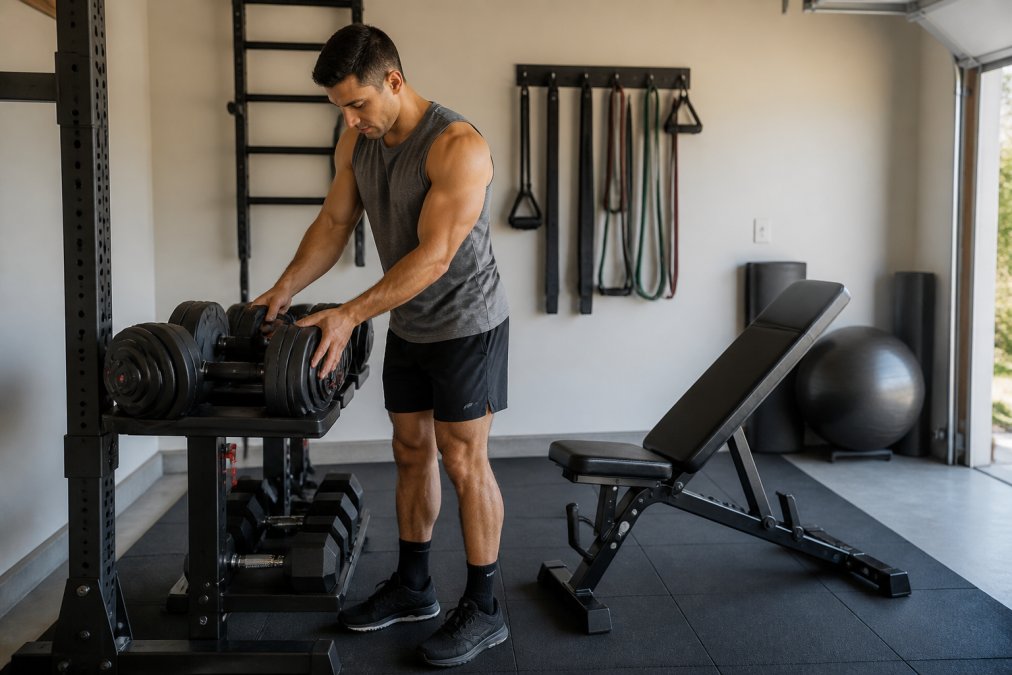
Learning how to build home gym space that you will actually use comes down to planning before purchasing. According to U.S. Bureau of Labor Statistics consumer expenditure data, fitness equipment remains one of the most common discretionary purchases households make, yet a large share of that equipment ends up stored rather than used.
Step 1: Define Your Training Goals
Your goals decide your equipment list, not the other way around. A lifter chasing a heavier squat needs a rack, barbell, and plates. Someone training for general health may need only a bench, adjustable dumbbells, and a pull-up bar.

Step 2: Measure Your Space and Plan the Layout
Measure the room before you measure your ambition. You need clear floor area plus overhead clearance for anything involving a barbell or pull-up bar.
Step 3: Set a Realistic Budget
Set your total budget first, then allocate roughly 60 percent to core strength equipment, 20 percent to flooring, and 20 percent to storage and accessories. That split keeps you from overspending on gadgets while skipping the mat that protects your floor.
Step 4: Choose Core Equipment First
Core equipment means the pieces that support your primary lifts: a bench, a rack or pull-up bar, and weights. Buy these before anything else.
Step 5: Handle Flooring, Power, and Noise
Flooring, power, and noise are the three items most people address after the fact, and all three are cheaper to solve before the equipment arrives.
Step 6: Add Storage and Organization
Vertical storage keeps floor space clear. Wall-mounted bars, plate trees, and hook racks move weight off the ground and out of your way.
Step 7: Build Consistency With a Written Routine
A written routine is what converts a room into a habit. Schedule sessions like appointments and log every one.
What You'll Need Before You Start
Before buying anything, gather these basics so setup day is not delayed:
- Measuring tape and painter's tape for layout
- A written list of three training goals
- Total budget figure, split across equipment, flooring, storage
- Outlet locations and overhead clearance confirmed
- A plan for where equipment lives when not in use
| Step | Focus | Time Needed | Typical Cost Driver |
|---|---|---|---|
| 1 | Define goals | 30 minutes | None |
| 2 | Measure and plan layout | 1 hour | None |
| 3 | Set budget | 30 minutes | Total spend |
| 4 | Buy core equipment | 1-2 weeks | Bench, rack, weights |
| 5 | Flooring, power, noise | 1 weekend | Mats, isolation |
| 6 | Storage and organization | Half day | Racks, hooks |
| 7 | Write your routine | 1 hour | None |
Best Budget Home Gym Equipment for Beginners
Budget equipment works when you buy fewer, sturdier pieces instead of a full set of cheap ones. Beginners rarely need a cable machine or a full plate set on day one. The goal is to cover the foundational movement patterns, squat, hinge, push, pull, carry, with the smallest number of durable pieces.
Essential Equipment for Beginners
Start with an adjustable bench, a set of adjustable dumbbells or a barbell with plates, resistance bands, and a pull-up bar. Those four categories cover nearly every foundational movement.
Budget-Friendly Gym Setups Under $500
A realistic under-$500 setup pairs a foldable bench with adjustable dumbbells, bands, and a doorway bar. Add a cardio option only if your goals require it; the adjustable indoor exercise bike with an 18 lb flywheel and 300 lb capacity covers low-impact conditioning without a treadmill footprint.

| Tier | Typical Spend | What It Buys | When to Add |
|---|---|---|---|
| Starter | Under $300 | Adjustable dumbbells, bands, doorway bar | Week one |
| Core | $300-$700 | Foldable or adjustable bench, first plates | Month one |
| Expand | $700+ | Rack, barbell, plate set, cardio | As lifts progress |
Where to Spend and Where to Save
Spend on anything that holds you off the floor or over your head: the bench, the rack, the barbell. Save on accessories, bands, mats, and collars are commodity items where the cheapest version usually works fine.
Small Space Home Gym Ideas That Actually Work
Small spaces reward vertical thinking and folding equipment. The goal is a room that serves two purposes without a 20-minute setup before every session. That means designing the layout around clear floor area, not around the equipment list.
Garage Gym Conversion Tips
A garage is the easiest conversion because it already has a concrete floor, high ceilings, and a door wide enough for equipment delivery. Clear one bay, park the car in the other, and use wall space for storage.
Space-Saving Equipment and Vertical Storage
Choose equipment that folds, stacks, or mounts. Foldable benches, doorway bars, and wall-mounted plate trees free up floor area that would otherwise stay permanently occupied.
A Dual-Use Layout That Actually Works
The strongest small-space pattern is a 'working wall' plus a clear center. Put the rack, storage, and any mounted equipment against one wall, and keep the center of the room empty so the space can serve another purpose when you are not training.
A simple sequence for a one-bay garage:
- Tape the rack footprint against the working wall and confirm bar-path clearance.
- Mount storage above and beside the rack, not in front of it.
- Keep the center clear for a bench or mat that folds or moves.
- Route any cardio equipment along a side wall so it does not block the door.
Home Gym Flooring Options Compared
Flooring protects both your equipment and the surface under it. The right choice depends on how much weight you drop and whether the room is climate-controlled.
Rubber Flooring, Puzzle Mats, and Foam Tiles
Rubber rolls handle heavy loads and stay put. Puzzle mats are easier to install and replace tile by tile. Foam tiles are the cheapest and the least durable under a rack.
Floor Protection and Weight Capacity
Check the weight capacity of whatever you place under a rack. A loaded bar plus a lifter can exceed several hundred pounds concentrated on a small area, and thin foam compresses permanently under that load.
| Flooring Type | Best For | Durability | Installation |
|---|---|---|---|
| Rubber rolls | Heavy lifting, racks | High | Adhesive or loose lay |
| Puzzle mats | Mixed use, rentals | Medium | Snap together |
| Foam tiles | Light cardio, yoga | Low | Peel and stick |
Electrical, HVAC, and Noise Considerations Most People Miss
Three environmental factors separate a home gym that lasts from one you abandon. Power, temperature, and sound all affect whether you can train on a given day.
Maintenance, Insurance, and Long-Term Equipment Care
Maintenance is what determines whether your equipment lasts five years or fifteen, and it takes minutes per month.
- Wipe bars and dumbbells after use to prevent rust
- Check bench bolts and rack hardware monthly
- Inspect safety clips and bands for wear
- Keep flooring dry and free of standing moisture
Common Mistakes to Avoid When Building a Home Gym
The same four mistakes show up again and again, and each one is avoidable with a little planning.
- Buying equipment before planning the layout
- Skipping flooring and damaging the concrete
- Choosing a bar or rack rated below your realistic working weight
- Building the room but never writing a routine
Frequently Asked Questions
How much does it cost to build a home gym?
A functional home gym can start under $300 with a foldable weight bench, adjustable dumbbells, and resistance bands. Adding a doorway pull-up bar and an indoor exercise bike brings a solid beginner setup to roughly $400-$500. From there, costs scale with what you add: barbells, weight plates, squat racks, and cardio machines push totals into the thousands. The smartest approach is buying core pieces first, then adding equipment as your training intensity and goals grow.
What are the essential pieces of equipment for a beginner home gym?
Start with a weight bench, a set of adjustable dumbbells or a barbell with weight plates, and resistance bands. A doorway pull-up bar adds upper body pulling work without drilling or permanent installation. If cardio matters to you, an indoor exercise bike covers low-impact conditioning. These five items support strength training, functional training, and a full-body home workout routine without filling your entire space.
How do I choose between rubber, foam, or wood flooring for a home gym?
Rubber flooring handles dropped weights and heavy racks best, making it the top choice for garage gyms and strength training areas. Puzzle mats and foam tiles cost less, feel softer underfoot, and work well for functional training, yoga, and small space home gym ideas where you need to move equipment around. Wood or laminate is fine for cardio equipment but offers little floor protection against dropped plates. Match the surface to your heaviest activity first.
What is the minimum space required for a functional home gym?
A 7-by-10-foot area handles a weight bench, dumbbells, and a cardio machine with room to move. For barbell work, plan at least 8-by-10 feet so you can load plates and press overhead safely. If you are short on room, a foldable weight bench and a doorway pull-up bar let you train in a corner and store everything afterward. Measure your ceiling height too, since overhead presses and pull-ups need clearance.
Building a home gym that survives past January is a planning problem, not a spending problem. Bodyhackfitnesss stocks the foldable benches, adjustable benches, pull-up bars, and cardio equipment that make a compact space work, alongside digital programs designed to keep you consistent once the room is ready. Start with your goals, measure twice, and buy core equipment first. Shop now at Bodyhackfitnesss and build a training space you will still be using next year.