


Last Updated: October 23, 2026
Quick Summary
Clean cast iron weights with a dry cloth after every session, a monthly deep clean using warm water and a soft brush, and a thin coat of mineral oil or 3-in-1 oil on bare iron to block moisture. Dry them fully and store them off the floor to prevent rust.
- Wipe sweat and chalk off handles and plates with a dry microfiber cloth for thirty seconds after every session.
- Deep-clean bare iron monthly with warm water and a soft brush, dry fully, then re-oil.
- Never use steel wool, wire wheels, or sandpaper on painted or rubber-coated weights.
- Keep home gym humidity under roughly 60% relative humidity, with a dehumidifier set to 50-55% in basements.
- Wrap stored plates in breathable cloth or paper rather than plastic, which traps condensation.
Table of Contents
- Why Cast Iron Weights Need Regular Cleaning and Maintenance
- What You'll Need Before You Start Cleaning
- Step-by-Step: How to Clean Iron Weight Plates and Dumbbells
- How to Remove Rust from Weight Plates Safely
- How to Prevent Cast Iron Weights from Rusting
- How to Store Weight Plates and Dumbbells for Long-Term Protection
- Preserving Weight Markings, Accuracy, and Gym Hygiene
- Conclusion
- Frequently Asked Questions
Why Cast Iron Weights Need Regular Cleaning and Maintenance
Cast iron weights last for decades, but only if you treat them right.
Cast iron is porous. Sweat, chalk, and humid air work into that surface and start the corrosion process.
Dust and grime also change how the weights feel in your hands, a slick dumbbell handle is a real safety issue when you're pressing overhead.
So how do you clean and maintain cast iron weights without damaging them?
What You'll Need Before You Start Cleaning
Gather your supplies first. The right tools make this job fast, and the wrong ones cause permanent damage.
Safe tools:
- Soft bristle brush or nylon cleaning brush
- Plastic scraper or non-metal spatula
- Microfiber cloths (two or three)
Tools to avoid:
- Steel wool on painted or coated weights
- Harsh chemical cleaners
- Dishwasher cycles (never)
A common mistake is reaching for the strongest cleaner on the shelf. Cast iron doesn't need it. Gentle cleaning with simple supplies works better and protects the surface.
Step-by-Step: How to Clean Iron Weight Plates and Dumbbells
Here's how to clean iron weight plates and dumbbells in five steps, about five minutes per piece.
- Wipe off loose bits while still warm. After your set, grab a dry cloth and wipe sweat and chalk dust off the surface. Warm metal releases grime faster.
- Do a quick rinse with warm water. Spray the surface lightly. Don't soak it.
- Scrape off stuck-on residue. Use a plastic scraper or non-metal spatula at a low angle. Food residue and dried sweat lift right off.
- Brush the textured areas. A soft brush gets into knurling and lettering where cloth can't reach.
- Dry thoroughly. This step matters most. Moisture left in crevices starts rust within hours.
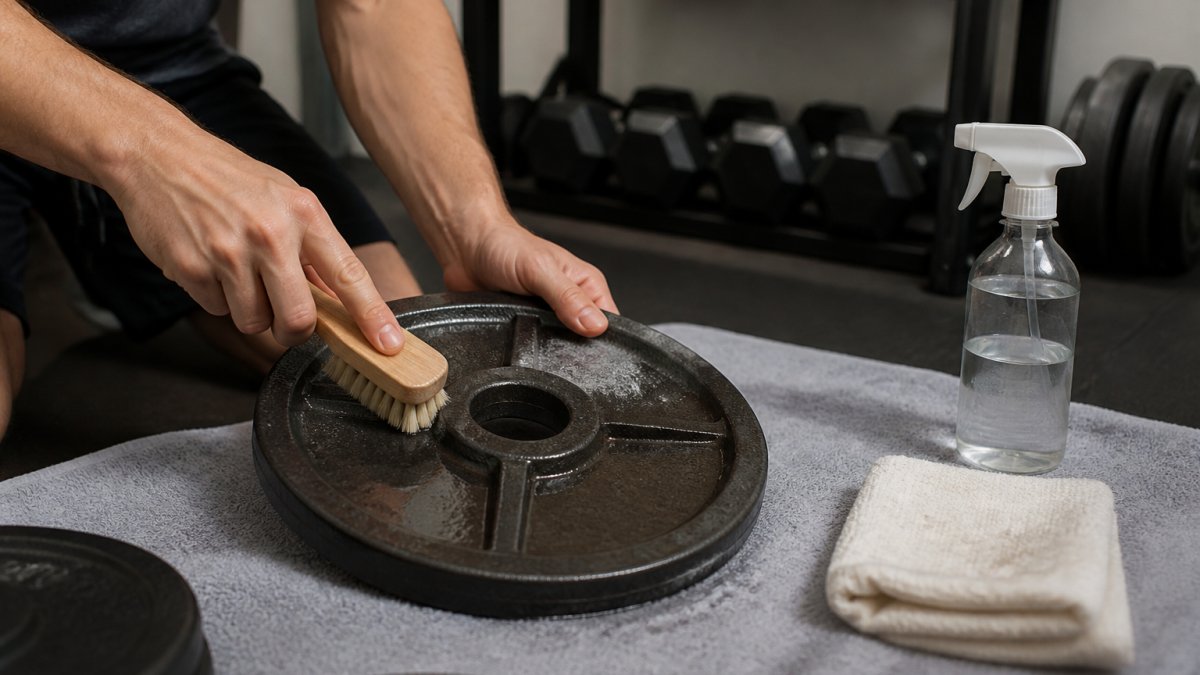
Cleaning Bare Cast Iron vs. Rubber-Coated or Painted Weights
Bare cast iron needs a protective oil layer after cleaning and benefits from occasional seasoning, much like a cast iron skillet.
Rubber-coated and painted weights are different. For a dedicated walkthrough, see how to clean and maintain rubber coated dumbbells.
Never use abrasive tools on coated weights. Scratches break the seal and let moisture underneath, causing rust you can't see until it spreads.
How to Remove Rust from Weight Plates Safely
Surface rust looks worse than it is, but the right method depends on the finish. Bare iron, painted plates, and rubber-coated dumbbells each need a different approach, and the wrong one turns a cosmetic problem into a structural one.
First, identify what you're dealing with
Wipe the area dry and look closely. Light surface rust is orange-brown, sits on top of the metal, and wipes away to leave smooth gray iron underneath. Deep pitting is darker, textured, and you can feel craters with a fingernail, moisture has been sitting against the iron long enough to eat into it.
Light rust is a cleaning job; deep pitting is a judgment call about whether the weight is still safe to load.
Bare cast iron: graduated rust removal
Start gentle and escalate only if the rust doesn't lift.
- Vinegar wrap (15-30 minutes). Soak a microfiber cloth in plain white vinegar, wrap it around the rusted area, and check every 10 minutes. Vinegar is acetic acid and dissolves iron oxide, but leaving it on too long starts attacking the iron itself. Do not leave a vinegar-soaked rag on a plate overnight.
- Stiff nylon brush. Scrub along the grain of the casting, not across it. Nylon is stiff enough to lift loosened rust without gouging the surface.
- Baking soda paste for stubborn spots. Mix baking soda with a little water, dab it on, and scrub. The mild abrasive and neutral pH help stop the vinegar's acid from continuing to work after you rinse.
- Rinse and dry immediately. Rinse with plain water, then dry with a cloth and let the plate air-dry in front of a fan for at least an hour before oiling. Any moisture trapped under oil becomes a new rust pocket.
- Re-oil the bare iron. A cleaned surface has zero protection. Wipe on a thin coat of mineral oil or 3-in-1 oil and buff off the excess.
When to stop: Stop as soon as you reach smooth gray metal. Every additional abrasive pass removes good iron. A few grams lost to surface cleaning is within tolerance, but grinding until the rust is 'gone' can change the weight and leave a rough surface that rusts faster next time.
Painted plates and rubber-coated weights
Do not use vinegar soaks or abrasive scrubbing on painted or coated surfaces. Vinegar dulls paint, and abrasives scratch the coating that keeps moisture off the iron underneath.
- Painted plates: treat rust spots with a paste of baking soda and water, scrub lightly with a nylon brush, rinse, dry, and touch up the paint with a rust-inhibiting enamel. The paint is the protection, restoring it is the maintenance.
- Rubber-coated dumbbells: rust usually appears at seams, around the handle collar, or where the coating has cracked. Clean the area, dry it thoroughly, and seal small cracks with a flexible silicone sealant. If the coating is split wide enough that you can see bare iron, the weight is a candidate for replacement rather than repair.
When rust means retirement
Deep pitting is the signal to stop cleaning and start evaluating. A plate with pitting around the hub or loading surface can develop cracks under load. Weigh it on a kitchen scale against its stamped value, noticeable mass lost to corrosion means it's no longer accurate for programming.
After any rust removal, monitor the area for a few weeks. Re-oiled bare iron that rusts again quickly is telling you the storage environment is the real problem, see the storage section below.
How to Prevent Cast Iron Weights from Rusting
Rust prevention comes down to three habits. Control moisture, keep a protective layer, and store weights correctly.
Premium 20LB Rubber Coated Cast Iron Dumbbell with Ergonomic Chrome Handle →
Dry immediately. Never stack wet weights. Water trapped between plates is the top cause of rust.
Apply a thin oil layer. After cleaning bare iron, wipe on a light coat of mineral oil or 3-in-1 oil.
Control the room. Home gyms in basements and garages hold humidity.
For coated weights, check for cracks in the rubber.
How to Store Weight Plates and Dumbbells for Long-Term Protection
Storage is where most cast iron weights rust, and it's the part almost every guide skips. A perfectly cleaned plate stacked on a damp concrete floor corrodes faster than a dusty plate on a dry rack. Treat storage as part of the maintenance routine, not an afterthought.
Get weights off the floor
Concrete wicks moisture and holds it against bare iron. Never stack plates directly on a slab, and never lean dumbbells against an exterior wall, the coldest surface in the room, where condensation forms first.
A rack with rubber or plastic contact points breaks the moisture path and lets air move around each plate. A multi-purpose weight rack that holds plates, bars, and dumbbells covers the whole setup. A dumbbell rack stand with padded contact points is one practical option.
Control humidity and airflow
Rust needs moisture and still air. Most home gyms sit in basements and garages where humidity swings with the weather. A hygrometer costs less than a pair of dumbbells and tells you what you're dealing with.
- Target range: keep the room under roughly 60% relative humidity. Above that, bare iron starts flash-rusting within days of a workout.
- Air movement: a small fan running on low keeps air circulating and dries sweat residue on the equipment between sessions.
- Dehumidifier: in a basement or garage, a dehumidifier set to 50-55% is the single most effective rust-prevention purchase you can make.
Leave gaps and stack smart
- Leave a finger-width gap between plates on a post so air can move.
- Store dumbbells on their handles or in cradles, not lying flat on rubber floors where the coating can trap moisture.
- Don't store weights in a closed plastic bin. Bins trap humidity and are a common cause of 'mystery' rust. A yoga mat and weight storage rack keeps gear open to the air and off the floor.
A practical maintenance schedule
Consistency matters more than intensity. A simple cadence covers almost every home gym:
- After every session: wipe sweat and chalk off handles and plates with a dry microfiber cloth. Thirty seconds.
- Weekly: inspect bare iron for orange flecks, especially on plate edges and dumbbell collars. Spot-treat any rust you find before it spreads.
- Monthly: deep-clean bare iron with warm water and a soft brush, dry fully, and re-oil. Check coated weights for cracks or peeling at seams.
Long-term storage
If weights go into storage, a move, a garage, a seasonal pause, clean and oil bare iron first, then wrap plates in breathable cloth or paper rather than plastic, which traps condensation. Store off the floor on a pallet or rack and check monthly. A weight stored clean and dry comes out the same way; one stored with sweat residue comes out pitted.
A simple cadence keeps cast iron weights rust-free without much effort.
| Frequency | Task | Time or target |
|---|---|---|
| After every session | Wipe sweat and chalk off handles and plates | Thirty seconds |
| Weekly | Inspect bare iron for orange flecks and spot-treat rust | Plate edges and dumbbell collars |
| Monthly | Deep-clean bare iron, dry fully, re-oil; check coatings | Warm water and soft brush |
| Seasonally | Re-check hygrometer, clean dehumidifier filter, re-oil dry iron | When humidity shifts |
| Annually | Weigh a sample plate and inspect for pitting | Against stamped value |
Preserving Weight Markings, Accuracy, and Gym Hygiene
Weight markings fade when you scrub too hard.
Use a soft brush over the lettering. Skip wire brushes and sandpaper entirely.
Accuracy matters too. Heavy rust removal takes metal off the plate. Light surface cleaning never changes the weight enough to notice.
Hygiene is the other half of maintenance. Sweat carries bacteria, and shared weights pass it around.
Our rubber coated cast iron dumbbells make hygiene easier.

Conclusion
Cast iron weights reward a little attention. Wipe them down, dry them fully, oil the bare iron, and store them off the floor. That routine keeps rust away and your equipment ready for the next session.
At Bodyhackfitnesss, we stock gear built to last, from rubber-coated cast iron dumbbells to storage racks that keep your space organized. If you're still assembling your space, our home gym setup guide walks through the full process.
Frequently Asked Questions
How often should you clean and maintain cast iron weights?
Wipe down cast iron weights after every session to remove sweat and chalk, then do a deeper clean with a brush and light oil every two to four weeks depending on use. In humid garages or basements, check for surface rust weekly. Rubber-coated options like the 20LB Rubber Coated Cast Iron Dumbbell need less frequent deep cleaning because the coating blocks moisture, but the chrome handles still collect sweat and should be wiped after each workout.
Should you oil cast iron weight plates after cleaning?
Yes, a thin coat of oil on bare cast iron helps prevent rust. Use a food-grade or mineral oil and apply a light layer with a cloth, then wipe off the excess so the plates are not slippery. Do not oil rubber-coated or painted weights, since the coating already protects the iron and oil can degrade the rubber over time. Reapply the oil layer whenever the surface looks dry or chalky.
Can you use a wire brush on cast iron weights?
A stiff wire brush can remove heavy rust from bare cast iron, but it will scratch painted or coated surfaces and can wear down weight markings. For routine cleaning, use a soft brush or non-metal scraper. Reserve wire brushes for rust removal on unpainted plates only, and work gently around stamped numbers so the markings stay readable. After brushing, wipe away loose bits and apply a protective oil layer.
How do you tell if cast iron weights are rusty or just dirty?
Dirt and chalk wipe away with a damp cloth, while rust leaves a reddish-brown stain that does not come off with water alone. Run a cloth over the surface: if it comes away orange or brown, you have surface rust. Light surface rust is safe to clean with a brush and oil. Deep pitting or flaking means the iron has corroded further and needs more thorough restoration before the weights are safe to handle.
