


Last Updated: October 28, 2026
Quick Summary
To track weight loss progress at home, combine weekly body measurements (waist, hips, chest, thigh, upper arm), progress photos every two to four weeks, and scale weight judged by weekly averages rather than single readings. Log everything in a notebook or spreadsheet, and add a non-scale victory log for changes like looser clothes and better sleep.
- Measure each spot twice and record the average, keeping the tape level and parallel to the floor.
- Set up a chart with columns for date, waist, hips, thigh, and notes, adding one row each week.
- Weigh daily and judge weekly averages, or weigh once a week if daily numbers stress you out.
- Take progress photos every two to four weeks in the same spot, light, and similar clothing.
- When the scale stalls two to three weeks, audit intake, activity, and water retention before changing anything.
Table of Contents
- Why the Scale Alone Can't Tell Your Full Weight Loss Progress Story
- How to Measure Your Body for Weight Loss (Step by Step)
- Building a Body Measurements for Weight Loss Chart
- How Often to Weigh Yourself for Weight Loss (and How to Read the Number)
- Weight Loss Progress Photos: The Visual Record Most People Skip
- Non-Scale Victories and the Mental Side of Frequent Tracking
- When Progress Stalls: Troubleshooting Plateaus and Body Type Differences
- Choosing the Right Tracking Tools for Your Home Setup
- Frequently Asked Questions
Why the Scale Alone Can't Tell Your Full Weight Loss Progress Story
A single number on a bathroom scale hides more than it shows. According to University of Connecticut research on diet tracking frequency, participants needed to track on about 30% of days to lose more than 3% of their body weight.
But weight loss progress is a trend, not a snapshot. Scale weight shifts with water retention, sodium, hormones, and even a bad night's sleep.
Here's what most guides get wrong: they treat the scale as the scoreboard. It isn't. It's one data point among many.
Weight loss progress is the measurable change in body composition over time, tracked through weight, measurements, photos, and how your clothes fit. It is not a single daily number.
How to Measure Your Body for Weight Loss (Step by Step)
Learning how to measure your body for weight loss takes about five minutes and one soft tape. Do it once a week, in the morning, before eating.
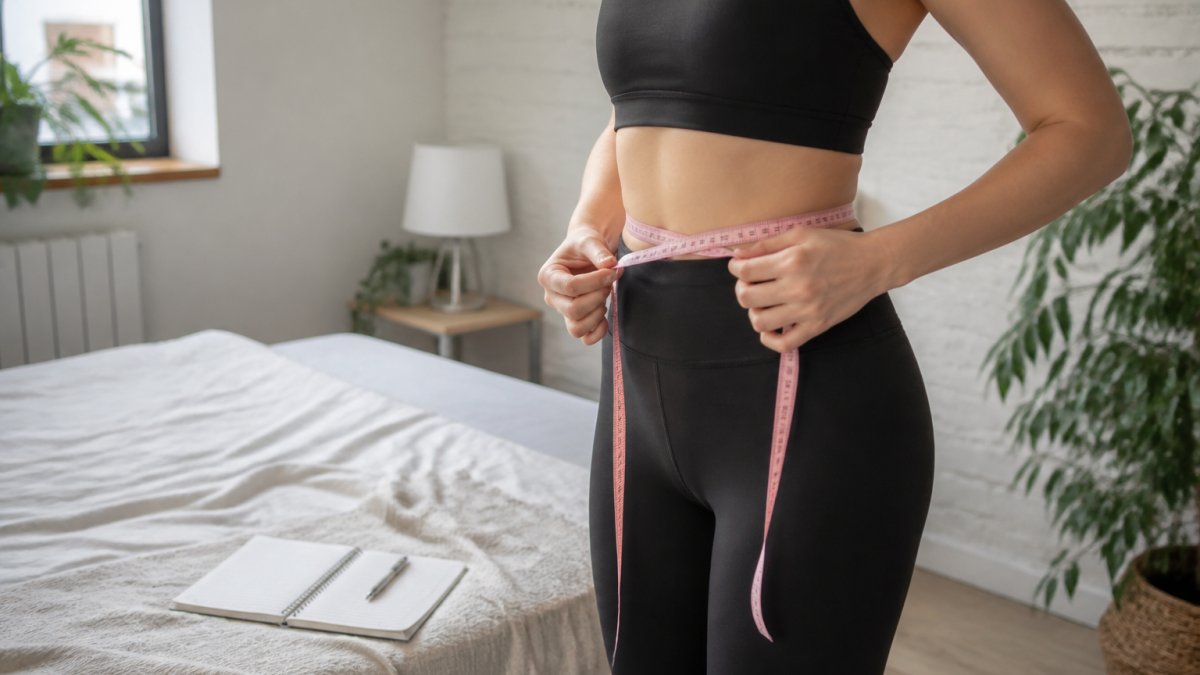
Follow these steps:
- Stand relaxed, feet together, and breathe normally.
- Wrap the tape snug against skin, not tight enough to dent it.
- Measure each spot twice and write down the average.
- Keep the tape level and parallel to the floor.
- Record the date and time with every entry.
The Five Measurements That Matter Most
- Waist at the navel
- Hips at the widest point
- Chest across the fullest part
- Thigh at mid-thigh
- Upper arm at mid-bicep
Getting Consistent Numbers Every Time
Measure at the same time of day, ideally morning. Use the same tape and the same mirror. Small habits like these build baseline data you can trust.
Building a Body Measurements for Weight Loss Chart
A body measurements for weight loss chart turns scattered numbers into a visible trend. You don't need software. A notebook works, and a spreadsheet works better.
Set up five columns: date, waist, hips, thigh, and notes. Add a row each week. After four weeks, you'll see patterns that daily weighing hides.
| What to Track | How Often | Why It Matters |
|---|---|---|
| Scale weight | Daily or weekly | Shows the weight trend |
| Waist and hips | Weekly | Captures body composition shifts |
| Progress photos | Every 2-4 weeks | Reveals visual cues the scale misses |
| Clothing fit | Weekly | A fast, honest non-scale check |
| Energy and sleep | Daily | Links habits to results |
Data visualization helps here. A simple line graph of your weekly averages makes a slow month look far less discouraging than a string of bad mornings.
How Often to Weigh Yourself for Weight Loss (and How to Read the Number)
The best answer: weigh daily and judge weekly averages, or weigh once a week if daily numbers stress you out. Both approaches work. What fails is weighing randomly and reacting to each reading.
Stanford Medicine research on digital tracking tools found that people who tracked their efforts more closely with tools like smart watches, digital scales, and diet apps had better weight-loss results.
Daily Weigh-Ins vs. Weekly Averages
Daily weigh-ins give you more data, but weight fluctuations can mislead you. Water retention alone can swing the number by several pounds overnight.
Weekly averages smooth that noise. Add seven daily readings, divide by seven, and compare that average to last week's. If the average drops, you're winning, even if today's number looks ugly.
Weight Loss Progress Photos: The Visual Record Most People Skip
Weight loss progress photos are the cheapest, most honest tracking tool you own. Take them every two to four weeks, in the same spot, with the same light.
- Wear similar clothing each time
- Stand straight, arms at your sides
- Use natural light and a plain background
- Save the date in the filename
The scale can stall while your body visibly changes. Photos catch that. They also give you proof on days when motivation runs thin. If you're struggling to stay consistent, our guide on how to stay motivated with home workouts covers the mental side in more depth.
Non-Scale Victories and the Mental Side of Frequent Tracking
Frequent tracking can wear you down if the numbers become a verdict on your worth. That is the psychological trap most guides ignore. The fix is not to stop tracking, it is to track the right things and set boundaries around the scale.
Build a Non-Scale Victory Log
Non-scale victories (NSVs) are the changes that do not show up in pounds: looser waistbands, better sleep, climbing stairs without gasping, steadier energy, improved mood, and clothes fitting differently. Track them in the same notebook or app you use for weight. Create a simple three-column log: date, NSV observed, and how it made you feel. Aim for at least one entry per week.
Set a "Data Diet" for the Scale
If stepping on the scale starts shaping your mood for the whole day, switch to weekly weigh-ins. A common pattern is to weigh daily for data collection but only review the weekly average, never react to a single reading. Another approach: weigh yourself but cover the display, logging the number without looking at it, and check the trend only once a week. This preserves data while removing the emotional spike.
Recognize the Warning Signs of Scale Obsession
Watch for these signals: weighing multiple times per day, feeling anxious if you miss a weigh-in, letting a number dictate your food choices for the entire day, or avoiding social events because you feel you have not lost enough. If any of these sound familiar, take a one-week break from the scale and focus on your NSV log and measurements instead. Sustainable habits beat perfect data every time.
Use Tracking to Support, Not Judge
A randomized controlled trial on weight self-monitoring frequency was designed to test how often people should monitor their weight during a behavioral weight-loss program, which shows researchers treat tracking frequency as a real variable, not a trivial habit. The takeaway: frequency should serve your goals, not rule your emotions. If daily tracking motivates you, keep it. If it drains you, scale back.
If you are struggling to stay consistent, our guide on how to stay motivated with home workouts covers the mental side in more depth.
When Progress Stalls: Troubleshooting Plateaus and Body Type Differences
A plateau is not a failure; it is a data point. When the scale stops moving for two to three weeks, most people panic and cut calories drastically. Instead, use your tracking data to diagnose the cause. Here is a step-by-step troubleshooting framework that competitors rarely provide.
Step 1: Audit Your Intake Without Guessing
Caloric intake creep is the most common culprit. Over time, portion sizes grow and untracked bites add up. For one week, log everything you eat and drink, including cooking oils, condiments, and tastes while cooking, using the same method you used at the start. Compare your average daily intake to what you were eating when you were losing. A difference of just 100-200 calories per day can stall progress.
Step 2: Check Your Activity Baseline
Activity drops are sneaky. A busy week at work can cut your step count by thousands without you noticing. Review your step data or activity logs from the past two weeks. If your daily steps have fallen from, say, 8,000 to 5,000, that alone can explain a stall. Restore your baseline before changing your diet.
Step 3: Rule Out Water Retention
Hard training weeks, high-sodium meals, poor sleep, and hormonal shifts all cause temporary water retention that masks fat loss. Look at your weekly average weight, not daily numbers. If your waist measurements are still shrinking or your clothes fit better, you are likely losing fat while holding water. Give it another week before making changes.
Step 4: Interpret Data for Your Body Type
Two people can lose the same amount of fat and see very different scale results. If you have high muscle mass, the scale may barely budge even as your body composition improves. If you have a higher starting body fat percentage, you may see faster initial drops that slow over time. Use your waist-to-hip ratio and progress photos alongside the scale.
Step 5: Adjust One Variable at a Time
If intake, activity, and water retention are ruled out, make one small change: add two 20-minute walks per week, or reduce your daily intake by 100-150 calories. Wait two weeks before assessing. Changing multiple variables at once makes it impossible to know what worked.
Strength training often breaks a stall faster than extra cardio because it preserves lean muscle while increasing energy expenditure. Our breakdown of strength training vs cardio for fat loss explains which lever to pull and when.
Choosing the Right Tracking Tools for Your Home Setup
A good home setup needs three things: a reliable scale, a soft measurement tape, and a way to log data. Everything else is optional.
A fitness tracker can help you track activity. The MOLED Fitness Tracker Black tracks heart rate, SpO₂, sleep, and activity and works with the Mi Fitness and Mi Home apps. The Fitness Tracker Smart Wristband Purple offers continuous heart rate monitoring, step tracking, and up to five days of battery life.


For app-based logging, our guide on evaluating fitness app features for personalized results covers which features actually support progress.
UCLA Health guidance on measuring weight loss progress notes that body-fat percentage requires specialized equipment, which is why simple home metrics matter so much.
Frequently Asked Questions
How long should I track weight loss progress before judging whether it's working?
Give any tracking method at least four weeks before drawing conclusions. Weight fluctuations from water retention, sodium, and hormonal cycles can mask real fat loss over a few days. Compare weekly averages and measurements rather than day-to-day numbers.
What can I track besides scale weight to measure weight loss progress?
Body measurements, progress photos, clothing fit, waist-to-hip ratio, and fitness performance all work alongside the scale. A tape measure around your waist, hips, chest, arms, and thighs can be used to record measurements. Progress photos can provide a visual record. You can also note non-scale changes, such as climbing stairs or finishing a workout. Use at least two methods so one bad reading never defines your week.
Why is my weight staying the same even though I'm working out?
Check your measurements and progress photos before assuming nothing is happening. A plateau lasting three or more weeks is worth reviewing your caloric intake and activity levels.
How often should I weigh myself when trying to lose weight?
Daily weigh-ins work for people who can treat the number as data, not a verdict. Weekly averages smooth out weight fluctuations from water retention and food volume. Pick a frequency you can sustain, log it consistently, and judge progress over four-week blocks rather than single days.
Tracking weight loss progress at home works best when you stop chasing one number and start building a record. That's the gap Bodyhackfitness was built to close. Our fitness trackers and digital programs give you the tools to log health metrics, spot trends, and stay accountable week after week. Shop now and build a home setup that tracks every kind of progress, not just the scale.
